For some time I've been curious about the idea so prevalent in modern Western literature that a central conflict is indispensable to effective storytelling. In my own writing, sure there's conflict, and when I read, clearly it abounds. But is conflict really the core of it? Is conflict really what's making the story engaging? The... Continue Reading →
Efficient revising: what order is best?
The four faces of revising. Yesterday, I completed a first draft of rewrites to my novel manuscript. It's been three months since I began, thirteen chapters of new material, and copious reworking of the existing. It's a celebration, to be sure, and I'm content to bask in the glory of a milestone passed for a... Continue Reading →
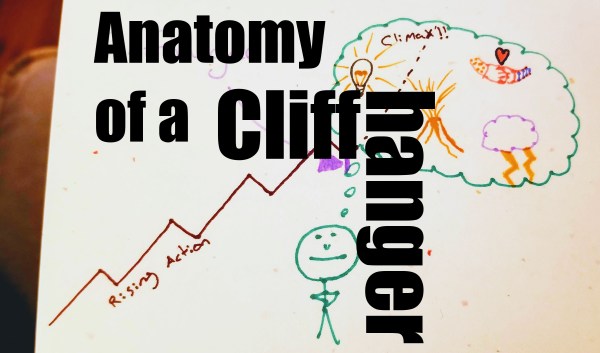
Anatomy of a cliffhanger
They're page-turning. They're nail-biting. They're infuriating. They're everywhere. Cliffhangers, those endings to scenes, chapters, or whole works that create anticipation in the audience, sometimes feel like the bread and butter of modern storytelling televised and written, and as a literary tool they have a long history. Today, let's step back and take their measure. What... Continue Reading →
Active verbs, their use, and their limits
When I taught creative writing to high school students in Minnesota, one of my favorite lessons involved a semi-choral reading of Annie Dillard's "The Death of a Moth." I gave students an excerpt from the essay (you can find the excerpt at the bottom of this post and the full essay at the link above)... Continue Reading →
The Slump: how to start writing again
Today is, I think, the sixth or seventh day I haven't done significant writing work. As in, I have pulled up the Word tab languishing at the bottom of my taskbar, stared at the winding sea of paragraphs, contemplated the next, set my fingers on the keys--and then it was too much. Something I didn't... Continue Reading →
Past or Present: why tense matters in our writing, and how to use it well
Nine months ago, I began translating my novel from past to present tense. At the time, before a bunch of ruthless cuts, it was about 160,000 words long, and changing the tense of every verb--it took a while. It was grueling. It set my brain reeling into the depths of grammatical subtlety. It also taught... Continue Reading →
Put your descriptive writing to work!
A few years ago I found myself in a one-day writing workshop, examining all fiction in terms of three elements: character, conflict, and description. The idea that every sentence we write is primarily serving one of these functions is perhaps reductive, but it can also help us tease out why a passage is not working,... Continue Reading →
Skiing in Stryn: lessons in perseverance
A short post this week. I'm skiing for a few days with students in the mountains, where the snow is still thick although the air has warmed. We bussed here this morning along the Nordfjord's shores, through rocky valleys and mountain passes, and crossed the snow line just below camp. The Nordic students step into... Continue Reading →
Spoons and stories: rethinking the ordinary in our writing
It's been a quiet week along the fjords. Students have been busy with a first-aid course and an immersive Model United Nations simulation. That left us teachers with a little time on our hands, and my husband and I took the opportunity for a few days' sojourn south to Bergen. We found ourselves in the... Continue Reading →
Writing around the world: expanding the toolbox
There are a lot of rules we set ourselves as writers. We try to show-not-tell, to make our characters round, to begin our stories with a conflict. We teach them to our students, preach them like the gospel, cite them in critiques, and write them core in every novel. And for (mostly) good reason. People... Continue Reading →