A tension has been on my mind for a while, between the stories we tell in fiction and the question of meaning. It was on my mind in September 2020, then again two years later, December 2022. It seems that perhaps every year in autumn I find myself thinking about this theme. Here I am... Continue Reading →
Novel outlining using the Snowflake Method
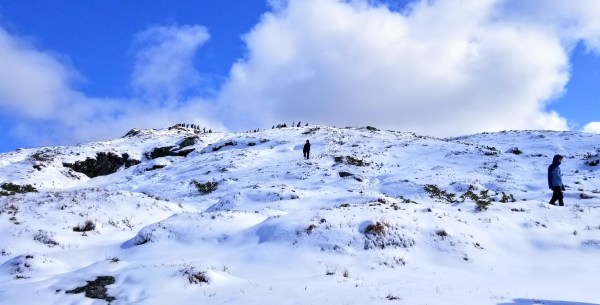
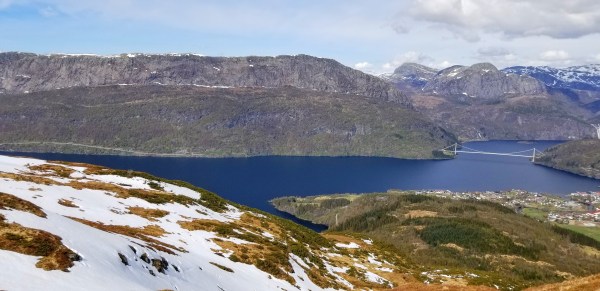
On the first of May this year, Labor Day in Norway and around much of the world, the first-year class took its annual hike up the local mountain, Jarstadheia. The hike took us up 584 meters into thick snow--more than a foot along the top plateau. We formed a winding column of sixty or seventy... Continue Reading →
After a while, publishing a piece
On the second of January, I had a flash fiction piece published with Electric Literature's The Commuter. It had been about two years prior to this since my last publication, and I had been feeling discouraged. I am feeling grateful and reaffirmed to be able to get this piece out there, and it has been... Continue Reading →
Must a story have a message?
In my English literature class this term, we have been working on writing theme statements. When we read the two novellas in Banana Yoshimoto's Kitchen, we wrote something like this: "Yoshimoto expresses the idea that we can move towards healing from grief by forming human relationships and seeking acceptance." The theme statement helps us wrap... Continue Reading →
Who decides what a text means? Short thoughts on interpretive authority
One of the things I love about teaching literature is the way its central questions push my thinking. Usually teacher-Jimmy and writer-Jimmy inhabit distinct mental spaces, but sometimes the two dovetail alongside. With the start of the new school year, meeting new students, lesson planning, checking how advisees are settling in, I got to have... Continue Reading →
Summer Reading: World Literature
Before departing school for the summer, I stopped by the book storage room. A small and musty room of bookshelves adjoining one of the English classrooms, far too many books for the space, piled three deep on the shelves so that you have to shift great tottering piles in order to see what is stacked... Continue Reading →
Long Shot, Medium Shot, and Close-up: the power of film shot types in our writing
This last week I participated in an online short story course. One Story's Write a Short Story with Hannah Tinti was an engaging, entertaining, but most of all practically useful one-week course, though which we explored a basic structure for short story writing. This was the first class I've done with One Story, and I... Continue Reading →
Participating in this season’s Sixfold voting
As I continue to explore different venues for submitting short stories, one publication different than the others has been Sixfold. Traditional literary journals have a team of readers and editors who vet submissions and curate the publication. Sixfold, instead, has the writers who have submitted stories or poems read, comment, and vote on one another's... Continue Reading →
When characters come to life
Many times I have heard writers talk about a character seeming to lift up off the page, feel real enough that they start telling their own story. Writers say, "The story writes itself. The character told me what they'd do." If I'm honest, most times when I hear these things I roll my eyes. I... Continue Reading →
Making a story feel real: Jean Rhys’s Wide Sargasso Sea
In 1966, the Dominican writer Jean Rhys published her most celebrated work, the novella Wide Sargasso Sea. It marked her return to the literary scene after a near twenty-year's gap, and it inspired a large body of scholarship and study. Wide Sargasso Sea took as its focus the character of Bertha Mason in Charlotte Brontรซ's... Continue Reading →