In 1966, the Dominican writer Jean Rhys published her most celebrated work, the novella Wide Sargasso Sea. It marked her return to the literary scene after a near twenty-year's gap, and it inspired a large body of scholarship and study. Wide Sargasso Sea took as its focus the character of Bertha Mason in Charlotte Brontรซ's... Continue Reading →
How Real is Real Enough?
I notice a fixation when I write on, let's call it, "textbook plausibility." It's always fiction, but I take great pains to make things possible. This could really happen, I hope the reader feels. Although we both know it never did. I'm currently working on a new story that I'm envisioning in a very specific... Continue Reading →
The Joys of Simple Writing Prompts–#AuthorToolboxBlogHop
This week's post forms part of the monthly Author Toolbox Blog Hop, in which writers at all stages of their careers come together to share knowledge. It's a good group. Check out the posts of others here. In this second week of school this year, our student creative writing group commenced. Two budding student leaders... Continue Reading →
Tone and Mood: Emotion in Our Writing
The school year has begun, and with most students arrived and out of quarantine, things feel more normal than they have in months. I've taken on two second-year Language & Literature courses from a colleague, and in a lesson reviewing the myriad ways we might analyze texts, one lovely pair of words emerged that will... Continue Reading →
Scene and Summary: Recasting the Balance–#AuthorToolboxBlogHop
This week's post is part of the monthly Author Toolbox Blog Hop. Check out posts by other writers about writing craft and industry. It is a good community and a good resource. #AuthorToolboxBlogHop The longer I poke at things I long believed about writing, the more they crumble like a log long on the fire.... Continue Reading →
Fleshing Out Characters
When a story gets stuck, I try to see it as an invitation. Amid the frustration, I seek what I have missed. What central element have I bypassed in this story that makes it tick slower, slower, slow until it halts? Often for me, the culprit is the undeveloped character. I plan the story and... Continue Reading →
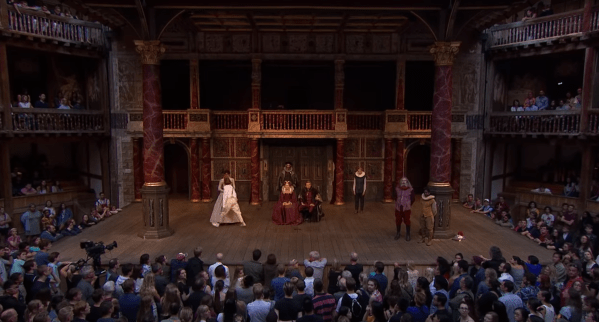
Hamlet at the Globe, Special Effects, and Conflict in Fiction
With IB exams canceled this year, second-year students have been given the choice of continuing with their classes or not. I've had a little less than half my English Language & Literature group stick with me, and freed of assessment's narrow course, we were without direction, of a sudden free. The students said they wanted... Continue Reading →
Synecdoche & Metonymy: Figurative Language Bootcamp #3
This post is third in a series about figurative language. The first post in the series discussed simile, metaphor, and symbolism. Last week, we explored personification and zoomorphism. Today, we will drive on to the realm of some lesser-known cousins, synecdoche and metonymy. Synecdoche A subset of metaphor, synecdoche refers to a part of an... Continue Reading →
Personification and Zoomorphism: Figurative Language Bootcamp #2
The menagerie of figurative language is large, unruly, a great joy to study. Last week, we explored its three most essential forms: simile, metaphor, and symbolism. Today, we reach forward to two more specific species: personification and zoomorphism. Personification Personification refers to any simile, metaphor, or symbol that lends human qualities to something nonhuman. In... Continue Reading →
Simile, Metaphor, and Symbol: Figurative Language Bootcamp 1โ#AuthorToolboxBlogHop
This post was part of the #AuthorToolboxBlogHop event. Every month, save November and December, we posted tips for writers on our respective blogs. Although the hop is no longer running, check out these other great writing blogs here! Other posts on figurative language: Personification and Zoomorphism Synecdoche and Metonymy Figurative language: all those saying-something-we-don't-means, the... Continue Reading →