A tension has been on my mind for a while, between the stories we tell in fiction and the question of meaning. It was on my mind in September 2020, then again two years later, December 2022. It seems that perhaps every year in autumn I find myself thinking about this theme. Here I am... Continue Reading →
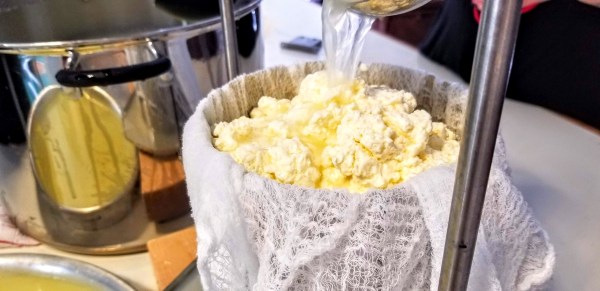
A weekend making cheese
Every October, our school stops classes for a week. We devote the time to special projects--some students are organizing a march against human trafficking in our nearby city of Førde; some are helping out on a local farm; others are job-shadowing in Bergen; a few groups are on three-day hikes in the mountains. My husband... Continue Reading →
Who decides what a text means? Short thoughts on interpretive authority
One of the things I love about teaching literature is the way its central questions push my thinking. Usually teacher-Jimmy and writer-Jimmy inhabit distinct mental spaces, but sometimes the two dovetail alongside. With the start of the new school year, meeting new students, lesson planning, checking how advisees are settling in, I got to have... Continue Reading →
Two Histories of Native American Peoples
During the last month, I've read (or listened to) two books of history of different Native American peoples, Staci Drouillard's Walking the Old Road: A People's History of Chippewa City and the Grand Marais Anishinaabe and Elizabeth Fenn's Encounters at the Heart of the World: A History of the Mandan People. These narratives took two... Continue Reading →
Searching for story ideas
Where does a good story come from? What are its core ingredients? I found myself this week seeking inspiration, and little coming. I've set myself a goal of two new pieces to produce in the coming six-week push. I haven't started yet--I've been focusing on older projects. What do I need to get me started?... Continue Reading →
Making a story feel real: Jean Rhys’s Wide Sargasso Sea
In 1966, the Dominican writer Jean Rhys published her most celebrated work, the novella Wide Sargasso Sea. It marked her return to the literary scene after a near twenty-year's gap, and it inspired a large body of scholarship and study. Wide Sargasso Sea took as its focus the character of Bertha Mason in Charlotte Brontë's... Continue Reading →
Can reading literature change our beliefs?
I remember a fable I heard once, from some origin that I can no longer locate. I think I was told this story by a speaking voice, perhaps by a teacher at school, perhaps elsewhere. The situation of its telling has thus vanished, but I remember the story perfectly. Let me share it with you... Continue Reading →
Summer in Billings
It was two and a half years ago that I made my first ever Words Like Trees post, written here in Billings at Christmastime. A three hour drive to Bergen, followed by eighteen hours of airport-hopping, and we reached Billings this time in its brilliant summer heat. Because of the pandemic, we haven't come here... Continue Reading →
Character Change is Oversimplification
"Happily ever after" is an age-old trope, and we know that reality is subtler than that. The ending of a story does not mean the rest of life will run smoothly. But a happily-ever-after ending makes sense in fiction: because the story at some point has to end, and an ending that reads, "And life... Continue Reading →
Stories and Concepts
The last part of this week, I have been participating in a virtual teacher training workshop about conceptual learning and inquiry. Nine teachers and the workshop leader have been gathering on Zoom for in-depth discussions of how to reframe learning to promote a deeper conceptual understanding (rather than memorized content) that better enables students to... Continue Reading →