A tension has been on my mind for a while, between the stories we tell in fiction and the question of meaning. It was on my mind in September 2020, then again two years later, December 2022. It seems that perhaps every year in autumn I find myself thinking about this theme. Here I am... Continue Reading →
Summer Reading: World Literature
Before departing school for the summer, I stopped by the book storage room. A small and musty room of bookshelves adjoining one of the English classrooms, far too many books for the space, piled three deep on the shelves so that you have to shift great tottering piles in order to see what is stacked... Continue Reading →
Continued reflections on conflict and story structure
Some stories seem to move more slowly than drying paint. They elongate scene after scene of a bland character sitting, contemplating, staring at walls. Whole novels can go by without the character doing much more than taking a sip of their watered-down beer as they contemplate the vagaries of their universes. How often do I... Continue Reading →
Reading Bernard Leach’s The Potter’s Challenge
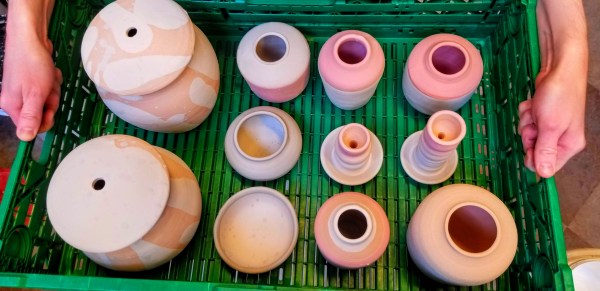
As part of my research for the novel I'm working on, which focuses on ceramics, I've been taking some of my writing time to explore what I can of an important figure in the craft, one who was a "great grandfather" to me in terms of my ceramics education (that is, a teacher of my... Continue Reading →
Mulk Raj Anand’s Untouchable
The last few weeks, my bedtime reading has been another novel I found in the marvelous book storage room at school: Untouchable, published in 1935. It was Mulk Raj Anand's debut novel, written in English, and it marked the beginning of Anand's use of literature to argue against the British colonial presence in India as... Continue Reading →
Philosophy Reading
Spurred on by an IB Extended Essay I am supervising, a couple of months ago I waded precipitously into Gayatri Spivak's 1988 essay "Can the Subaltern Speak?" In this vitally important essay on the West's erasure of non-Western women, Spivak makes the case that colonial ideology stops Westerners from knowing anything about the most disenfranchised... Continue Reading →
The Text Matters: Why American Education’s Focus on Skills is Damaging
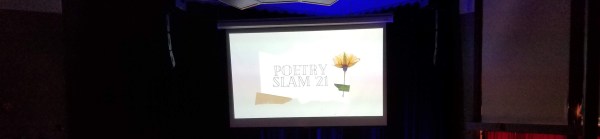
Yesterday evening, students gathered together for the annual Poetry Slam event. It isn't really a poetry slam. It's something brilliant and beautiful in a different way. Our students come from about ninety countries, and the vast majority have learned English as an additional language. Unfortunately in an English-medium school, the staggering linguistic diversity of our... Continue Reading →
Character Change is Oversimplification
"Happily ever after" is an age-old trope, and we know that reality is subtler than that. The ending of a story does not mean the rest of life will run smoothly. But a happily-ever-after ending makes sense in fiction: because the story at some point has to end, and an ending that reads, "And life... Continue Reading →
The Reading Sickness
My husband is not a reader. While I wade up to my eyes through stories, he stays dry. We are different people, and that is fine, but I have wondered for years precisely why he doesn't love to read--to me it seems so natural. To me, it is necessary. He has told me sometimes, that... Continue Reading →
Change Your Perspective: Dead Poets and Sedoka
There are few films (and I find it a bit ironic that it is the film we go to before the book here) more called upon for inspiring young writers than Dead Poets Society, in which charismatic literature teacher Mr. Keating (Robin Williams) leads a group of teenage boys to discover their personal voices. In... Continue Reading →