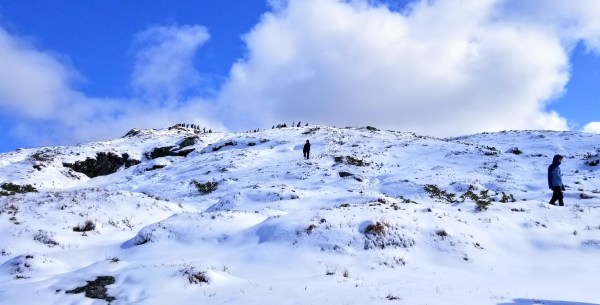
On the first of May this year, Labor Day in Norway and around much of the world, the first-year class took its annual hike up the local mountain, Jarstadheia. The hike took us up 584 meters into thick snow--more than a foot along the top plateau. We formed a winding column of sixty or seventy... Continue Reading →
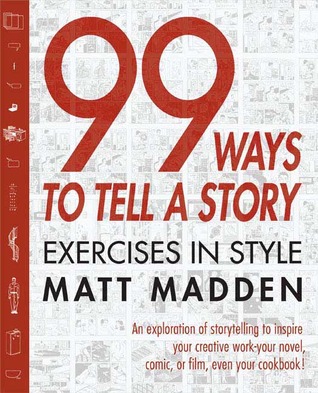
99 Ways to Tell a Story: more explorations in story structure
My biggest questions about stories the last few years have been focused on structure. What is the role of conflict? Do all stories really follow the same dramatic structures, or is this an oversimplification? What alternative story structures might exist (such as Kishลtenketsu), and how do they function in different cultural contexts? When I asked... Continue Reading →
Continued reflections on conflict and story structure
Some stories seem to move more slowly than drying paint. They elongate scene after scene of a bland character sitting, contemplating, staring at walls. Whole novels can go by without the character doing much more than taking a sip of their watered-down beer as they contemplate the vagaries of their universes. How often do I... Continue Reading →
Character Change is Oversimplification
"Happily ever after" is an age-old trope, and we know that reality is subtler than that. The ending of a story does not mean the rest of life will run smoothly. But a happily-ever-after ending makes sense in fiction: because the story at some point has to end, and an ending that reads, "And life... Continue Reading →
Episodic Serialization in Star Trek Discovery: How to Satisfy Audience Yet Keep Them Wanting More
In this third season of Star Trek Discovery, there is a lot to enjoy. A reimagined, post-Federation galaxy, the ever-imaginative CGI work, characters who are growing on me in this third adventure through space and time, and most importantly, Star Trek's beautifully hopeful, human, redemptive storytelling in an age when so many shows seem fixated... Continue Reading →
Fleshing Out Characters
When a story gets stuck, I try to see it as an invitation. Amid the frustration, I seek what I have missed. What central element have I bypassed in this story that makes it tick slower, slower, slow until it halts? Often for me, the culprit is the undeveloped character. I plan the story and... Continue Reading →
Growing story ideas
In between novel revisions this winter and spring, I've been working on a few short stories. The more compressed, quicker course of developing and honing these has helped me think about the process and purpose of telling stories, and today I'll share some of what I am learning. Likewise, I would love to hear your... Continue Reading →
Efficient revising: what order is best?
The four faces of revising. Yesterday, I completed a first draft of rewrites to my novel manuscript. It's been three months since I began, thirteen chapters of new material, and copious reworking of the existing. It's a celebration, to be sure, and I'm content to bask in the glory of a milestone passed for a... Continue Reading →
Put your descriptive writing to work!
A few years ago I found myself in a one-day writing workshop, examining all fiction in terms of three elements: character, conflict, and description. The idea that every sentence we write is primarily serving one of these functions is perhaps reductive, but it can also help us tease out why a passage is not working,... Continue Reading →
Is conflict necessary?: Kishลtenketsu and the conflict-less plot
I've long been puzzled by the idea of conflict so ubiquitous in the stories we read and write. Why is it necessary? What, precisely, is it giving us? To what extent is the focus on conflict reflecting our worldview and basic human psychology? Is it possible to write a story without conflict? If you keep... Continue Reading →