My biggest questions about stories the last few years have been focused on structure. What is the role of conflict? Do all stories really follow the same dramatic structures, or is this an oversimplification? What alternative story structures might exist (such as Kishลtenketsu), and how do they function in different cultural contexts? When I asked... Continue Reading →
Why clarity should be every writer’s top priority
Let me begin this post as clearly as I can, knowing that the later paragraphs will invariably (for I have already written them and know) diverge, get muddy, lose themselves. I'll be clear: Good writing must be readily understandable. Clarity of expression should be a writer's foremost goal. Artistry of language, implied meaning, symbolism--these things... Continue Reading →
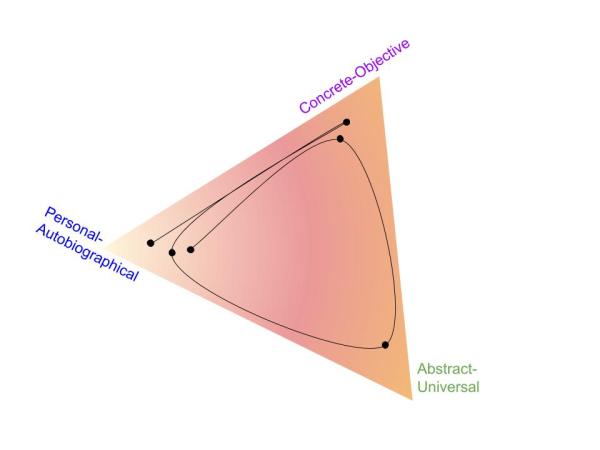
The Three Poles of the Essay
They say the best way to learn a thing is to teach it, and in the trial by fire that is the teaching of a new syllabus, I have been learning a lot this week about the literary essay. I am looking explicitly at the theory now of a genre I have long read, enjoyed,... Continue Reading →
Apparently, I’m Blogging All Wrong!
This week, let's look at blogs. What make one tick and another flop? Why do some get clicks and others languish patiently? And which is this? The IB syllabus for my English language acquisition students asks them to practice writing a variety of text types, from letters to proposals, from persuasive speeches to brochures. This... Continue Reading →
Short Story and Novel: Key Differences in Form–#AuthorToolboxBlogHop
This week's post is part of the monthly Author Toolbox Blog Hop. Check out others' great posts about the craft and business of writing! I first encountered Haruki Murakami through his short story collection The Elephant Vanishes. These stories of middle-class life in Japan were bizarre, esoteric, often difficult to get my mind around. The... Continue Reading →
Mode, Genre, and Form: Three Ways to Think More Deeply about Our Texts
In the huge range of texts we write, distinguishing among them helps us know what we are writing, helps readers know what to expect, and helps us connect our pieces to readers who will enjoy them. Today we'll discuss three central ways texts are distinguished from one another: mode, genre, and form. These tools help... Continue Reading →
Scene and Summary: Recasting the Balance–#AuthorToolboxBlogHop
This week's post is part of the monthly Author Toolbox Blog Hop. Check out posts by other writers about writing craft and industry. It is a good community and a good resource. #AuthorToolboxBlogHop The longer I poke at things I long believed about writing, the more they crumble like a log long on the fire.... Continue Reading →
Personal Style, or Set in Our Ways: The Importance of Change and Holding On–#AuthorToolboxBlogHop
This week's post is part of the monthly Author Toolbox Blog Hop. Check out other participants' posts here. The #AuthorToolboxBlogHop is a great way to connect with other writers and build our own repertoire of craft knowledge alongside. Check it out! A wonderful professor of mine, Deborah Appleman, once told me that life is a... Continue Reading →
Myths of the 3rd Person Narrator
Several weeks ago here on Words like Trees, we surveyed a range of common narrative points of view, from character-turned-narrator first person to free indirect style, omniscient, and close third person. In the weeks since, and in particular as I have been making my way slowly (very slowly) through the first volume and a half... Continue Reading →
Choose the Right Point of View for Your Story: Beyond the Basics
First, third, omniscient, limitedโpoint of view (POV) is a global decision we make in every writing project. Like our choice of present or past tense, selecting the right point of view for a story has a powerful impact on the final effect, and itโs worth considering different options before jumping to one choice. Many of... Continue Reading →