Earlier this week, earth crossed the equinox. Days in the northern hemisphere are longer than the nights now. Here in Norway, the sea change between winter and summer is always so dramatic, and around the equinox daylight change is the fastest. We're headed into sun and light. We've had a smattering of beautiful clear days... Continue Reading →
Novel outlining using the Snowflake Method
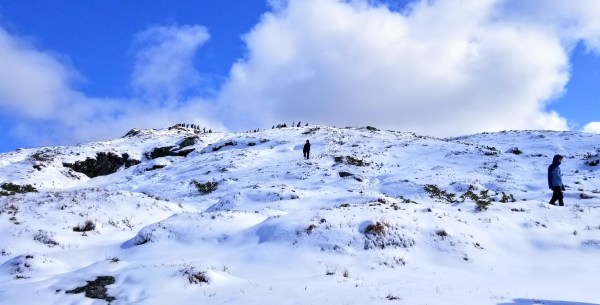
On the first of May this year, Labor Day in Norway and around much of the world, the first-year class took its annual hike up the local mountain, Jarstadheia. The hike took us up 584 meters into thick snow--more than a foot along the top plateau. We formed a winding column of sixty or seventy... Continue Reading →
Continued reflections on conflict and story structure
Some stories seem to move more slowly than drying paint. They elongate scene after scene of a bland character sitting, contemplating, staring at walls. Whole novels can go by without the character doing much more than taking a sip of their watered-down beer as they contemplate the vagaries of their universes. How often do I... Continue Reading →
When characters come to life
Many times I have heard writers talk about a character seeming to lift up off the page, feel real enough that they start telling their own story. Writers say, "The story writes itself. The character told me what they'd do." If I'm honest, most times when I hear these things I roll my eyes. I... Continue Reading →
Character Change is Oversimplification
"Happily ever after" is an age-old trope, and we know that reality is subtler than that. The ending of a story does not mean the rest of life will run smoothly. But a happily-ever-after ending makes sense in fiction: because the story at some point has to end, and an ending that reads, "And life... Continue Reading →
Writing Outside Our Own Identities: Representation, Research, Sensitivity Reading, and Justice–#AuthorToolboxBlogHop
This post is part of the monthly Author Toolbox Blog Hop. Check out other Hop participants' posts to learn about more aspects of writing craft and business, the third Wednesday of each month except for November and December. If we are writers who care about social justice, we have to interrogate our work. How do... Continue Reading →
Tone and Mood: Emotion in Our Writing
The school year has begun, and with most students arrived and out of quarantine, things feel more normal than they have in months. I've taken on two second-year Language & Literature courses from a colleague, and in a lesson reviewing the myriad ways we might analyze texts, one lovely pair of words emerged that will... Continue Reading →
Short Story and Novel: Key Differences in Form–#AuthorToolboxBlogHop
This week's post is part of the monthly Author Toolbox Blog Hop. Check out others' great posts about the craft and business of writing! I first encountered Haruki Murakami through his short story collection The Elephant Vanishes. These stories of middle-class life in Japan were bizarre, esoteric, often difficult to get my mind around. The... Continue Reading →
Fleshing Out Characters
When a story gets stuck, I try to see it as an invitation. Amid the frustration, I seek what I have missed. What central element have I bypassed in this story that makes it tick slower, slower, slow until it halts? Often for me, the culprit is the undeveloped character. I plan the story and... Continue Reading →
Personal Style, or Set in Our Ways: The Importance of Change and Holding On–#AuthorToolboxBlogHop
This week's post is part of the monthly Author Toolbox Blog Hop. Check out other participants' posts here. The #AuthorToolboxBlogHop is a great way to connect with other writers and build our own repertoire of craft knowledge alongside. Check it out! A wonderful professor of mine, Deborah Appleman, once told me that life is a... Continue Reading →