I've been working on a short story recently. Unlike most of what I've been writing the last few years, it's solid realism. I didn't expect this to make it a particular challenge for me, but as I have been slogging my way through outlines, a first draft of one-and-a-quarter scenes, doubt has besieged me of... Continue Reading →
Literature and political commentary: how far from reality can we stray?
The other night, I finished reading Ariel Dorfman's play Death and the Maiden, a haunting examination of Chile's reckoning with the aftermath of dictatorship. The play itself was emotionally powerful, concentrated in its characters and ideas (somewhat in the way poetry has a density of meaning, like the brief but all-consuming burst from a candy... Continue Reading →
Foraging for stories
I spent a bit of time researching MFA programs yesterday. Just a bit. It's still a ways in the future for me, but I began with a survey of the pros and cons of formally studying creative writing at all. Jennifer Ellis has assembled a helpful list of cons, and the first item she included... Continue Reading →
Worldbuilding #2: into the story we go
This post is part two of two in a series on worldbuilding. To read part one, click here. Last week, we explored how to plan and develop a speculative world, how we must situate ourselves along a continuum between the real and the absurd, how we can tie into existing cultural concepts while still making... Continue Reading →
Worldbuilding #1: setting fits the story
The worlds we construct inside our stories, especially in speculative genres, carry our readers to new possibilities, new ways of thinking about life and what is set and normal. Worldbuilding is one of the great excitements of the writing process, as our minds, omnipotent in the world of the story, trace out societies and structures... Continue Reading →
Reflections at a project’s end
In January of 2016, a dear friend gave me the gift of a little Daruma doll. Growing out of Japanese Zen Buddhist tradition, the idea with these figurines [and the one I received is very minimalist compared to many of them] is to encourage perseverance and working towards a goal. When one sets a goal,... Continue Reading →
Mystery drives good storytelling, not conflict.
For some time I've been curious about the idea so prevalent in modern Western literature that a central conflict is indispensable to effective storytelling. In my own writing, sure there's conflict, and when I read, clearly it abounds. But is conflict really the core of it? Is conflict really what's making the story engaging? The... Continue Reading →
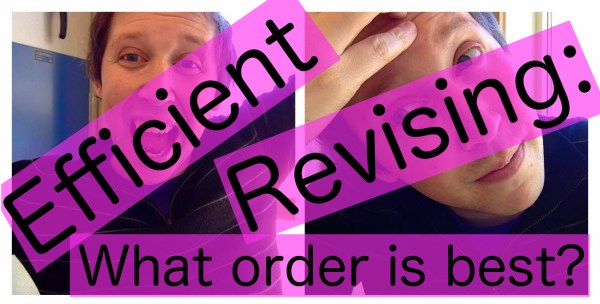
Efficient revising: what order is best?
The four faces of revising. Yesterday, I completed a first draft of rewrites to my novel manuscript. It's been three months since I began, thirteen chapters of new material, and copious reworking of the existing. It's a celebration, to be sure, and I'm content to bask in the glory of a milestone passed for a... Continue Reading →
Active verbs, their use, and their limits
When I taught creative writing to high school students in Minnesota, one of my favorite lessons involved a semi-choral reading of Annie Dillard's "The Death of a Moth." I gave students an excerpt from the essay (you can find the excerpt at the bottom of this post and the full essay at the link above)... Continue Reading →
The Slump: how to start writing again
Today is, I think, the sixth or seventh day I haven't done significant writing work. As in, I have pulled up the Word tab languishing at the bottom of my taskbar, stared at the winding sea of paragraphs, contemplated the next, set my fingers on the keys--and then it was too much. Something I didn't... Continue Reading →