This week's post is part of the monthly Author Toolbox Blog Hop, in which some thoughtful, engaged writers post ideas relevant to the writing community. Check out other great posts here! The snow came to Norway indecisive. It came in the morning and turned rain by afternoon. It snowed all night then melted into slush.... Continue Reading →
Simile, Metaphor, and Symbol: Figurative Language Bootcamp 1โ#AuthorToolboxBlogHop
This post was part of the #AuthorToolboxBlogHop event. Every month, save November and December, we posted tips for writers on our respective blogs. Although the hop is no longer running, check out these other great writing blogs here! Other posts on figurative language: Personification and Zoomorphism Synecdoche and Metonymy Figurative language: all those saying-something-we-don't-means, the... Continue Reading →
Dialogue #3: Dialect
This post comes third in our series on dialogue. To read the first post about the dialogue's three basic forms or last week's discussion of realistic dialogue, click these links. This week, we'll look at how characters' spoken dialects might be rendered in fiction, the effects these different portrayals might have on readers, and the... Continue Reading →
Myths of the 3rd Person Narrator
Several weeks ago here on Words like Trees, we surveyed a range of common narrative points of view, from character-turned-narrator first person to free indirect style, omniscient, and close third person. In the weeks since, and in particular as I have been making my way slowly (very slowly) through the first volume and a half... Continue Reading →
Choose the Right Point of View for Your Story: Beyond the Basics
First, third, omniscient, limitedโpoint of view (POV) is a global decision we make in every writing project. Like our choice of present or past tense, selecting the right point of view for a story has a powerful impact on the final effect, and itโs worth considering different options before jumping to one choice. Many of... Continue Reading →
Worldbuilding #2: into the story we go
This post is part two of two in a series on worldbuilding. To read part one, click here. Last week, we explored how to plan and develop a speculative world, how we must situate ourselves along a continuum between the real and the absurd, how we can tie into existing cultural concepts while still making... Continue Reading →
Efficient revising: what order is best?
The four faces of revising. Yesterday, I completed a first draft of rewrites to my novel manuscript. It's been three months since I began, thirteen chapters of new material, and copious reworking of the existing. It's a celebration, to be sure, and I'm content to bask in the glory of a milestone passed for a... Continue Reading →
Writing around the world: expanding the toolbox
There are a lot of rules we set ourselves as writers. We try to show-not-tell, to make our characters round, to begin our stories with a conflict. We teach them to our students, preach them like the gospel, cite them in critiques, and write them core in every novel. And for (mostly) good reason. People... Continue Reading →
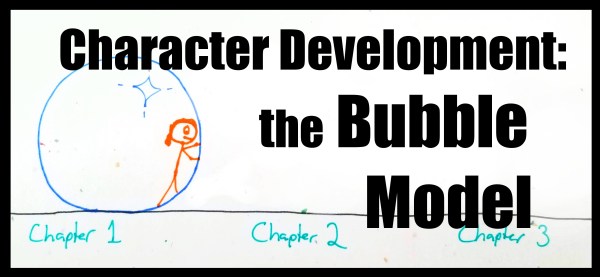
Character development: the bubble model
The lifeblood of so many stories is in their characters. An unsympathetic, unrelatable protagonist can easily drive readers away, and writing believable, sympathetic characters can pose real challenges. Not least among these is the question of how our characters change from beginning to end. How do we write believable, authentic change in our characters? How,... Continue Reading →
Revising for consistency: the case of the mysteriously changing hair color
I think both look pretty nice. Why must I choose? A novel is big, literally as well as temporally. At the point I finished a complete first draft of my novel, I had an embarrassing splat of 160 thousand words and a nearly three-year distance from my first paragraphs. Revision beckoned; then it loomed. Although... Continue Reading →