The other night, I finished reading Ariel Dorfman's play Death and the Maiden, a haunting examination of Chile's reckoning with the aftermath of dictatorship. The play itself was emotionally powerful, concentrated in its characters and ideas (somewhat in the way poetry has a density of meaning, like the brief but all-consuming burst from a candy... Continue Reading →
Foraging for stories
I spent a bit of time researching MFA programs yesterday. Just a bit. It's still a ways in the future for me, but I began with a survey of the pros and cons of formally studying creative writing at all. Jennifer Ellis has assembled a helpful list of cons, and the first item she included... Continue Reading →
Anatomy of a cliffhanger
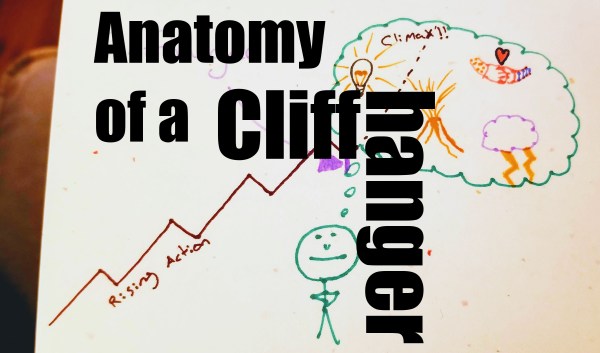
They're page-turning. They're nail-biting. They're infuriating. They're everywhere. Cliffhangers, those endings to scenes, chapters, or whole works that create anticipation in the audience, sometimes feel like the bread and butter of modern storytelling televised and written, and as a literary tool they have a long history. Today, let's step back and take their measure. What... Continue Reading →
Active verbs, their use, and their limits
When I taught creative writing to high school students in Minnesota, one of my favorite lessons involved a semi-choral reading of Annie Dillard's "The Death of a Moth." I gave students an excerpt from the essay (you can find the excerpt at the bottom of this post and the full essay at the link above)... Continue Reading →
The Slump: how to start writing again
Today is, I think, the sixth or seventh day I haven't done significant writing work. As in, I have pulled up the Word tab languishing at the bottom of my taskbar, stared at the winding sea of paragraphs, contemplated the next, set my fingers on the keys--and then it was too much. Something I didn't... Continue Reading →
Past or Present: why tense matters in our writing, and how to use it well
Nine months ago, I began translating my novel from past to present tense. At the time, before a bunch of ruthless cuts, it was about 160,000 words long, and changing the tense of every verb--it took a while. It was grueling. It set my brain reeling into the depths of grammatical subtlety. It also taught... Continue Reading →
Put your descriptive writing to work!
A few years ago I found myself in a one-day writing workshop, examining all fiction in terms of three elements: character, conflict, and description. The idea that every sentence we write is primarily serving one of these functions is perhaps reductive, but it can also help us tease out why a passage is not working,... Continue Reading →
Spoons and stories: rethinking the ordinary in our writing
It's been a quiet week along the fjords. Students have been busy with a first-aid course and an immersive Model United Nations simulation. That left us teachers with a little time on our hands, and my husband and I took the opportunity for a few days' sojourn south to Bergen. We found ourselves in the... Continue Reading →
Writing around the world: expanding the toolbox
There are a lot of rules we set ourselves as writers. We try to show-not-tell, to make our characters round, to begin our stories with a conflict. We teach them to our students, preach them like the gospel, cite them in critiques, and write them core in every novel. And for (mostly) good reason. People... Continue Reading →
Why speculative fiction compels us: place, time, and the imagination
Near the end of my journey north, the bus drove onto a ferry crossing the Sogn Fjord. I disembarked and went to the boat's edge. Beneath me, the motor sounded deep and long, like a brilliant foghorn sweeping out over the water. Mountains jutted up on either side of the fjord, and swirls of gray... Continue Reading →