This week’s post is part of the monthly Author Toolbox Blog Hop. Check out others’ great posts about the craft and business of writing!
I first encountered Haruki Murakami through his short story collection The Elephant Vanishes. These stories of middle-class life in Japan were bizarre, esoteric, often difficult to get my mind around. The characters were bold and dark. Murakami played with genres of psychological thriller, horror, fantasy, and then straight realism. They use structures and techniques I had not seen before. Experimental, surprising, sometimes alienating, although not my favorite literature I have ever read, these stories are undoubtedly memorable.
So when I subsequently read Murakami’s best-known novel Norwegian Wood, I was shocked by how… normal it was. The writing is mostly linear, a measured blend of scene and summary. Deep emotional engagement grows from its sustained attention to characters, who develop slowly and organically. The story follows a recognizable structure of rising action, climax, denouement. It is a sad and beautiful story, but I would not call it avant-garde.
Of course writers frequently change their styles from text to text, but the extreme contrast I found between these two works by Murakami drew me to a question about form: how might the dictates of these two forms, short story and novel, have contributed to these so different styles?
Two weeks ago, we discussed the roles of mode, genre, and form in writing, and today we’ll return to this question of form, expanding on its role in fiction. We will reflect on the key differences between two of fiction’s most established forms: the novel and the short story.
For context, my background is primarily in literary fiction. After finishing a first novel, the last eighteen months of my writing journey have been devoted to short stories and a bit of flash fiction. These experiences are what I draw on in this post.
Basic form divisions: Length
Form refers to a text’s structure. In fiction, the initial knife that divides recognized forms is always the text’s length. Have I written a novel or a short story? The answer is in the word count.
Novel
A text is called a novel once it reaches somewhere around 50,000 words, although most contemporary novels are closer to 80,000, and the norm is longer in speculative genres. Nathan Bransford has this helpful list of word counts by genre, as well as word counts for many well-known novels, some of which surprised me.
Short story & flash fiction
If the text is between 1000 and 7000 words, we would likely call it a short story. Shorter than that, it’s the form of flash fiction. These shorter forms are often described as “to be read in a single sitting”–we’ll come back to this idea later.
Novella
The gulf between the short story and the novel is usually called “novella” or “novelette,” and although these last two are not often published in the current literary world, that doesn’t mean they don’t exist. Novellas were historically quite commonly published and read; I imagine they may come back into style at some point.
Length begets more differences
I’ve sometimes lamented that the idea of form in fiction seems quite spare. If you ask a poet what makes a sonnet, a limerick, a ghazal, they can pull lists of rules for syllable count and rhyme scheme, repetition, stress patterns, et cetera. But length is a more impactful measure of form than one might originally think. Let’s examine length’s impact on writer and reader:
Economy
A novel’s length allows writers to develop a story broadly. The writer can excavate nuances, flesh out a significant array of characters, weave through subplots and motifs in a great maze of implication. The extended length of the novel allows for foreshadowing to work effectively, whereas in a short story this device has more limited function.
Sheer barriers of word count require short story writers to work more economically. Short stories tend to have fewer characters–more than two developed characters can be a stretch in a short story. Short stories compact their plots and employ a single primary conflict. The cost of “wasted words” is steeper in a short story than a novel, and so they are cut more ruthlessly. The short story by its brevity must eschew tangents, subplots, and supporting characters to distill a story to its core.
The reader’s experience
The length of a piece of fiction impacts the amount of time a reader spends with the text, which in turn affects emotional engagement. It’s very common for a reader to say that they “got lost” in a novel. When we sit with characters for days, weeks, or longer, it is easier for their worlds to feel real to us. We might ponder their perils while we wash the dishes, speculate about their futures in an idle moment–the sustained, ongoing nature of novels lends itself to this kind of immersion.
A short story, by contrast, is typically read in a single sitting, rarely longer than an hour. Readers know the story will end rapidly, and this affects their level of emotional investment. The short story compresses experience into a burst that the reader can examine in its entirety at once, and it is easier to leave a short story behind at its end. This effect is even more pronounced in flash fiction, where characters can sometimes feel more like tools pulled into place by the writer than human beings.
Experimental writing
A few weeks ago, I was speaking to a non-writer friend who had read one of my short stories. The story leaves a lot unanswered, not only at the end but in terms of backstory and setting–my friend felt frustrated, wanting to know some of those answers, and when I told him that I had conceived of the story really as a short story only, he said something that made me re-think some of these core distinctions between the short story and the novel:
“I guess you have to leave it more open-ended,” he said, “because in twelve pages there isn’t enough space to put the whole story.”
Oh. Oh! Okay. Yes, actually, I had never thought of it in such a clear way, but I think this is exactly what it is. In a short story, we face the challenge of creating as engaging a world as possible in a very limited space. I liken it to a house of mirrors: we use tools to perhaps make the story on the page seem larger than it really is. Techniques like the telling detail, suggestive world-building, beginning the story in medias res–such tools work to engage the reader’s imagination or sense of excitement while expending few of our precious words.
A short story can’t rely on sustained attention by a reader over the course of multiple days or weeks; it must thus stimulate that engagement by other means. When I think back now to Murakami’s short stories in The Elephant Vanishes, this is part of what I’m seeing: Murakami’s experimental writing has the effect of engaging the reader through surprise, through imaginative implication, and this makes the stories stand out in ways that a classic rising-action structure might not.
Resolution and the open ending
What follows from the above ideas are different expectations about resolution. With a novel’s extensive scope comes the expectation that readers are getting the whole story. A novel whose final chapter is a cliffhanger, unless it is part of a series, can be anathema.
Short stories and flash fiction, by contrast, more commonly end the story just before a climactic moment or a key decision. By leaving the moment hanging, the short story achieves two goals: to use fewer words, and to send the reader out on something rich to think about. Whereas a novel might include such tense moments earlier in its structure, knowing that readers are likely to pause, set the book down for a time, digest, but then return, the short story writer is more likely to launch the reader forward with an open-ended ending. The reader knows that they are on their own; there is no expectation that the writer will later catch them and tell the answer. I have had students get very frustrated with such endings in short stories; others love the freedom that they give the reader to explore, a freedom often less available in a novel.
Practical considerations
Writing occurs not in a philosophical artistic space but in the real world. Considerations of time and marketability can have a big impact on the kinds of short stories and novels we commit to writing.
I think most writers are more willing to take a risk in a short story because it is short. There is a smaller time investment, and short stories are less marketable than novels anyway, so if the experiment doesn’t work out, less has been lost. I think these considerations contribute as much as a desire to engage readers to short fiction’s greater penchant for the experimental. Like an artist’s sketch, short fiction can be a kind of study that later grows into a novel, and this makes it a lower commitment, a greater freedom.
Break these rules
But now that we can see these trends in form, rules if you will, as always, let’s consider them before we follow. Some incredible experimental novels exist, as do three-act-structure short stories that sing. Art advances when people try new things. Some reader out there will be moved by a story in a way we won’t expect until it happens. So as with every rule, know it, and follow it sometimes, and sometimes break it.
Novelists can learn a lot from the short story: how to condense, how to imply, how to experiment and upend. The short story writer can learn much from the novel too: its dependable, unrelenting, sustained gaze at something, never getting bored, and its reassurance that a well-known structure does not mean a story is not fresh or worth our time.
What have your experiences been writing different forms of fiction? Do you notice differences in your own style? What about in reading short stories and novels? What do you prefer, and why?
Don’t forget to check out the other #AuthorToolboxBlogHop posts. Thanks for stopping by, and best wishes for the week ahead,
Jimmy


Great break down. I write romance and that’s a genre where novellas do well-ish. Sometimes people who read that genre want something short, light and steamy without all the angst. Each form has it’s place for sure. When I’ve written novellas I noticed I do have to keep the plot tighter and simpler. Can’t have any subplots going on because the length doesn’t allow for them. It makes my writing more focused which can be a good thing for me since I can get wordy at times.
LikeLiked by 1 person
Ah, that’s really interesting that within romance novellas have more of a market. It sounds like maybe your experience with novellas is closer to novel than to short story–like a novel but with fewer subplots and a more streamlined focus; am I interpreting that right? Do you think there are things a novella can do that other forms can’t? Thanks for your insights!
LikeLike
I’ve written plenty of short stories but a novel intimidates me, because I worry that I won’t be able to sustain the reader’s interest. I guess I just have to begin before I give up!
LikeLiked by 1 person
I was definitely feeling that way when I started a novel. I think though there’s really such a difference in mindset–after I had finished my novel and was trying to switch to short stories, I found it so difficult to think small; now, after a number of short stories, I’m finding it tricky to get back into the novel frame of mind. The best thing to do is to dive in–if you are interested, your reader likely will be too. Thanks for stopping by! : )
LikeLiked by 1 person
Writing a short story vs a novel to me is like traveling. A short story is a weekend trip and a novel is a month-long vacation. They both have beginnings, middles and ends, but with a novel, it can be a series of short stories linked together, where every chapter can stand alone as it’s own little story, just like how a long trip is full of little adventures. I suppose I might be thinking about traveling at the moment since I’m yearning for a trip at the moment lol Thank you for this!
LikeLiked by 1 person
Haha yes I think we are all getting stir-crazy right about now! I like the metaphor–thank you, Elliot!
LikeLike
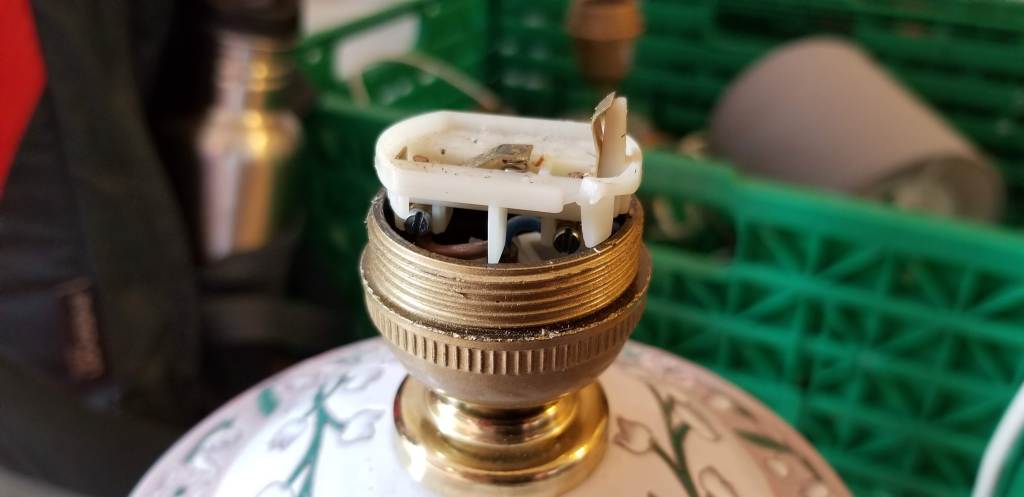
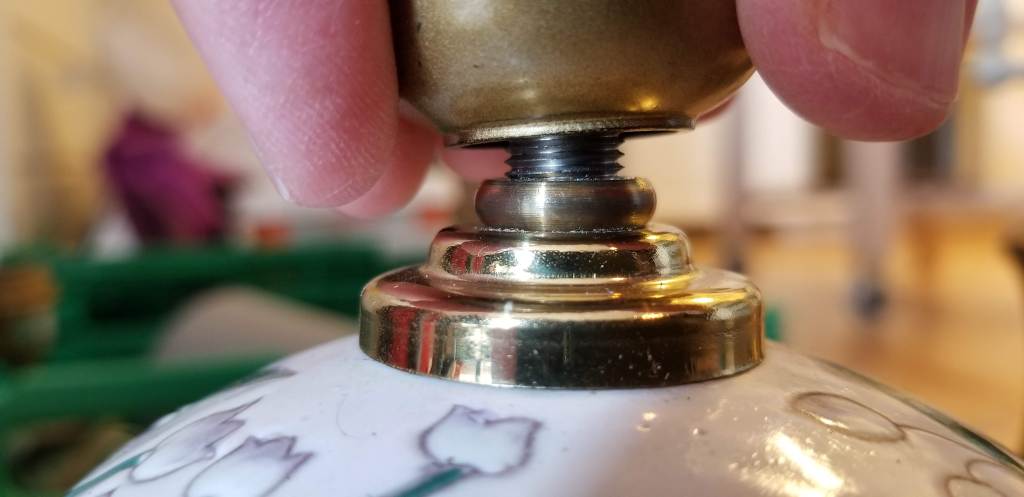
Yes, but what happened to the lamp??! Joking. How cool was that note in there, though? Really interesting discussion about form and reader expectations as it relates to the various forms. I’ve written short stories, and I like writing them, but I don’t think I’ve developed any expertise in being able to talk about the form based on my experience, whereas, I do think I understand the novel form enough to speak about it. Interesting that I’m more comfortable with the longer form. Thanks and good luck with the lamp.
LikeLiked by 1 person
Thanks, Raimey! The lamp is now comfortably disassembled and waiting for its new… body! I was really excited by that note, even if what it actually said was a bit more prosaic than I imagine it would have been in a story. : ) I’ve noticed my mindset really changing based on which form I’m working in. I’m contemplating heading back into a novel here soon, but my mind is so focused on short stories I think it will take some re-orienting.
LikeLike
I’ve definitely noticed some of these things naturally in my own writing since I skip around formats quite a bit, but I’m glad you put it into words!
LikeLiked by 1 person
Thanks, Leland.
I don’t find it easy to move between different forms–I really need to re-orient my mind. Is there anything you do to make that skipping around easier?
LikeLiked by 1 person
I’m a pretty heavy outliner, so I can usually tell from that if something is going to work as a short story rather than a novel. When it comes to longer works, I have a spreadsheet I found somewhere online that follows the Save the Cat Writes a Novel plot progression, so I know if my pacing matches up as I go!
LikeLike
Interesting post! I’ve found that my current series I’m working on “The Faery Tales series” is a combination of flash fiction, short stories, novellas and it will include a novel or two as it all builds to an end. It’s definitely experimental — and loads of fun to write! I’ll be doing a couple of posts about this experience at a later date (most probably when the series is complete) on the writing, publishing and reader response on the series as a whole.
Ronel catching up for July Author Toolbox day Three Roles to Avoid When Creating Characters
LikeLike
So many differences between short stories, novellas & novels. And yet some of the same principles apply. I think everyone should write at least two of those to understand the differences.
LikeLike