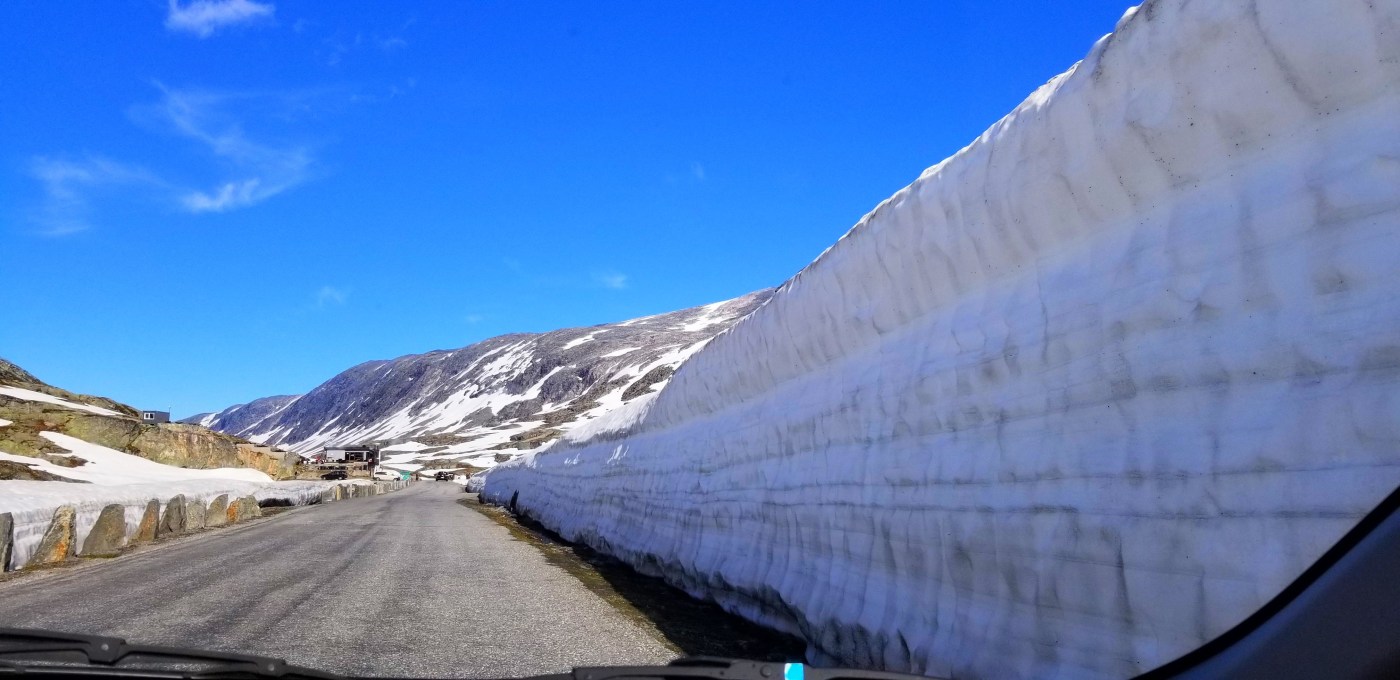
In the rush through of this so different summer, at last the rain has broken. Three days of sun erupted miraculously into the forecast, and in a fevered burst we made our travel plans.
Covid-19 seems to be controlled in Norway. The country mostly reopened in mid-May, and new case numbers have held low at a trickle. In early summer I heard bizarre reports from colleagues who had visited the larger Norwegian cities, of open restaurants and busy shopping centers. So inundated by daily news of the hodgepodge response and anti-maskers in the US, my response to these tales of normal life was incredulous. I have seen precisely zero people in Norway wearing masks. I have read social media posts from a couple other Americans who wore masks in Oslo or Bergen and were summarily coughed on and heckled.
It’s an interesting point of reflection for me on who I am here in this country. The longer we live here, the more it feels like home of course, and how could it not, yet I feel an enduring gulf too between me and the Norwegians around. For a long time, I’ve called myself an “expat,” a term whose certain luxury recalls James Joyce or Gertrude Stein. This summer, I have stayed in Norway not by choice but by necessity. The appellation “immigrant” feels more appropriate.
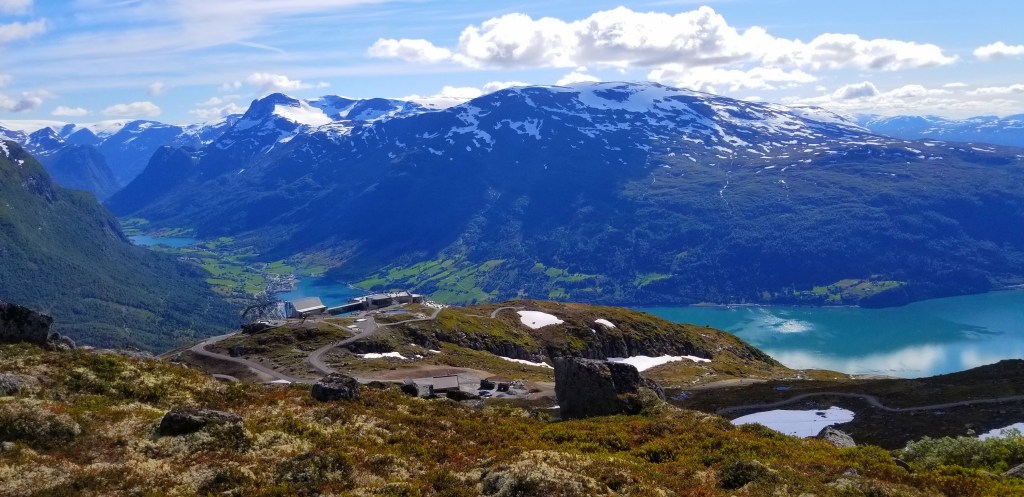
On Thursday, we swept off down the single-tracks, fjordside overlooks, mountain-bound. Our plan was to circle the Jostedalsbreen National Park, home to continental Europe’s largest glacier, north along the Gamle Strynefjellsvegen mountain pass tourist road to Lom, where we had heard there was a good food scene (and good food in Norway is no small dangling carrot!), south as far as Bergen for a day, then return home. It’s the first time in six months we’ve slept somewhere other than at home or eaten at a restaurant.
There’s something about traveling that modifies the mind. One looks with the eye of one who is forever departing and so must catalogue and relish in extremes. I think it is a bit like a recall to childhood, where every stone is worth investigation. It’s a mindset I try to cultivate at home too—how sad it was after the first few months in Norway to find that a waterfall or fjord no longer arrested me with beauty—and perhaps this is one of the great goals in life, to see in such ordinary things around the aura of surprise. Good writing can do this.
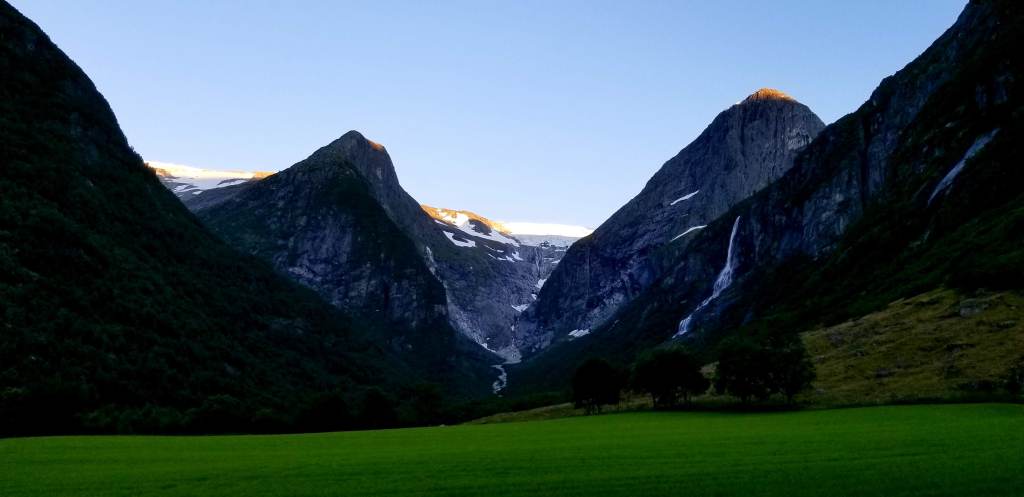
On Friday morning, we woke in the Olden Valley, surrounded on three sides by the Jostedalsbreen Glacier on its stone divan. The meltwater was roaring in great torrents into every valley from a frozen tongue, into which the ice is pushed by the mass behind to spill out over the slopes. The water gushing forth is melt from underneath, water that fell as snow on these mountaintops thousands of years ago. When it fell, the world was so different. It emerges now out of the tongue. Hello world! What a sight.
To ride the Loen Skylift up the mountains, we stood tight-packed in an hour’s line. It is the last weekend of the Norwegian national holiday period, when every business and office not associated with tourism shuts down for two weeks. These few long-awaited halcyon days have driven everyone (like us) out into the wilds, and even a few European tourists have now filtered their way up. Attendants at the cable car wiped down with conspicuous aplomb all the handrails before we entered. On our ascent, as he pointed out mountains and the Nordfjord underneath, the operator advised us of their anti-infection precautions. “In the US,” my husband said, “this would be the most irresponsible thing you could do.”
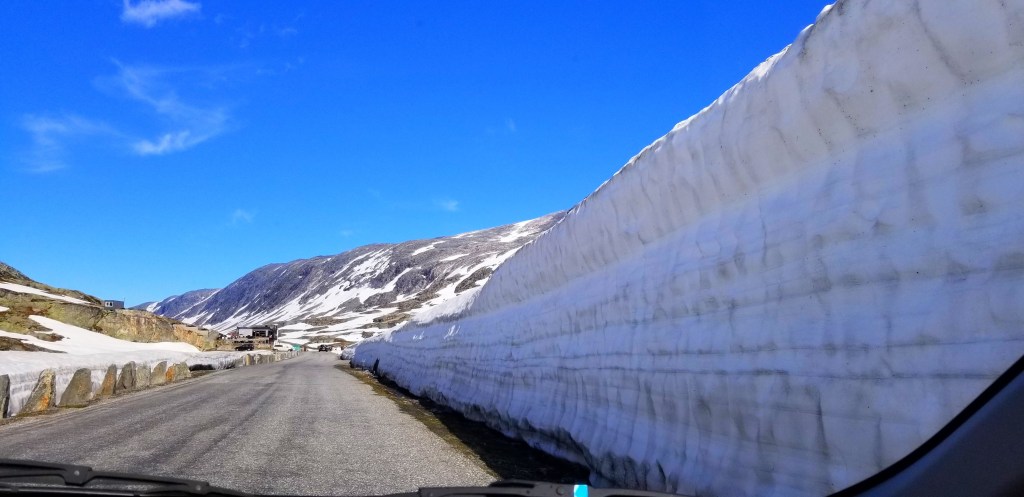
School is coming again fast, and the Norwegian government has agreed to grant visas for international students, including those on Europe’s travel ban. Quarantine restrictions keep shortening as well, from fourteen days to ten to five now with testing on each end, so that it seems finding flights will be the last major obstacle to gathering our student body. Most European students won’t have to quarantine at all, and either we will be very pleased, with a more-normal-than-anyone-expected start to the school year, or we will all catch Covid.
For now, I am trying to relish up these summer days, to soak in the blue sky and the mountain air. To write a little. To be well. To figure out just what this country is and what my place is here. That’s all for today. Thanks for stopping by.


