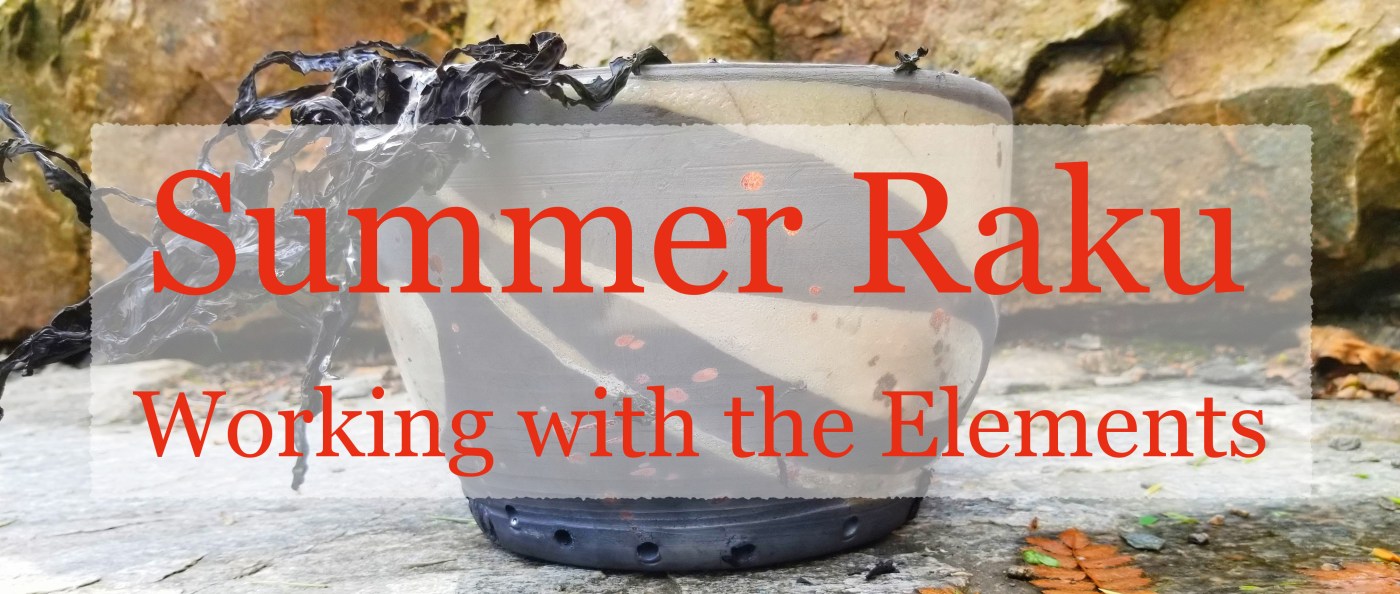
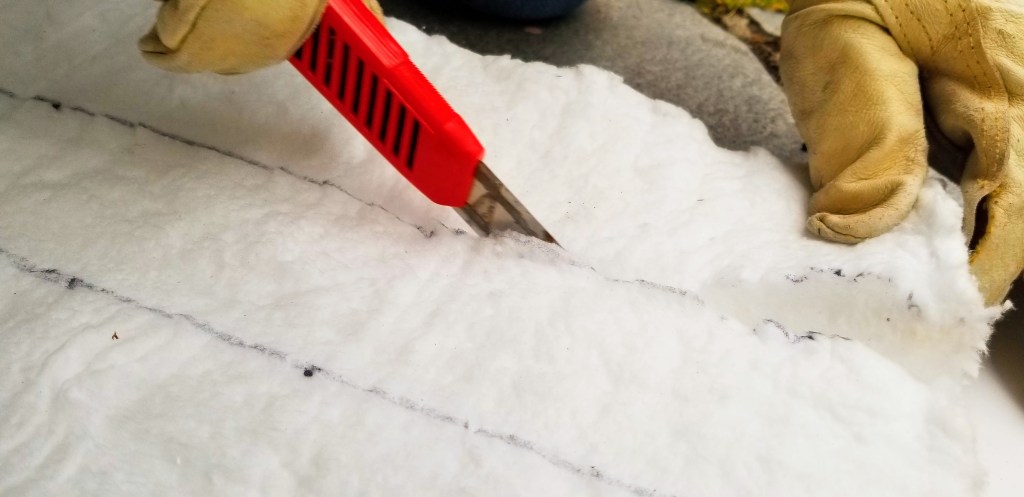
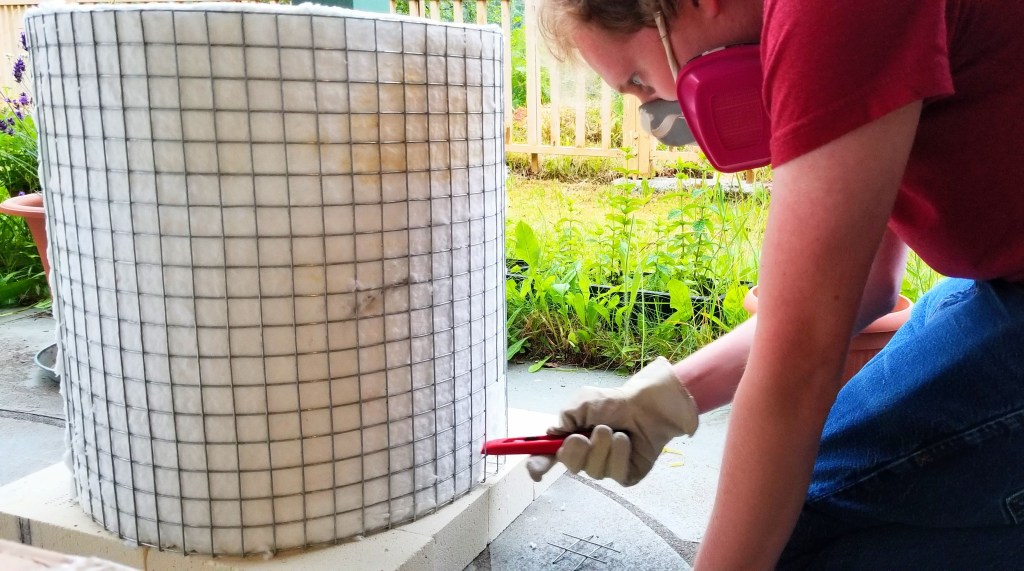
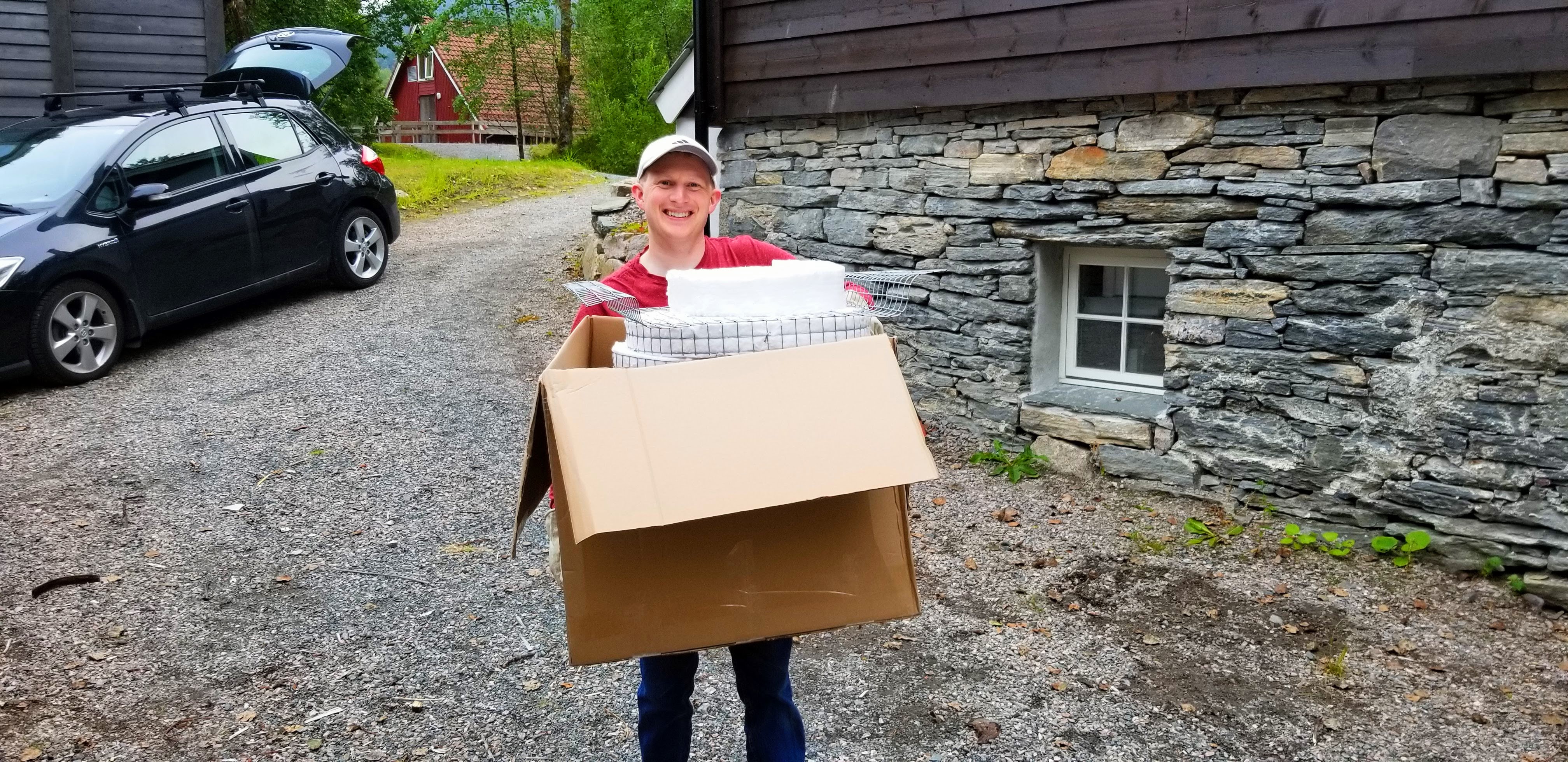
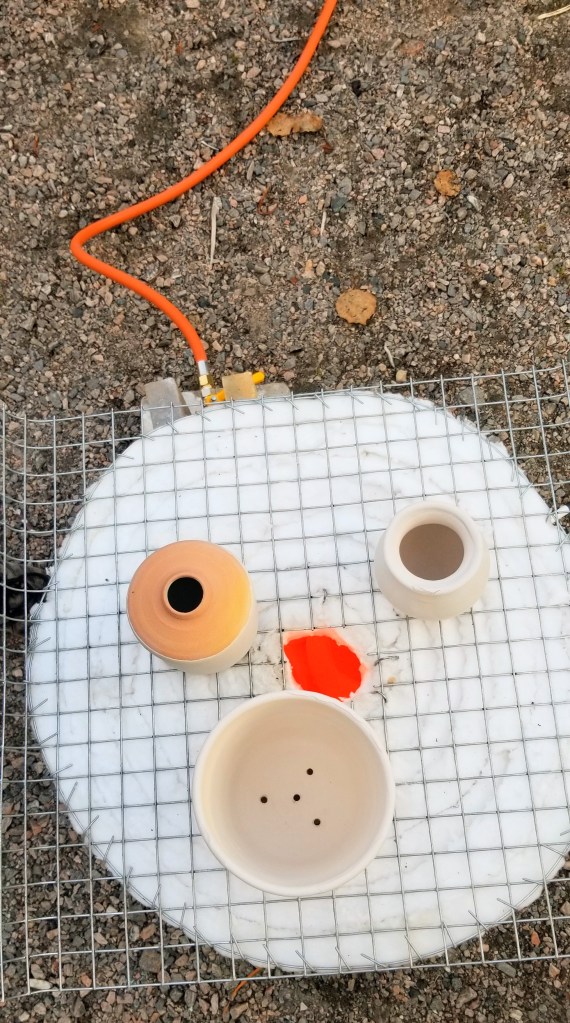
My husband and I took the money we would have spent on a trip back to the US this summer and bought a Raku kiln for our ongoing ceramics adventure. After more than a month’s wait, the kit arrived finally in late July, and my husband spent a whole day (until about 11:00pm) working through instructions in Norwegian to measure and cut a ceramic-fiber blanket, then wedge it into a form he’d made of wire mesh.
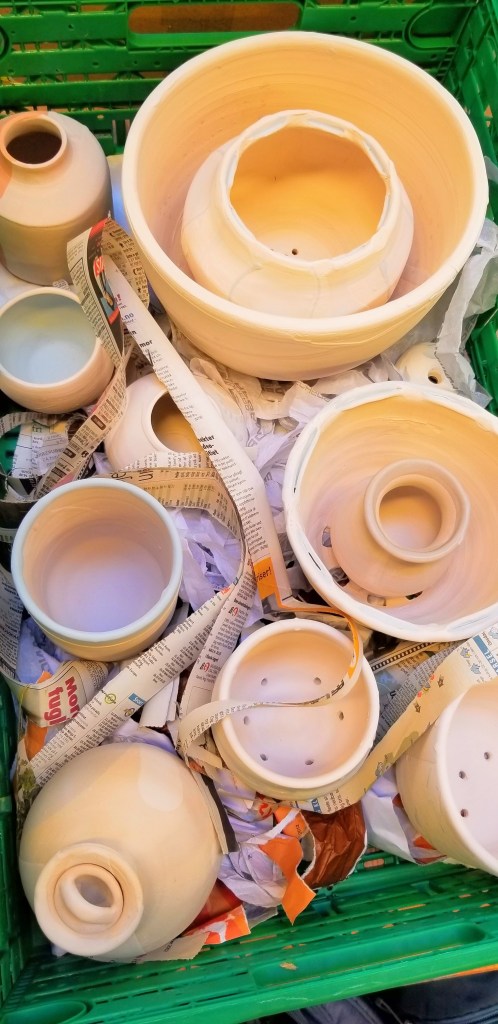
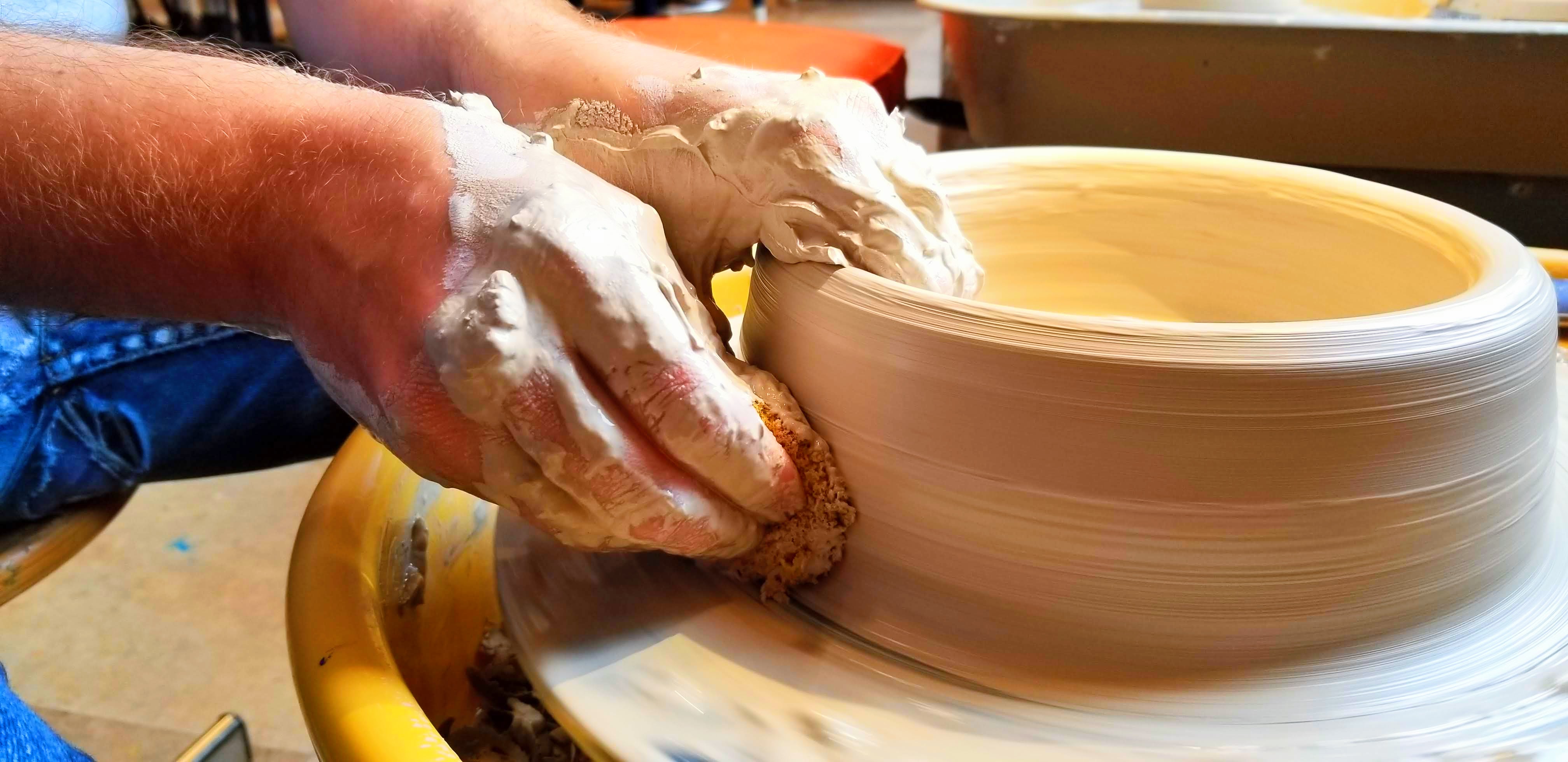
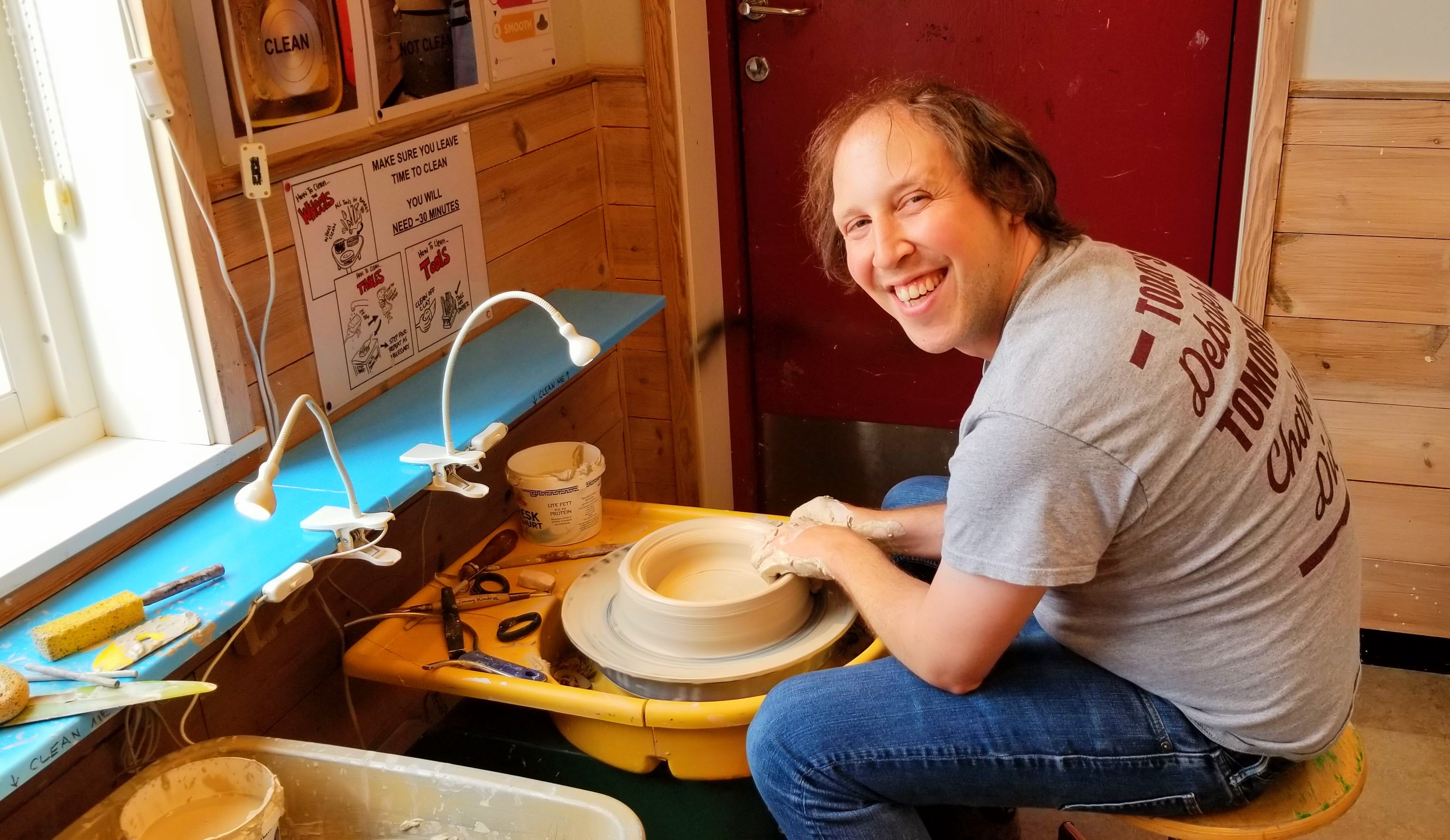
Down in the ceramics studio on campus, we bisque-fired at last the slow array of pieces we’d been throwing in June and July, wondering if the kiln would arrive in time for us to fire them, or if they would languish incomplete.
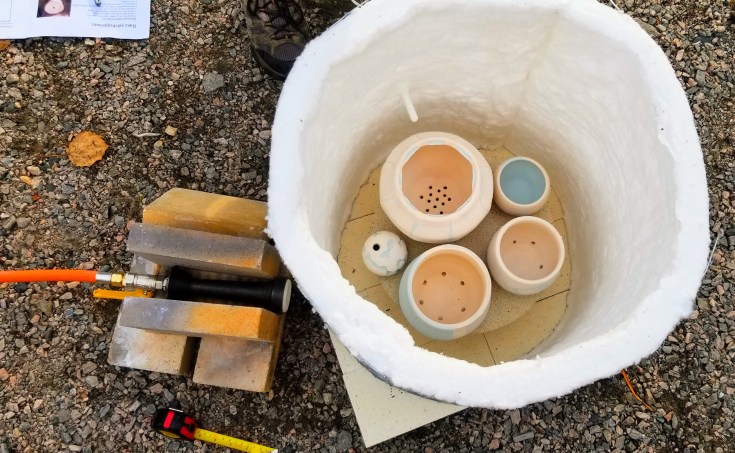
And so barely a week before we teachers had to return to school, bisque-firing complete and the kiln assembled, on a half-sunny but still hopeful afternoon, we headed down to glaze, then trundled our pieces over to a graveled area where we determined we would set the kiln.
What is Raku?
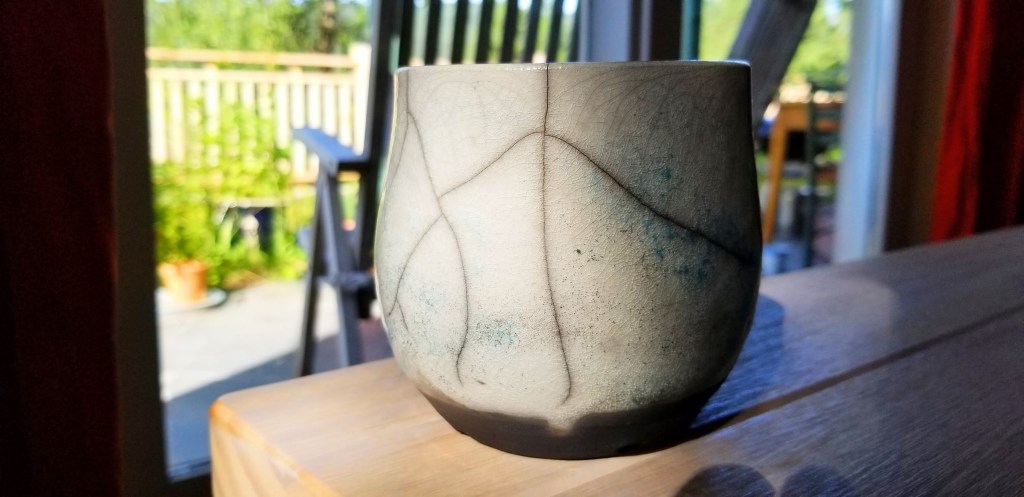
Raku is a technique for firing ceramics with origins in Japan. Growing out of a Zen Buddhist tradition that valued simplicity and quiet appreciation, handbuilt (as opposed to wheel-thrown) bowls were glazed simply, heated quickly in a kiln, and removed at their peak firing temperature, around 1100 degrees Celsius (just over 2000 degrees Fahrenheit).
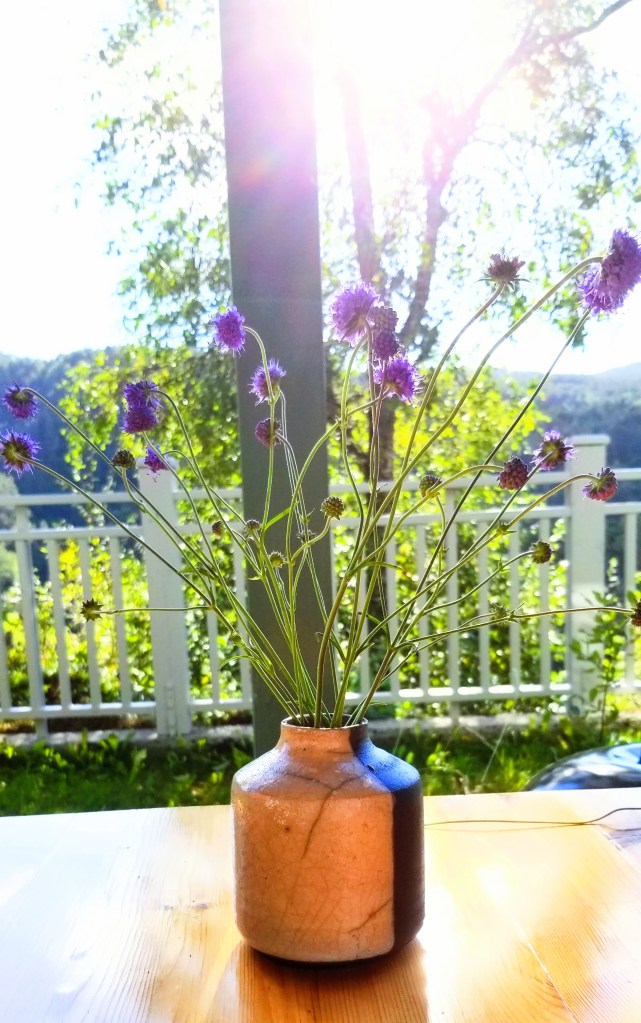
The pieces cool down quickly in the outside air, and it’s common for pots to crack or explode because of the thermal shock of the process. These traditional techniques are still practiced by the Raku family in Japan.
In the mid-twentieth century, studio potters in Europe and North America began emulating the Raku technique, and these potters added variations, such as plunging the hot pots into water, laying horsehair or feathers over the naked clay, or laying the burning pots into a chamber of combustible materials (often newspaper or sawdust) that burns any naked clay and cracks in the glaze a rich black.
Western Raku is often wheel-thrown instead of hand-built, and although it has lost perhaps some of its original simplicity in favor of dramatic color, contrast, and metallic glazes, it is for all of these things so much a record of the firing process, each pot becomes a story.
Working with the elements
Raku takes the mercurial wonder of ceramics to the extreme. So much is left to chance, to the way the fire burns, to the magic of the combustion chamber–the elements are at work, and the potter is only one participant in the dance of them, seeking to listen, understand, work with them, rather than control.
There is no other way, after all. We let the clay do what it needs. We try to accept the results. If we can’t, it is our own loss.
What do people do with Raku?
Raku pottery is porous (not water-tight), and the thermal shock of the firing makes the pieces fragile. They aren’t food-safe. For my husband and I, who love functional pottery, it was something of a conundrum: what to make?
This became another way for us to listen to what the pots were telling us. A mug or cereal bowl just wouldn’t work. We went for flower pots and vases. We haven’t fired them yet, but we’re now at work on candlesticks and lamps.
The firing
You need to see how this happens. It’s incredible. Below, you will find a series of images and videos. Come experience the magic of it with us.
Kiln building
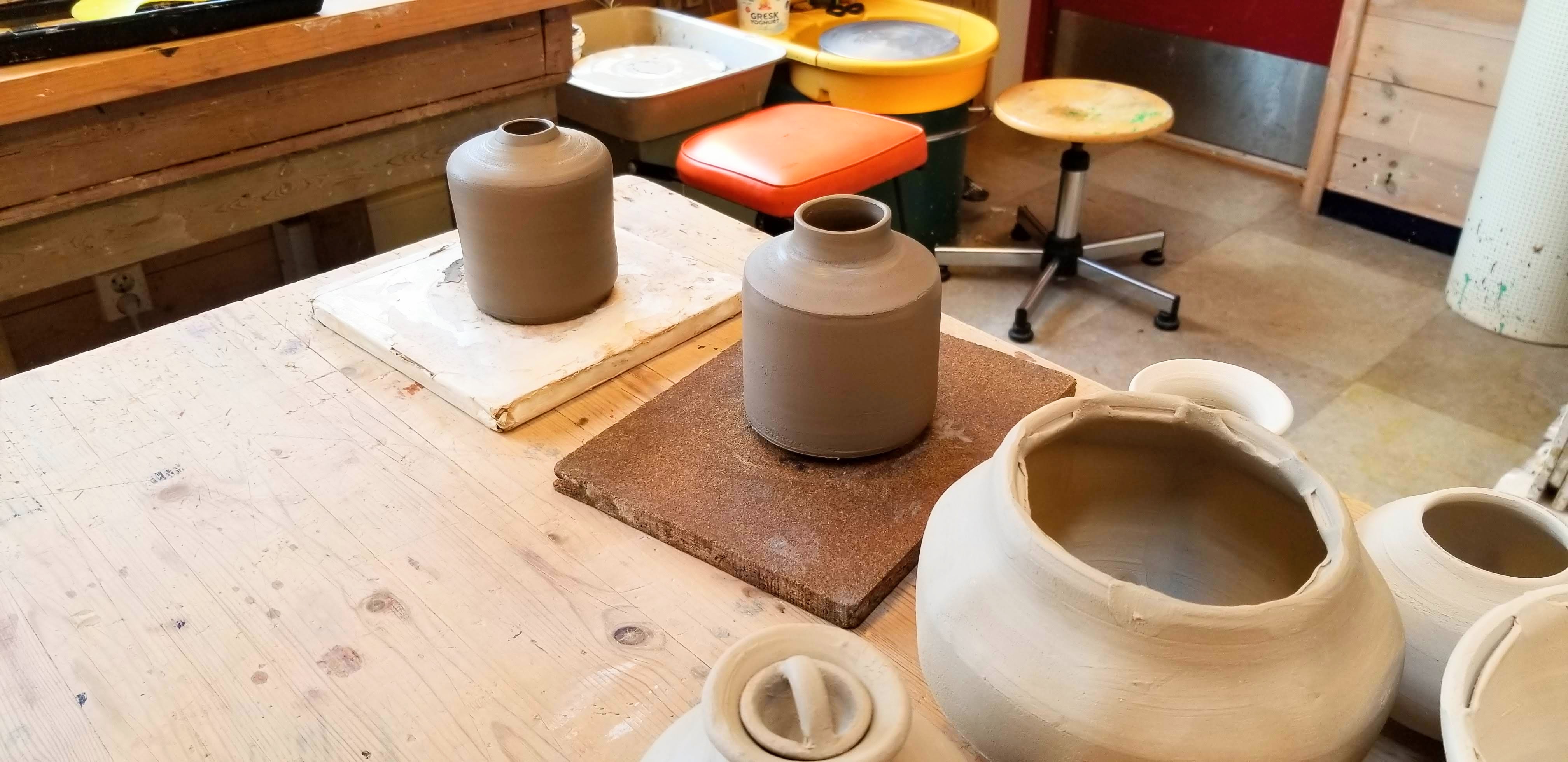
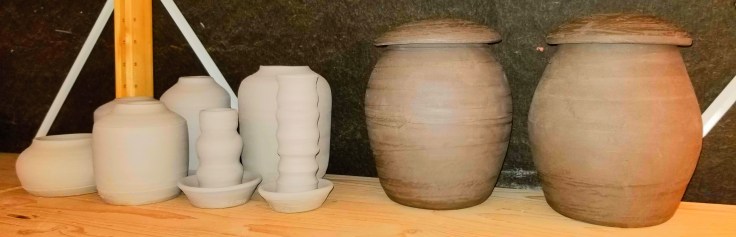
Making pots
Setting up for firing
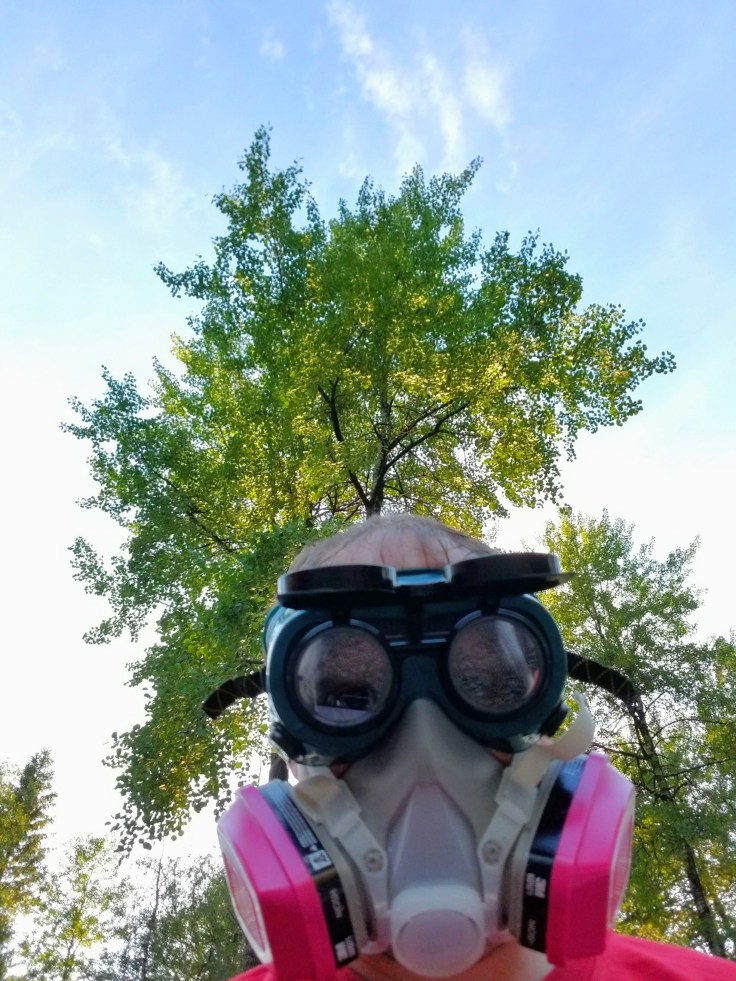
Into the fire
The heat rises quickly–200, 300, 500 degrees. When we hit 1000 Celsius, we know the time is close, but it’s really the appearance of the pots that tells us that they are ready.
With welding goggles, we look into the inferno for a little shine: the glazes have melted. They’re ready to go.
At that point, it’s like a dance. We choreograph who will remove the lid and where we’ll set it, who will take the tongs down to lift those precious pieces from the fire.
We transfer the pots into a trash can filled with torn paper and wood chips. It’s this final burning that creates the deep black of the naked clay.
The great reveal
These pots
These are pots to look at slowly, to appreciate, to remember where they’ve come from.
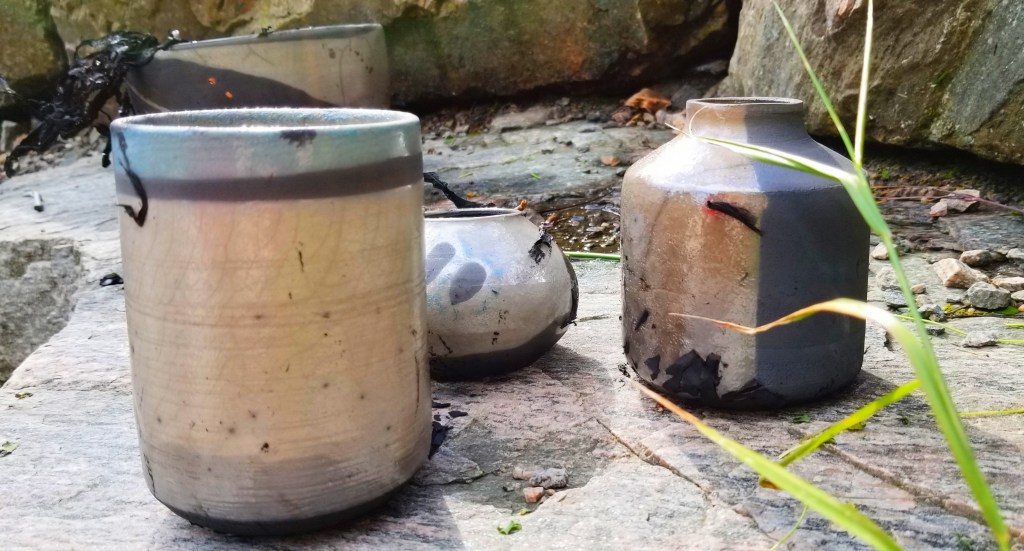
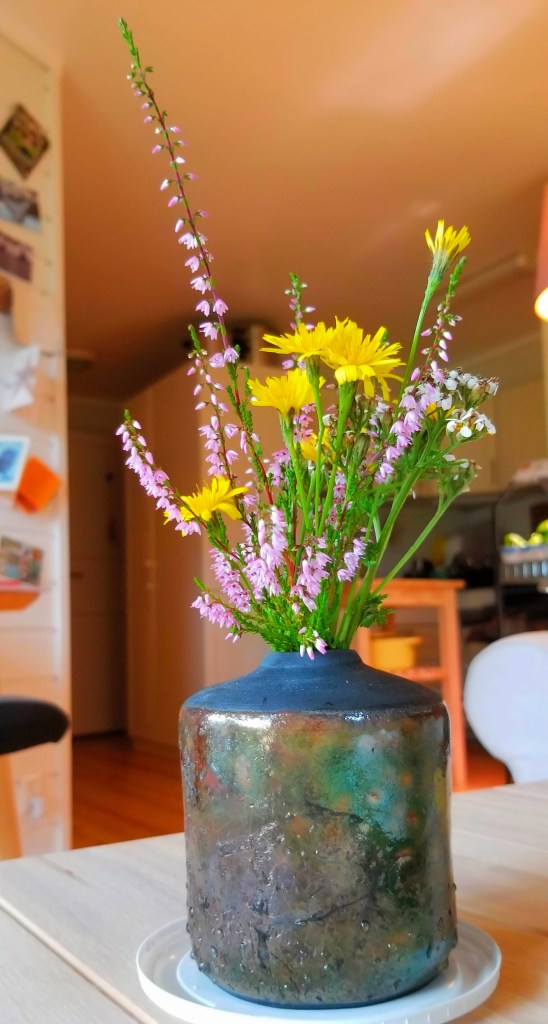
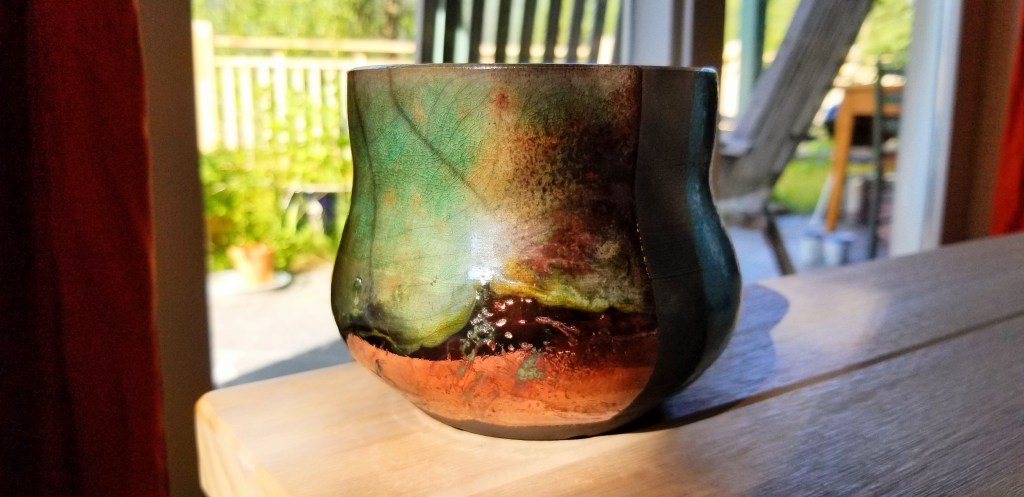
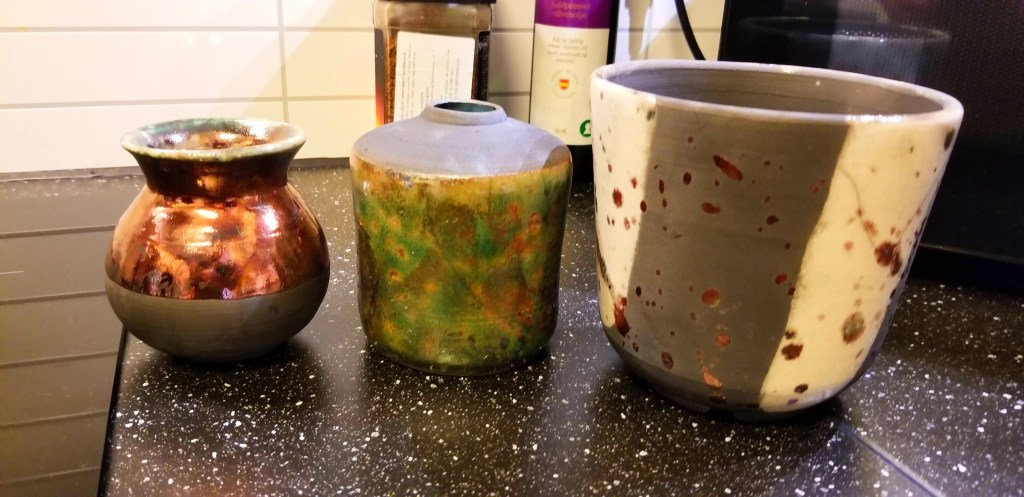

Records of a fire
It’s a good moment to reflect, to remember the many forces at play in our whole lives. Only some of them can we control. We have to find a way to peace with this. In writing too, we are crafting art out of the world, of which we are each small pieces.
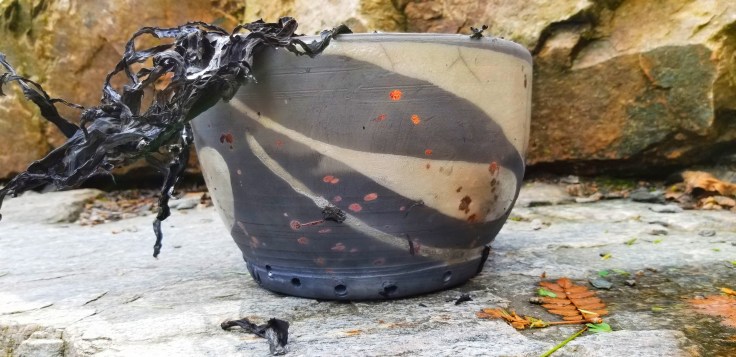
This last image I cannot stop looking at. The fresh pot, still too hot to touch, the wild hair of charred combustibles still pouring from its neck. A record of these human hands, and clay, and fire.


This is a beautiful way to spend time! I myself cannot pot, but I love the opportunity to spend an afternoon creating something that has meaning behind it.
LikeLike
Those pots are magnificent! I kind of hate the thought that a pot might explode or crack to pieces, and I kind of love it. It makes the ones that survive all the more precious. I’ve never done ceramics, except at Neighborhood House when I was quite young, but it fascinates me. Thank you for sharing the experience!
LikeLike