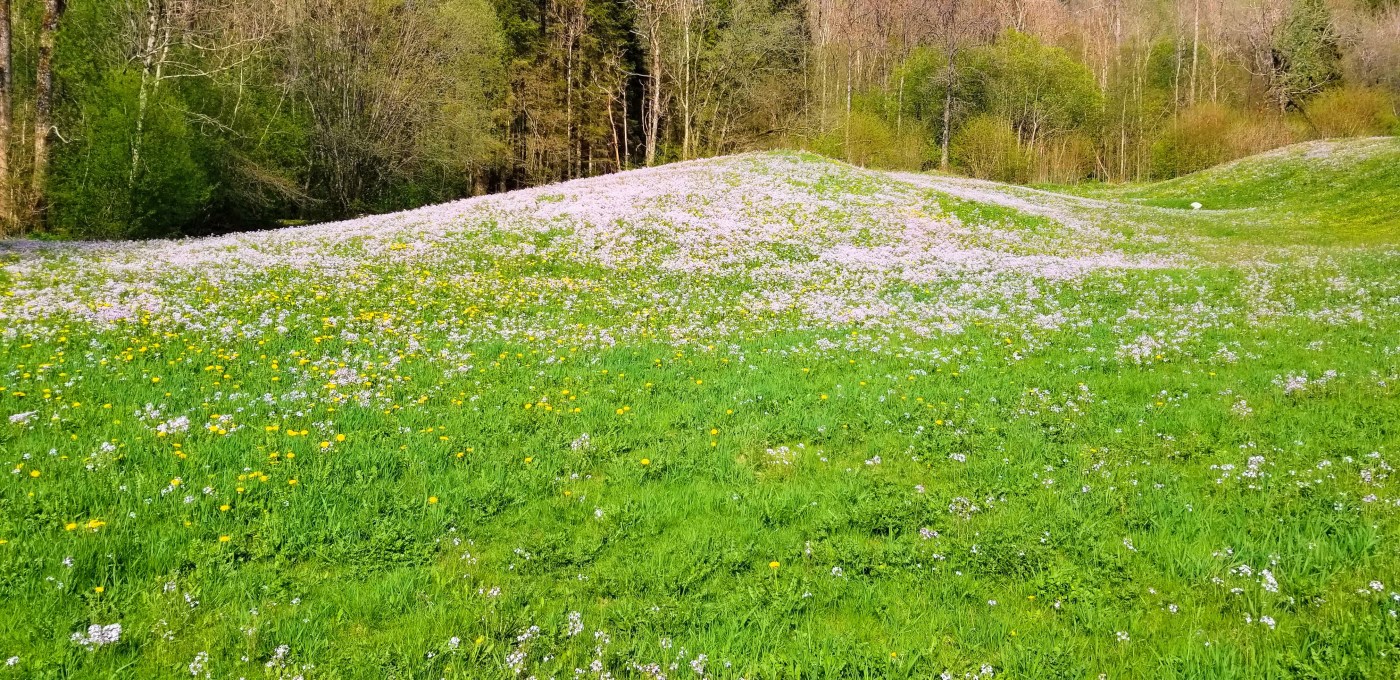
We have catapulted into spring this week, with warmth and sun bounding forth. The trees, which have been holding their thousand green fists tight for weeks against the cold, they now are opening their fingers. The waterfalls have been reduced to trickles. The students are abuzz with life (exams are nearly finished; last night was prom), and birds are singing without cease into the elongated evenings–we’ve reached that time of year when it no longer becomes fully dark.
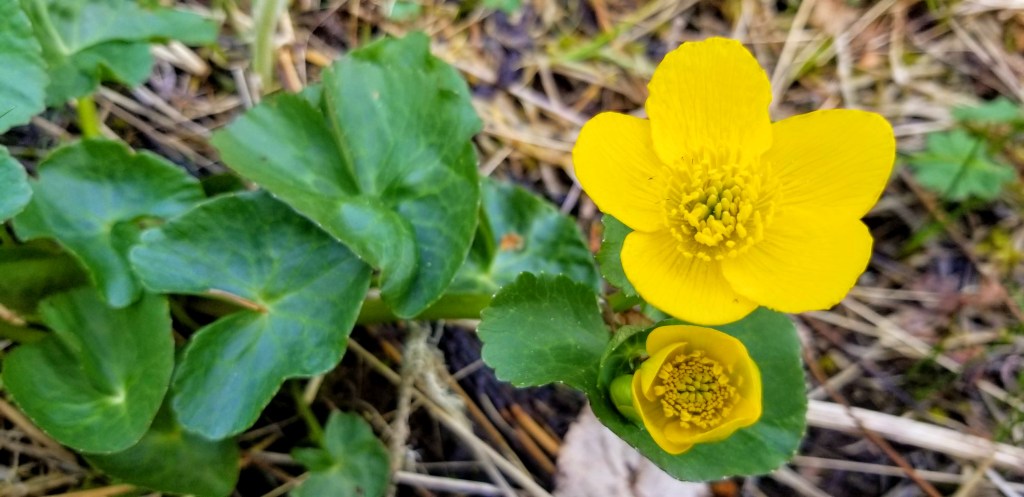
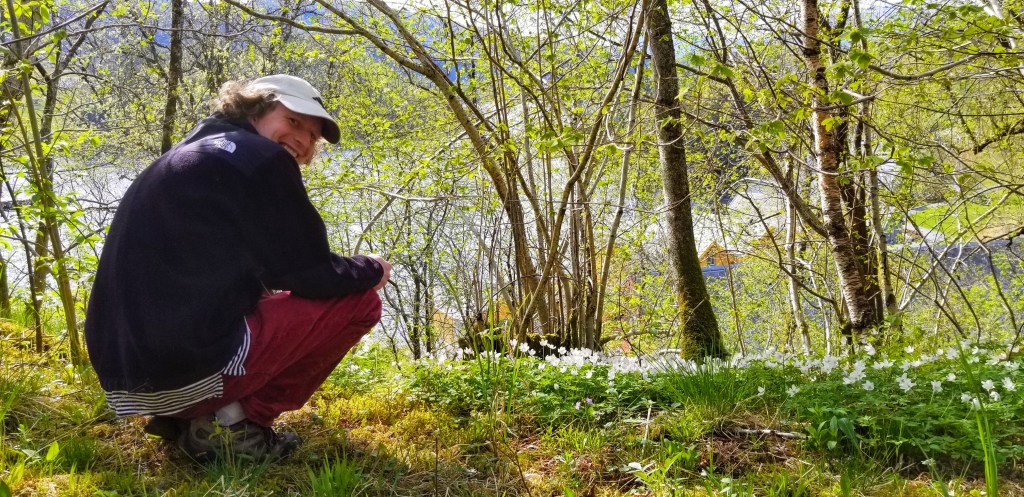
Yesterday in the wide fields, a sea of pale purple flowers greeted us. They have emerged so suddenly, and so ubiquitously, I am struck by the knowledge that their stems and leaves are there the whole year through, yet in all other seasons they are some unremarkable and scraggly plant. In these few days of the ascendant spring, they are the star.
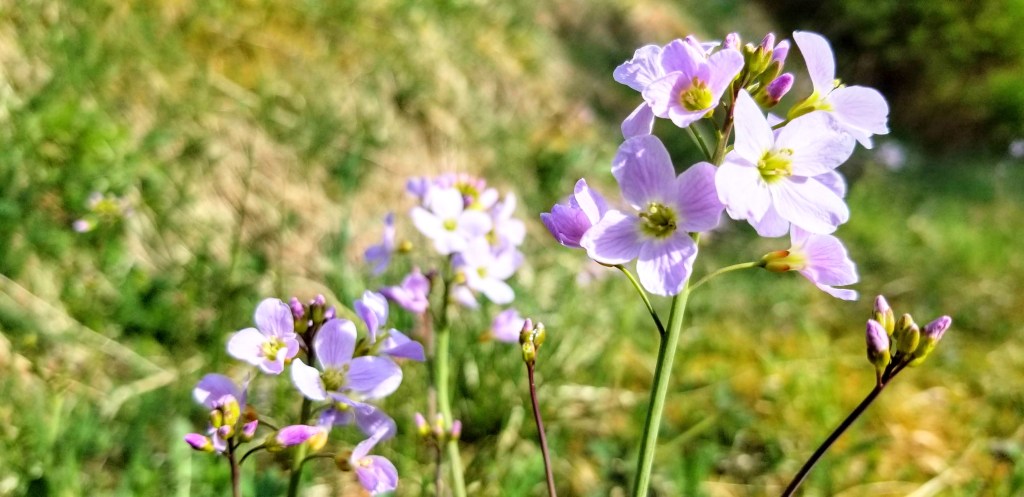
Last summer, the pandemic meant that we could not leave Norway. We had had important plans: my sister’s wedding, a canoe trip with our dads–the canoe trip we’ve postponed until this summer; the beautiful wedding we were able to join virtually. But the crushing reality that we would not be able to visit home, it left us here in Norway’s most beautiful season, watching the succession of summer flowers one and the next. I wished I knew their names. One after another they rose up from some unassuming weed and showered me in color and shape and movement in the wind. Nature was the silver lining of those canceled plans.
Now, I see that succession here beginning, and as we prepare to depart in the next month, I am thrilled but also vaguely mournful that we will miss the cartwheeling season, this place in its most vibrant clothes.
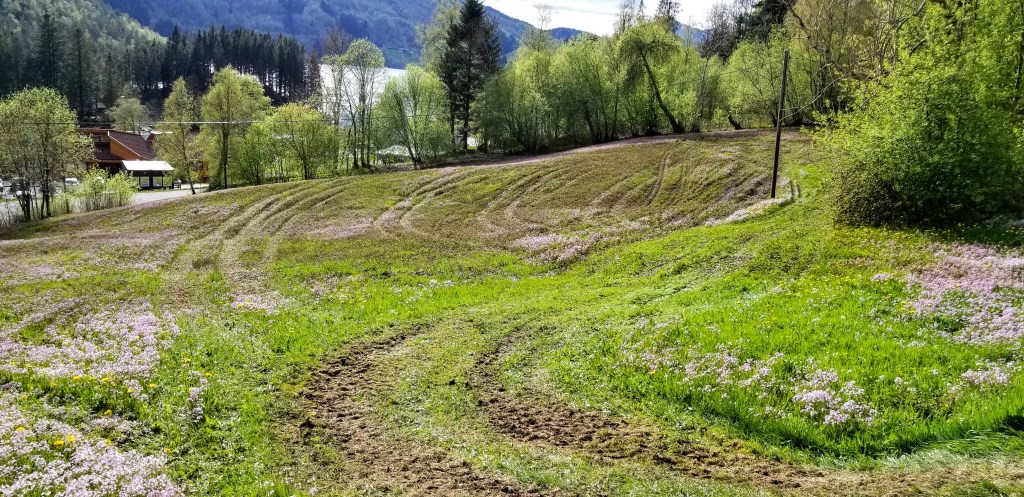
Yesterday on a short hike, the stench of raw manure bludgeoned us. It rose up on a sudden whiff of the air, but it did not abate. We hit the cloud full force, the acidic, earthy, acrid, animal smell. “Cows!” my husband cursed. To our left spilled one more resplendent field of the purple flowers, yet the green and lilac were now suffused in dark, in brown. The farmer had sprayed the field with manure, collected all winter in the barn, swilled up with water, and pumped out now through the nozzle of a great tank, projectile arch of fertilizer stink.
We crossed the miasma, groaning and laughing. “Thank you, cows,” I said.
My husband suggested, “You should write about this in your blog. What metaphor do you think you could make for writing.”
The answer was easy: “It takes a lot of hard work and frustration to make a beautiful piece of writing. That unpleasant stuff is the manure.” So it goes, for of course these will be the lushest fields of the high summer, the ones the farmers will return to, to cut for the winter’s hay, spilling with the hair of the damp grass, recycled shit.
I have spent the last week revising a short story, one I had thought was done last summer, but I remained unsatisfied. I returned and honed it. Yesterday, with a submission deadline just a few hours away, I finished at last and sent it out into the world for someone else’s eyes. I’m getting better with rejections. I am feeling more confident these days in the long trajectory. Those rejections, I’ll try to see them as more manure on the field.
Best wishes for the week to come,
Jimmy


I know what you mean about the smell. When we moved out of the city and got a whiff of natural fertilizer, we would, at least once during the growing season, take a deep breath and say, “Ah, that good, clean country air, right?” Then we would go inside and close the windows.
LikeLiked by 1 person
Hahaha yes! There are a couple of barns in the nearby village that, when you go past, even in the car, they have such a smell! I couldn’t imagine living immediately next to one of these. At least the manure on the fields is short-lived.
LikeLiked by 1 person