
Before departing school for the summer, I stopped by the book storage room. A small and musty room of bookshelves adjoining one of the English classrooms, far too many books for the space, piled three deep on the shelves so that you have to shift great tottering piles in order to see what is stacked behind, where the books are scattered, replaced haphazardly in stacks where they do not belong because that’s where the space is–when I need something right before class, it is my least favorite place to go. When I have the time to sift and browse, the necessity of unearthing the books makes it magical.
This year I’ll be teaching a section of English literature, which means I will need to choose more books than usual. My goal is to limit British and American authors, drawing most of the syllabus from other parts of the world. To that end, I made a stack of books to explore during the summer. I’ve made it through only a few during my summer travels, but these few glimpses have been wonderful. Reading world literature is essential if we are going to be global citizens, if we are going to have a chance of understanding the different worldviews, histories, and present-day concerns of the people with whom we live on this pale blue dot, if we are going to work towards peace.
Christ Stopped at Eboli
Carlo Levi–1945–Italy
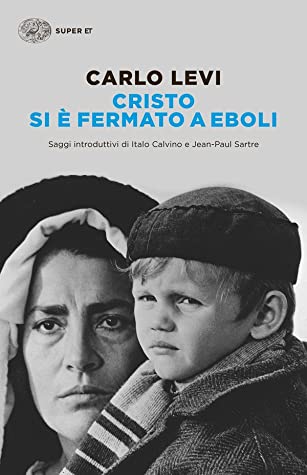
I had begun reading this book last spring, along with one of my students. Christ Stopped at Eboli is Carlo Levi’s memoir of his political exile ten years earlier in Aliano, a village in southern Italy that Levi rechristens “Gagliano” based on the local dialect. Conditions in Gagliano are appalling: an incompetent and self-aggrandizing gentry lords itself over the impoverished peasant community. Malaria is chronic through the population, and repressive political forces abort any public health measures. In the center of the village square, public funds have been paid to erect a toilet, which is used by no one but animals (what a crappy state of affairs!). Levi’s memoir paints a vivid, hilarious, and disparaging picture of this abandoned region.
I loved the slow, easygoing nature of this memoir. Levi draws out his episodes with colorful characters, many historical connections, and a political eye that shows the injustices faced by the lower classes and argues compellingly for the culpability of “those people in Rome” who have never paid any attention.
The Lion and the Jewel
Wole Soyinka–1959–Nigeria
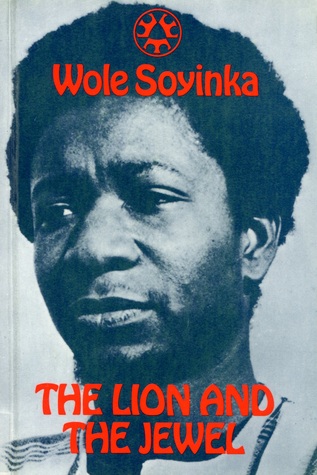
Wole Soyinka won the Nobel Prize for Literature in 1986, the first African to win the award. The Lion and the Jewel is a short play, one of those for which Soyinka is best known. The play dramatizes competing attitudes about westernization in Nigeria in the clash between the elder political leader Baroka and the young schoolteacher Lakunle. Baroka (the “Lion” of the play’s title) fights to maintain his village’s cultural independence while thoughtfully and intentionally working with western elements in ways that benefit the people. Lakunle, meanwhile, unequivocally espouses western ideas. These two men are both interested in marrying Sidi, a beautiful young woman, the “Jewel.”
I found a lot of marvelous complexity in this short play. The early conversations between Sidi and Lakunle, Baroka’s nuanced attitudes towards adopting some western technologies and ideas, the great reversals that happen multiple times through the play–these made it dynamic and engaging. In two sections, the play uses dance to tell stories, which I would love to see performed.
At the same time, I will also say that I really struggled with the way gender works in the play. The play wanted me to admire Baroka, but with the way Sidi (and other female characters) are treated, I found this extremely difficult. I recognize that this is a really essential part of reading literature from other cultures: that we encounter different cultural values that can cause us to react strongly. I’m not yet sure how to reconcile these feelings. If I choose this play to read with students, I expect that this will be a major area of discussion and introspection on our positionality as readers.
Drive Your Plow over the Bones of the Dead
Olga Tokarczuk–2009–Poland
This book was not one that I found in the school’s book room. Instead, my husband and I listened to the audiobook version of this hilarious environmental murder mystery while road-tripping between Montana and Wisconsin. Drive Your Plow over the Bones of the Dead was shortlisted for the Booker Prize in 2019, and Tokarczuk won the Nobel Prize for Literature in 2018. Through its quirky and deeply determined narrator Mrs. Duszejko, the book carries us through a series of deaths, meanwhile constructing an argument about animal rights and environmental protection.
In many ways, the book follows an expected format for a murder mystery, but it also had such a great wealth of humor, cozy scenes, and philosophical speculation that made it come alive. I appreciated that it didn’t become dark or violent, and its characters are the kind of people I would enjoy spending time with.
The Promise
Damon Galgut–2021–South Africa
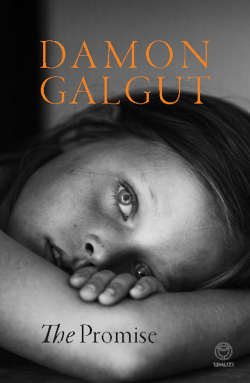
This was the second audiobook we listened to on our road trip, and it catapulted us into a very different world: a farm outside Pretoria, South Africa, in a family saga spanning from 1986 under Apartheid until 2017. Damon Galgut is a white, gay South African, and The Promise won the Booker Prize in 2021. We listened to it in a marathon two-day run, and it was, according to my mother-in-law, perhaps the reason we found North Dakota so beautiful (actually, I have to say, the rolling North Dakota fields were beautiful all on their own–see the photograph at the bottom of this post from our brief stop at Theodore Roosevelt National Park).
Galgut’s omniscient narrator paints a vivid world and shows us the Swart family over the course of four decades, each section focused on another family funeral. The characters are sharply drawn, and Galgut sugar-coats nothing–we hear about everybody’s dark thoughts and dirty imaginings, including those of minor characters such as the woman who applies makeup to one of the bodies and a homeless man who sleeps in the doorway of the church. If I have a criticism, it is perhaps that the characters’ lives were so bleak and their thoughts so sordid that I was really longing for a bit of genuine affection and kindness.
The “promise” of the title is an important one: a promise by the white landowner to transfer ownership of part of the property to one of the Black servants, Salome. Thus alongside the internal family drama runs the current of racial justice. I was keen to see how Galgut dealt with white saviorism in the novel, and I think I’m still unsure of what I think about the way it ultimately resolved. I also think there is a potential criticism to be leveled here of the rather passive portrayal of Salome and her son Lukas. I’m not sure.
Chronicle of a Death Foretold
Gabriel García Márquez–1981–Colombia
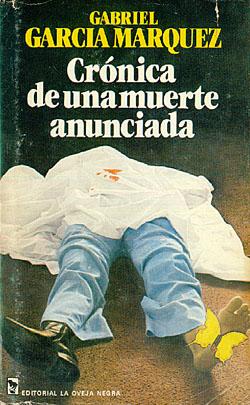
Back to the book room. I had read García Márquez’s One Hundred Years of Solitude many years ago, and I could see the author’s enduring style in the much shorter Chronicle of a Death Foretold. García Márquez won the Nobel Prize for Literature in 1982. The novella spirals around the murder of the young and wealthy Santiago Nasar by the Vicario twins, reporting all that happened in the small Caribbean town among an expansive cast of characters, their hidden thoughts and motivations, the humorous coincidences, and the characters’ future lives that were irrevocably determined by this murder.
I appreciated the novella’s quick and yet unrushed pace, the delicately-painted societal beliefs around honor and virginity, and, as with Galgut’s novel, the way many characters can be so rapidly and vividly drawn. And I loved the central question that the narrator is never able to answer, the question on which the whole killing hangs–
Yet I also struggled here, and it was a struggle that I also experienced with One Hundred Years of Solitude. García Márquez’s characters, although I can perhaps see them clearly, never endear me. I have the sense that they are all pieces on a chess board, that the real focus of the story is the situation that connects the characters rather than the characters, and for me this makes them difficult to care about. Although as a book to teach this novella might be appealing because of its brevity, I think it would be difficult to teach something that I didn’t love.
The Kiss of the Spider Woman
Manuel Puig–1976–Argentina
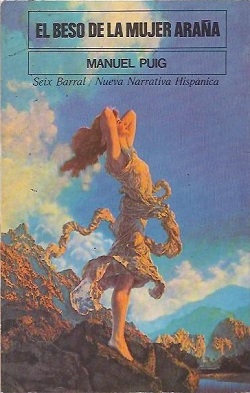
The Kiss of the Spider Woman made some really interesting experiments in narration. Most of it is written in dialogue as in a stage play, mixed in with lengthy footnotes about the psychology of homosexuality, stream of consciousness interludes, and official reports by prison officers. The story follows two cellmates, Valentin and Molina. Molina recounts several films that he has seen and Valentin describes his relationship troubles and the workings of his community of political dissidents.
I found the two principal characters believable, compelling, and complex. As a gay man myself, I particularly was interested in Puig’s complex exploration of homosexuality. Although it might be challenging in some ways, I think there is a lot of rich material to engage students with, and I might teach this as part of my upcoming literature course.
Further reading
Looking back over these six summer reads, I recognize some of the gaps. I have only one female author here, and I haven’t read anything from Asia, the Middle East, or the Caribbean in this set. I’ll look to add some of these in the coming months. I have Ousmane Sembène’s novel God’s Bits of Wood that I will come to soon. At the moment I’m currently reading another Soyinka play, A Dance of the Forests, and on the recommendation of my brother-in-law I also began reading Leslie Marmon Silko’s Ceremony. So there is plenty still to read and explore. I hope I’ll be able to put together a good syllabus for students.
What world literature would you most recommend? I would love to hear your favorites to add to my reading list as I continue to explore.
Summer is sadly drawing to a close. By the time this post is live on Words Like Trees, I will be back in Norway, and staff in-service will start the second week of August.
Best wishes,
Jimmy



Dear Jimmy, thank you for your book reviews. Ive enjoyed reading them. I have a book recommendation for you– a trilogy by Sigrid Undset called Kristen Lavransdatter. I read it several decades ago and loved it so much that I was sorry when it ended. It even made me appreciate Christianity –in the context of the book.
Unfortunately, when I tried recently to read it again, my memory was so bad I couldn’t keep track of the characters. So read it while you’re young and fit!
Best wishes,
Kathryn
LikeLike