I think it was in 2020 that someone showed us where the blackberries are. In a field along one of the local narrow roads, the road I walk to reach the trail up into the mountains, a field I had passed by frequently in 2017, 2018, 2019 and never considered that the berries might be there until someone (we can’t remember who) told us, they were there.
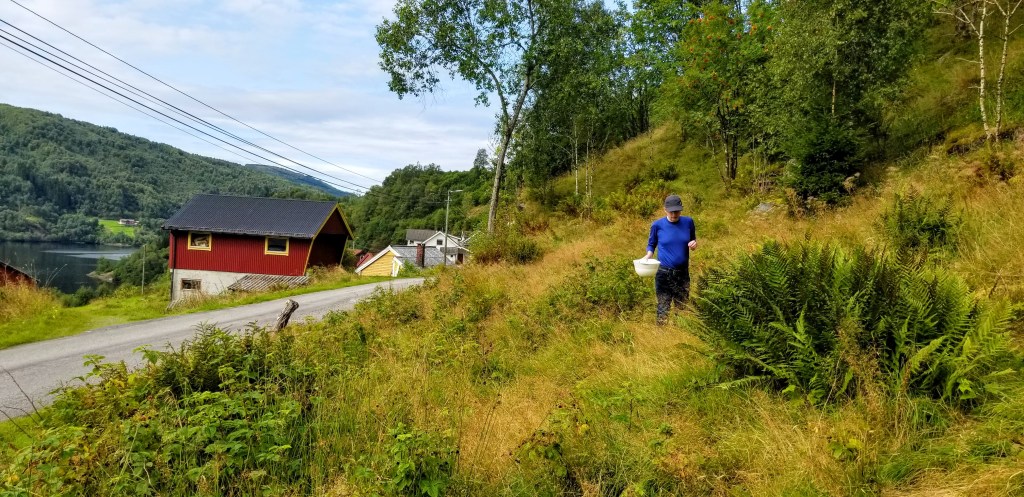
Now, the blackberries are a yearly tradition. When we get back here for the start of each new school year, we check the blackberry patch. Some years, they have come ripe during new student orientation. This year, they’ve taken until the second week of classes. On Thursday this week, I took a quick hike and passed the blackberry field. They were no longer the shiny deep red of the underripe. Most had gone black now, their skins stretched tight enough to reflect back squares of sunlight. We had to pick them this weekend.
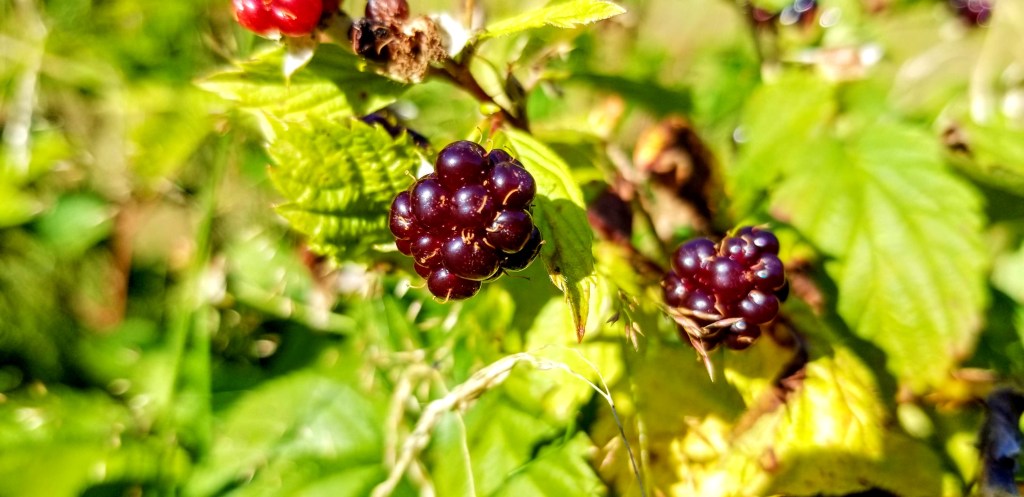
In the last couple of years, I’ve become very interested in identifying plants. On walks I am forever pulling up the Seek app on my phone and posting observations to iNaturalist. Of course I have wanted to know what species these blackberries are, but each time I try the app, I get stuck at the genus level: Rubus, the brambles.
Rubus as a genus is vast. It includes raspberries, blackberries, and also the beautiful orange cloudberries that grow here in Norway in mountain wetlands. And digging a bit into iNaturalist, and other online resources, I learned that the genus contains more than a thousand species.
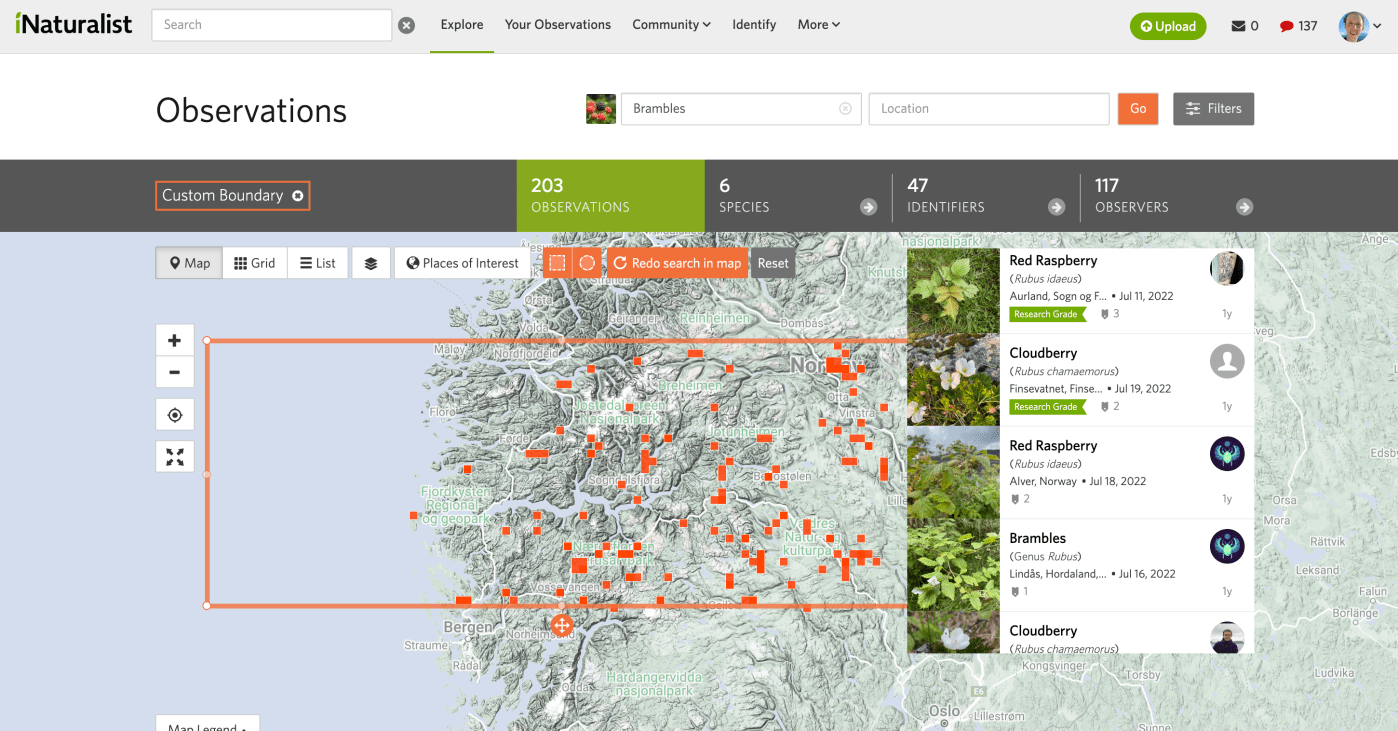
iNaturalist is a database of observations by citizen scientists. Anyone can post an observation of a plant, animal, fungus, or other organism, and other users can then post responses, either corroborating the identification or suggesting their own. In a bid to discover the identity of our blackberries, I searched observations in the Rubus genus in my region of Norway.
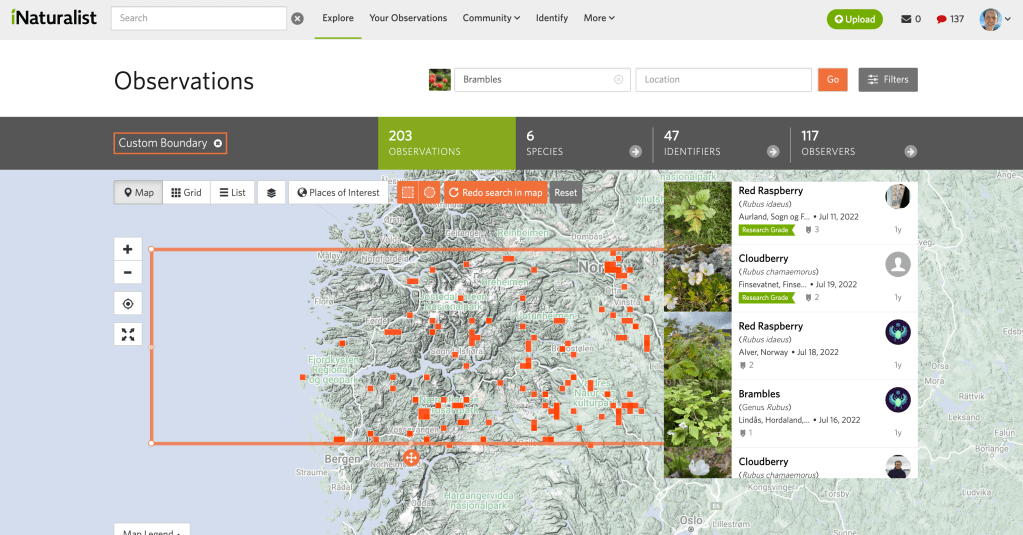
Of the 203 Rubus observations, none clearly resembled the berry I sought. There were many red raspberries (Rubus idaeus). Cloudberries (Rubus chamaemorus), although I think much less common of an actual plant, were posted even more frequently, probably because they are so prized and distinctive. The stone bramble (Rubus saxatilis), which I’ve never encountered, also made a fair number of appearances.
Reading more, it sounds like the subgenus that gets called “blackberries” is a sprawling, complex set of plants that actually leads to quite a lot of disagreement among botanists about how it should be classified. Plants in this subgenus frequently hybridize, and their penchants for polyploidy (when an organism has more than two sets of chromosomes) and asexual reproduction complicate the idea of what a species is.
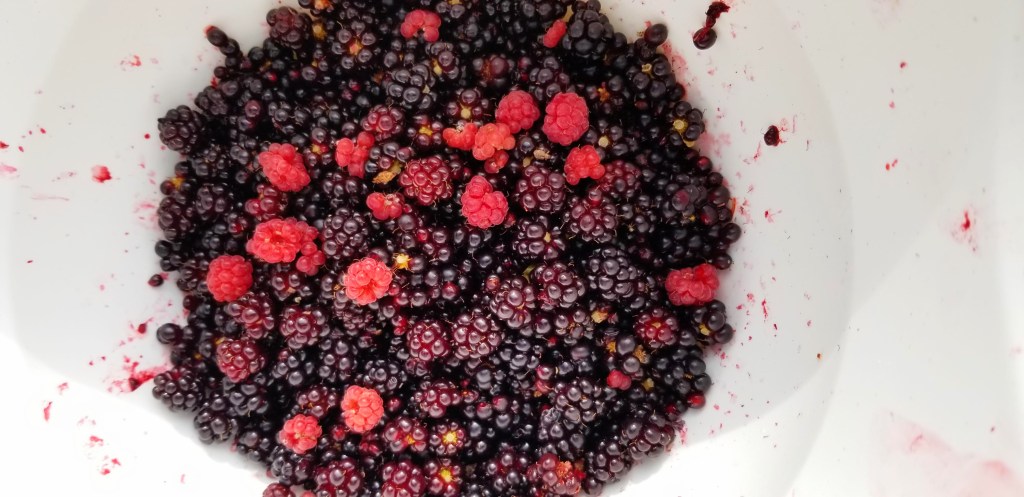
Except their color, the blackberries in that field share almost nothing with the blackberries sold in the grocery store. The commercial blackberries are nearly an inch long, composed of probably a hundred little sacs of juice. The berries we went out picking Saturday afternoon have fewer, larger sacs, most berries with perhaps ten or fifteen. The shape of the berry is rounder than the elongated commercial blackberry. And the color, the closer I look, pulses with red in the just-ripe ones, bypasses black and becomes satiny purple as the berries age. The juice sacs often split apart–unlike raspberries and commercial blackberries, which have a certain integrity to them, these blackberries are more loosely joined. They’re their own thing. I don’t know their name, but each year when they grow again, I recognize them.
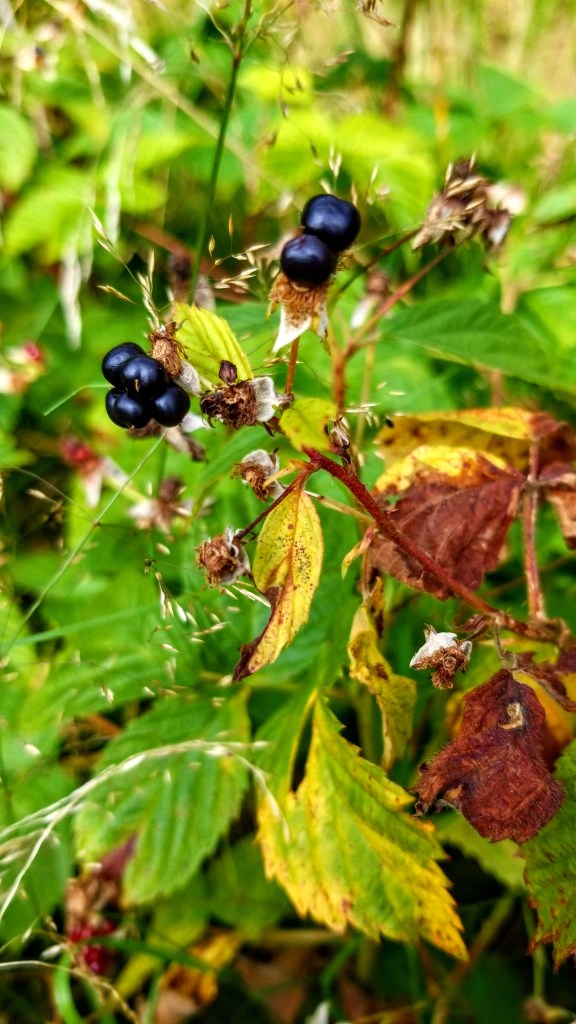
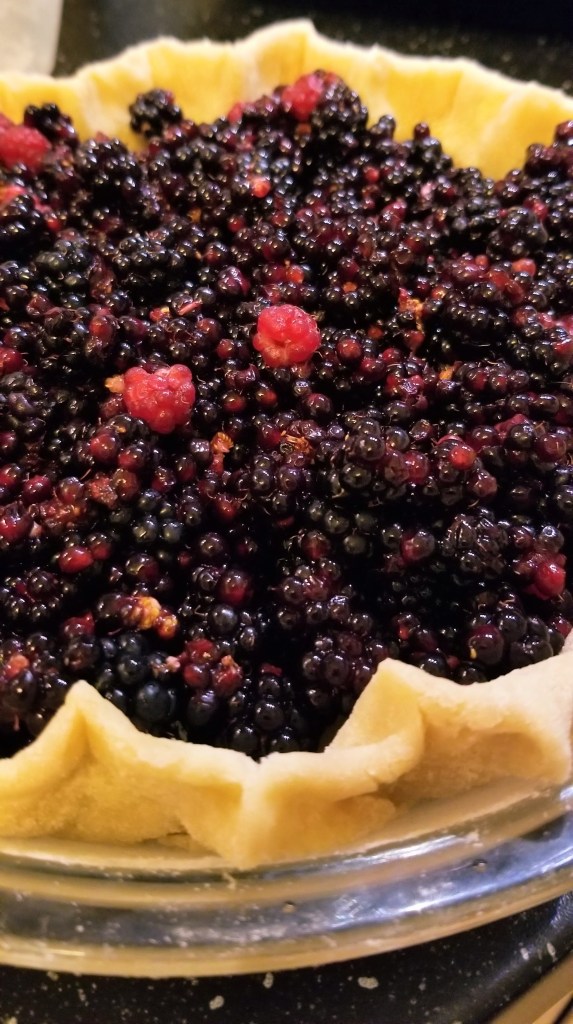
They’re delicious. Some of them are beginning to ferment on the plant, and the just under-ripe ones have the zing of acid that makes your mouth pucker. They’re rich and complex. We can’t get enough of them. Tonight we’ll make a pie, mixing in a handful of the raspberries too, whose season is just ending, for the sweetness.
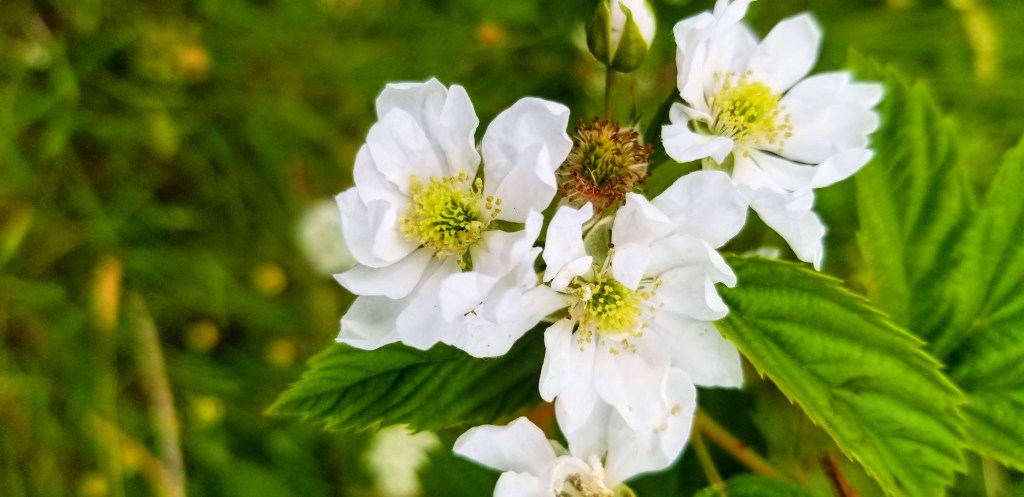
In June, these blackberries flowered. My husband and I dug back through our photos, and we found this one, from June 25. We’re pretty sure this is the blackberry bush and not the raspberries that also grow along the roadside. They’re bright white, billowy, the stamens bursting out like a sunburst. The feature of them that seems particularly unusual is that they have two rows of petals. I was poking around a bit on this wonderful website that catalogs brambles of the British Isles, but I wasn’t able to find a match. Maybe someone in the local area knows the species that I can ask. I’m making another push to finally learn Norwegian–maybe if I have enough language, I will be able to use some Norwegian botanical resources too.
I’ve thought about, if we move away, I would like to know the name of this berry so that I can grow it. But who knows. Maybe it’s a wild plant that I couldn’t buy elsewhere. I imagine transporting a cutting wouldn’t be legal, and I who knows if it would even survive. Maybe it’s just a part of this place. And this is all hypothetical. We don’t have any plans to leave. There will be more years of these blackberries, or whatever they are.
Wishing you a good start of September,
Jimmy