
The school year has begun, and with most students arrived and out of quarantine, things feel more normal than they have in months. I’ve taken on two second-year Language & Literature courses from a colleague, and in a lesson reviewing the myriad ways we might analyze texts, one lovely pair of words emerged that will form the basis for today’s post:
Tone
Mood
What are they? What’s the difference? Why do they matter in our writing?

What are tone and mood?
Tone refers to the attitude or emotion that a narrator expresses towards the story they are telling. Similar to a speaker’s tone of voice, tone is the emotional tenor that emerges from the narration, and it can shift over the course of the text.
Mood, by contrast, focuses on the emotional experience of a reader: what emotion does the text create in readers? How do readers feel? It is this difference in focus on the reader’s emotional experience as opposed to the narrator’s that distinguishes tone and mood.

The relationship between tone and mood
Often, tone and mood overlap: a narrator tells a story in a mournful tone, and the mood felt by the reader is sadness; the narrator is conversational, and the reader feels part of a special tête-à-tête.
But it is not always so: sometimes narrators’ actual attitudes contrast significantly with the mood of the text, and it is especially at these moments when having two separate words for tone and mood is helpful. Controversial or unreliable narrators frequently produce this split, but it can happen with any narrator, third or first person.
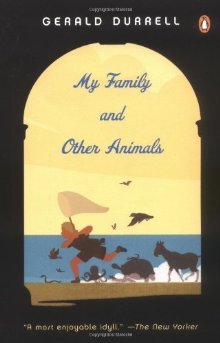
In a rather bizarre example of this effect, take a look at this passage from Gerald Durrell’s My Family and Other Animals:
Not long after Achilles had been taken from us I obtained another pet from the Rose-beetle Man. This time it was a pigeon. he was still very young and had to be force-fed on bread-and-milk and soaked corn. He was the most revolting bird to look at, with his feathers pushing through the wrinkled scarlet skin, mixed with the horrible yellow down that covers baby pigeons and makes them look as through they have been peroxiding their hair. Owing to his repulsive and obese appearance, Larry suggested we called him Quasimodo and, liking the name without realizing the implications, I agreed. For a long time after he could feed himself, and when all his feathers had grown, Quasimodo retained a sprig of yellow down on his head which gave him the appearance of a rather pompous judge wearing a wig several sizes too small.

Owing to his unorthodox upbringing, and the fact that he had no parents to teach him the facts of life, Quasimodo became convinced that he was not a bird at all, and refused to fly. Instead he walked everywhere. If he wanted to get on to a table, or a chair, he stood below it, ducking his head and cooing in a rich contralto until someone lifted him up. He was always eager to join us in anything we did, and would even try to come for walks with us. This, however, we had to stop, for either you carried him on your shoulder, which was risking an accident to your clothes, or else you let him walk behind. If you let him walk, then you had to slow down your own pace to suit his, for should you get too far ahead you would hear the most frantic and imploring coos and turn round to find Quasimodo running desperately after you, his tail wagging seductively, his iridescent chest pouted out with indignation at your cruelty.
The beginning of the narrator’s description of Quasimodo carries, uncharacteristically for the book, a tone of disgust. Words like revolting, wrinkled, repulsive, and even force-fed show us the narrator’s attitude, alongside the narrator’s choice to focus on the aspects of Quasimodo that he does.
But near the bottom of the first paragraph, the tone shifts quite dramatically, to what I would perhaps call mocking. The narrator gives us a series of images–a judge wearing an undersized wig, bird poop on a shirt, and the final jab of the seductive, angry, too-slow pigeon–that portray Quasimodo in a quite ridiculous light.
So tone can be achieved through word choice, through imagery, through choice of focus. It also interacts with register, the formality of language that we discussed two weeks ago. The narrator’s quite formal register seems to place him in a position superior to Quasimodo’s “imploring coos.” It thus contributes to both the disgusted and mocking tones in the passage.
But we have said nothing yet about how very funny this passage can be. I recognize that removing it from the context of the larger story, it seems quite cruel. Yet knowing how much the narrator loves all of these animals, how fascinated he is by them, and how so much of the book consists of a kind of childish ridicule of all things around the narrator in an, in the end, hilarious and loving family portrait, the pompous tones shown above actually contribute to a quite contrasting comical mood.
Identifying this contrast between tone and mood can help us better understand the narrator’s character, better understand the reader’s experience. Ultimately, the story takes on greater complexity.

How to use tone and mood in our own writing
Writing is a craft steeped in emotion, from both the writer’s and the reader’s sides. Nearly every choice we make as writers expresses something about our (or our narrator’s) emotional state, and readers are constantly adjusting the mood they perceive in a text. Our job as writers is to bring intentionality and awareness to the emotional content of our choices, and to anticipate the emotional experience of readers in order to craft a text that best suits our purposes.
We can do this from the beginning, planning explicitly the tone or mood we are intending; we can also, as is my norm, do so retrospectively, upon reading a first draft, identify the tone and mood that have naturally arisen in the text, then fine-tuning, exaggerating, or modifying these in order to suit our goals.
Why do so many “literary” books have sad endings? I think it has something to do with the staying power of a dark mood, that leaves a reader stewing long after the book has ended, ruminating on its content, perhaps so disturbed as to make a change in their lives.
Emotions thus form part of the content of a story, but they are also tools. Constructing a particular tone or mood is part of our wider toolkit for engaging with readers, for expressing our vision, for this odd telepathy called writing.
Thanks for reading, and best wishes for the week ahead,
Jimmy