In 1966, the Dominican writer Jean Rhys published her most celebrated work, the novella Wide Sargasso Sea. It marked her return to the literary scene after a near twenty-year's gap, and it inspired a large body of scholarship and study. Wide Sargasso Sea took as its focus the character of Bertha Mason in Charlotte Brontรซ's... Continue Reading →
Tone and Mood: Emotion in Our Writing
The school year has begun, and with most students arrived and out of quarantine, things feel more normal than they have in months. I've taken on two second-year Language & Literature courses from a colleague, and in a lesson reviewing the myriad ways we might analyze texts, one lovely pair of words emerged that will... Continue Reading →
Personal Style, or Set in Our Ways: The Importance of Change and Holding On–#AuthorToolboxBlogHop
This week's post is part of the monthly Author Toolbox Blog Hop. Check out other participants' posts here. The #AuthorToolboxBlogHop is a great way to connect with other writers and build our own repertoire of craft knowledge alongside. Check it out! A wonderful professor of mine, Deborah Appleman, once told me that life is a... Continue Reading →
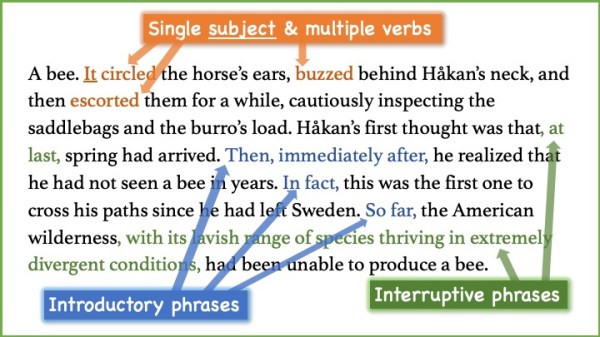
How to Use Sentence Structure to Improve Your Writing
Human languages glitter with variety. Rife with synonyms, recursive structures, nuances of tone and pronunciation--the ways we speak and write possess the subtlety of art. Today, we'll examine how sentence structure in English can be modified to bring our texts to life. Let's see. Linguistic Background Multilingual people often debate the merits of their languages.... Continue Reading →
Myths of the 3rd Person Narrator
Several weeks ago here on Words like Trees, we surveyed a range of common narrative points of view, from character-turned-narrator first person to free indirect style, omniscient, and close third person. In the weeks since, and in particular as I have been making my way slowly (very slowly) through the first volume and a half... Continue Reading →
Choose the Right Point of View for Your Story: Beyond the Basics
First, third, omniscient, limitedโpoint of view (POV) is a global decision we make in every writing project. Like our choice of present or past tense, selecting the right point of view for a story has a powerful impact on the final effect, and itโs worth considering different options before jumping to one choice. Many of... Continue Reading →