
The last part of this week, I have been participating in a virtual teacher training workshop about conceptual learning and inquiry. Nine teachers and the workshop leader have been gathering on Zoom for in-depth discussions of how to reframe learning to promote a deeper conceptual understanding (rather than memorized content) that better enables students to transfer their knowledge within and between subjects. The focus shifts from knowing information to knowing what we can do with that information.
The subjects that I teach (English language and English literature) already lend themselves to the kinds of big questions and deep understandings that we’re learning about, and I find myself pushing in the other direction: how can I make clearer connections between my teaching and the real world? How can I build robust content that makes the concepts relevant, vibrant, and dynamic? I can’t keep trying to grow flowers on top of flowers. I need some dirt.
Of course, I have been thinking too as we work together, about how this kind of conceptual thinking relates to writing. How do the stories that we write and read engage with deep conceptual ideas, to what extent should they, and how can it be done?

What is a concept?
A concept is a big idea: abstract, potentially universal in scope, one that can apply to a variety of situations. At their largest breadth, concepts might include truth, justice, perspective, change, power, causality, identity, etc. At the nearer level, within the study of literature, for example, simile, character, syntax, diction, pathos, etc. are conceptual tools that we can use to investigate something that we are reading.
Of course, what concepts are worth exploring and how they should be explored involves enormous value judgement. This week, for example, the way we understand the horrendous series of shootings in Atlanta, Georgia is developing through the concepts of race and gender. At the same time, there are people trying to reframe the conversation as one exclusively about mental health, or what I see as a reductive conceptual framework of simply good and evil. Which concepts we say apply affects the perspective and the actions that we take. Thus these concepts matter at deep levels. They matter in our teaching. They matter in the stories that we write and read.
Concepts in our stories
When we set out to write a story, we might come at it from different starting points. Sometimes, the inspiration is a concrete situation: a woman trying to leave a dead-end job; a child facing bullying at school; a family lost in the desert attempting to survive. Other times, we might begin with a concept: a story about love, about hope in terrible circumstances, about masculinity, about empowerment.
As we develop our story, however, both kinds of inspiration need to expand into something fuller. The concrete world proliferates and takes on conceptual dimensions: that family lost in the desert is engaged with survival, with deciding the relative value of things that they must sacrifice, with the power or impotence of individual action. On the other side, conceptually-based ideas need to put down roots to make them engaging and to give them movement. If I am writing a story about empowerment, I must ultimately develop a concrete character and situation and conflict and setting that will bring that concept into life.

An enduring question that I have pondered in previous posts is how explicit in the final writing the conceptual ideas should be. More philosophical engagement within the text itself might appeal to some readers and less to others, might feel didactic in some cases, or else absolutely at the heart of this story.
Readers will also surely map their own conceptual understandings of our stories. So much literature from past eras was written without much attention to, for example, gender dynamics, yet a lot of contemporary feminist criticism seeks to interpret these stories now through a conceptual lens of gender, and through this process it unearths new understandings of these older texts.
Case study: The Outsider
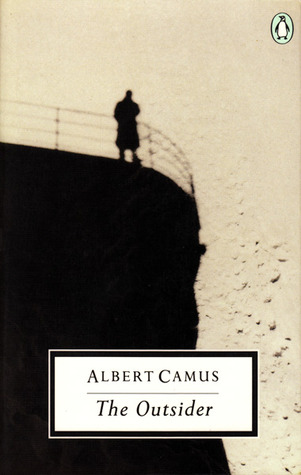
Over the last week, I read Albert Camus’s The Outsider (The Stranger in North American translations). In this short novel, French-Algerian bachelor Meursault kills a man, then must face the criminal punishment. When I was trying to learn about existential philosophers a year or two ago, I heard about The Outsider, which was held up as a kind of exemplar of Camus’s philosophy.
It was interesting to me as I read how little the novel explicitly engaged with these existential ideas. I could see them as I read, felt almost that the words were half tingling with them, the ideas ready to spring forward at my touch, and yet until nearly the end, the book confined itself to the slow reporting of Meursault’s daily experiences. He sounded almost bored as he was narrating.
What concepts were at play here? If I had not known the novel was associated with existential philosophy, I’m not sure I would have made the connection. I instead might have brought to bear concepts of conformity, societal expectations, perhaps emotional callousness or justice. We might look at the novel through concepts of colonialism, gender, or psychoanalysis. Any one of these can be the tool that helps us make meaning. What did Camus intend? What is right? Part of the beauty of literature is that the answers to these questions are meaningless and absolutely essential, complex, varied, and strange. But it is this messiness that keeps us pondering and digging and exploring and writing. So it goes.

I’m afraid that is all I can manage for this weekend. This three-day workshop has worn out my brain. Anyway, thank you for stopping by, and best wishes for the week ahead,
Jimmy


I love that you, as a teacher, have been exploring a deeper way to teach. Learning something well goes beyond memorization and enters the realm of passion and conceptualization; of really understanding what is really being taught and why.
LikeLiked by 1 person
It felt really good to be doing some professional development. Sometimes I feel like the longer I teach or write, the more I realize I don’t know yet and need to learn. I don’t think my learning will ever keep pace with all of the things I keep realizing I don’t know, but I suppose I’m moving forward. 🙂 And it’s good for the students too.
LikeLiked by 1 person