I return today to a question that has arisen frequently on this blog, that nagging issue in fiction I’ve not yet been satisfied with my own answers to, that I feel like this week I’ve stumbled haphazard into a new idea about–today, let’s circle back to that question of conflict.
When I taught high school creative writing classes in Minnesota, my lessons on plot and fiction revolved invariably around conflict. I taught that conflict was an essential element in fiction, that a story without conflict would fail to engage readers, that conflict follows a pattern of rising action to a climax, then resolution at the story’s end. These lessons culminated in the development of a short story, in which students had to follow a clearly-identified conflict through these stages, demonstrating in every scene an understanding and adherence to our conflict-central model.
Some marvelous stories resulted from this work. Many students dove eagerly in, daunted as they were, and crafted impressive exercises in conflict that left me near tears or in great laughter or smiling in contentment. But the more I taught, the more I wondered whether at the core I had it wrong.
For a start, it seemed too simple. A prescribed central conflict the engine powering a story? Or, that is, powering every story? That was hard for me to believe. What was more, when I attempted to research this question, this why must every story have a conflict? question, no deeper an answer could I find than that conflict was engaging. As if nothing else possibly could be engaging, as if conflict was the only engaging thing in a work of literature, that, okay, fine, a conflict by itself is not enough, for it needs developed characters, and thoughtful description, etc., fine, but all of those other elements alone, without a conflict, could never be a story? It seemed ultimately reductionist. It seemed, if true, a quite unflattering comment on human nature, that nothing else in the world could interest us like conflict. That conflict was at the very center of the human condition.
And this did not ring true to me. Because the conflicts in popular literature are so grand in comparison to most people’s lives. We may deal with conflict on a daily basis, but it is rarely the type of conflict so dramatized in film and play and story. It is, for most of us, not the life-and-death struggle, but the quieter decision, the difficult conversation, the frustrating encounter, the drifting apart of an old friendship, the drama of a she-said-he-said, questions of money and time and resources. Fine. It’s not that our lives do not contain conflict. Of course they do. But the myopic focus on conflict, the insistence on it, casts fiction to me more as a soap opera than something deeper.
And I can’t without pause accept the response to this argument that fiction is life’s conflict heightened for relief. For fiction writers are loathe to accept flat major characters, who heighten a character trait to make it more obvious, and we grimace at the idea of didactically overstated symbolism that robs readers of the opportunity to interpret for themselves. I question why conflict should be treated differently. (I explored this argument in more detail and in some varying directions here.)
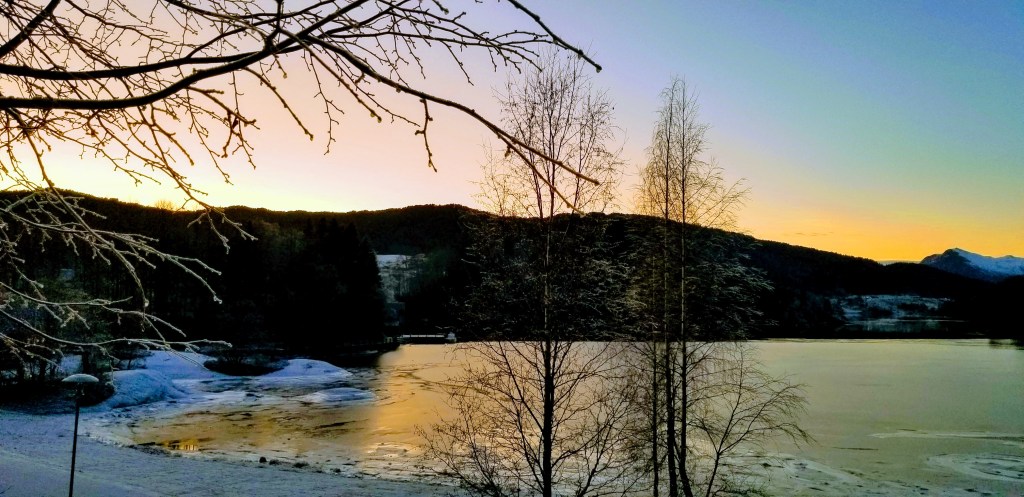
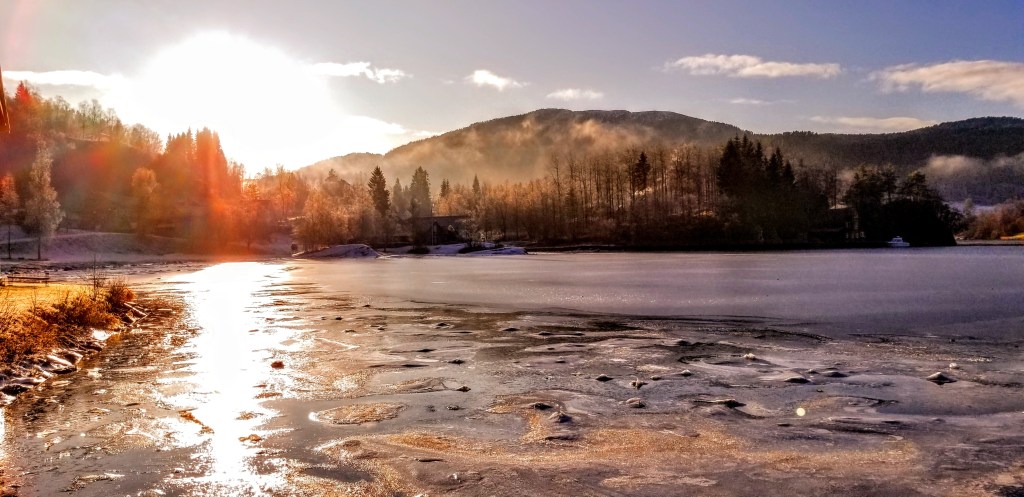
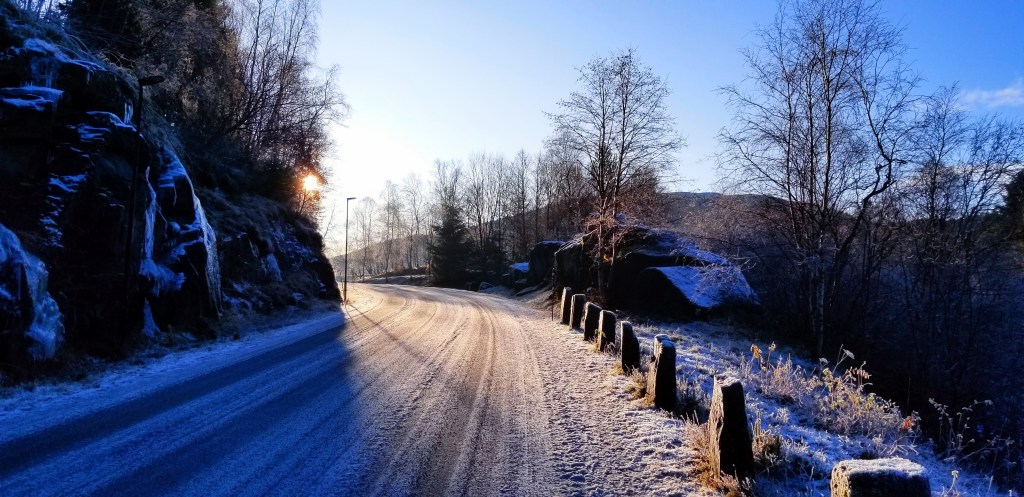
And I must also say, all the real conflict in life aside, so many of the elements in life have at most a tangential relationship to conflict. I consider the moment I am living now, a Friday morning (I am beginning this post a couple of days early), a late start (my first class today is at 10:50am), a pot of tea, lingering threads of sleep (I slept well, but I woke in the middle of a dream. My brain is sluggish now, caught up elsewhere, I suppose). Am I in conflict? I suppose that if I thought about it hard enough, sure, I suppose I am. I made a choice this morning to spend an hour writing and not an hour marking students’ work. That conflict is ongoing. I am in a bit of a conflict about what to teach next in a couple of my classes–how do I make the right decision, that will engage them and also prepare them for what they will need later and be at a good stopping place when we reach the winter break? I am in a conflict regarding my writing itself, unsure quite how to proceed, pondering the MFA-program-applications I hope to send out in a year’s time, not knowing quite how that will work, who I’ll be able to ask about letters of recommendation–all of this is conflict, or could be if I pushed and prodded. But all of these things, including the decision about whether to mark or write, probably the most immediate “conflict” in my list, I could hardly call deeply conflicted right now. I’ve made my decision for this morning. That’s fine. I’m glad I made it. I am not agonizing. The reality of this moment for me is not about the conflicts. It is about the thoughtful typing of a meandering line of thought, the still-disoriented brain, the warmth of the tea and the slipper-socks knitted years ago for me by my sister, about the quiet of the apartment, the blue-white-pink of sunrise, the sloppy frost awaiting me outside–and is this not a moment worthy of a story?
I recently listened to the audiobook of Ursula K. LeGuin’s The Left Hand of Darkness. And although the story itself was lovely (though perhaps not as captivating to me as Earthsea), it was actually LeGuin’s introduction to the book that I have been unable to stop thinking about. Allow me to quote a little of it here:
Science fiction is often described, and even defined, as extrapolative. The science fiction writer is supposed to take a trend or phenomenon of the here-and-now, purify and intensify it for dramatic effect, and extend it into the future. ... Method and results much resemble those of a scientist who feeds large doses of a purified and concentrated food additive to mice, in order to predict what may happen to people who eat it in small quantities for a long time. The outcome seems almost inevitably to be cancer. So does the outcome of extrapolation. Strictly extrapolative works of science fiction generally arrive ... somewhere between the gradual extinction of human liberty and the total extinction of terrestrial life.
LeGuin is not writing about conflict specifically here, and perhaps I am taking her point sinfully out of context, but this is the same phenomenon I see in the dictum of the centrality of conflict. We have distilled conflict from the stories around us, purified it, isolated it, then fed it back into the system in large doses for the stimulant that it is. Like the mice in LeGuin’s carcinogenic experiments, the result is unintentionally severe. It is the high-fructose corn syrup of fiction, the MSG, the manufactured taste. It is exciting. It is page-turning. But something unclear has been lost in this purification process, something we never knew was there but which still served a vital function.
I think it is probably true that every story has a conflict (Kishōtenketsu stories included). I think it is probably impossible to live as a human being without some measure of conflict. However, conflict itself is not an ingredient in life. Rather, it arises out of more elemental things, like needs, and confusions, and the competing treasures of existence.
This, I sense, feeds into Western culture’s larger mania that privileges the exciting and bold over the quiet and unobtrusive, the intense over the mild, the loud over the soft. We face great strain as a society from the quick-fix ease of satisfying desires. For the easy pleasures of life, we are sacrificing our ability to delay gratification, which in turn makes life’s deeper pleasures, which cannot (at least not yet) be so easily manufactured, all the more elusive. It is a distressing and benumbing cycle, a kind of desensitization, not only to sex or violence, but to conflict itself. Is a story not worth following without high drama? If so, what must we think of our own lives? What quiet moments, introspections, thoughts, emotions, beauty of the everyday–to how much of these are we closing ourselves off?
I’m not certain I’m right about this. It’s a new idea I’m feeling out. What do you think? What do you think about the maxims around conflict? And, after all, what is literature’s role in our lives? I think I am assuming here some foundational purpose, art more than entertainment, and I recognize that this does not fit every writer’s goal.
I do feel, however, a certain peace with this idea as I’ve formulated it. At least for now, that nagging question has quietened. We’ll see how soon it wakes.
I think the other unintended consequence of this philosophy I’m proposing, and perhaps this indicates a misunderstanding I’ve had from the beginning, is that it is a refusal to analyze, to pick apart a story into its component parts, to look at what conflict is there as a conflict in itself, large or small, and to understand its workings. Perhaps all the hype about conflict in fiction was only ever this: a tool for understanding. If so, let it be that tool. Let it not become that bristling tail that wags the dog.
I’m going to write some boring stories. Or, I’m going to resist the urge to heighten the conflicts that germinate there naturally. I’m going to let them be what conflicts they are, and leave engagement to a faithful, or as close as I can manage it, somehow rendering of life. We’ll see how it goes.
Thanks for stopping by. With love,
Jimmy


Great writing Jimmy, You are right that the amount of conflict in ordinary peoples lives is much less than the conflict in most stories. But I don’t want to read a storry about an ordinary persons life. And I think most ordinary people don’t want to reannnd a storry about my life. I think some conflict makes stories more interesting.
LikeLike
Left Hand of Darkness is one of my favourite books, and one of the reasons I love reading and writing sci-fi so much. I do have a different take on story structure though. To me, the core value of any story is what it tells us about us. But every day life happens so slowly, we are unaware of changes, especially to ourselves, until something snaps us out of the ordinary. That’s where fiction can speed up the process so we can see it as it happens.
Sci-fi goes one step further, it places characters in impossible situations, to see what they do in the circumstances. If we relate to those characters, we can actually learn quite a lot about ourselves. The conflict in fiction is often extreme, not to titillate but to disturb, and perhaps make us question our assumptions.
Thanks for raising such an interesting question.
LikeLiked by 1 person
Love the post! I love books and stories wherein the importance of “small” decisions and the tension of “small” conflicts are given their due weight. It doesn’t have to be loud to be profound.
LikeLiked by 2 people
Absolutely. It really feels like you’re getting at the stuff of life in a way.
LikeLiked by 1 person
Hi Jimmy, I quite agree with your post overall (which came across my search results while I was–once again–reading up on kishotenketsu): conflict is overrated. Of course life is an obstacle course, but boring is mostly good; there is only so much excitement most of us can, or want to take.
I think the current growing popularity of cozy fiction is a case in point. It was time for stories about normal people with normal things happening in their lives. Current events are exhausting enough.
(NB: That’s why I dislike A Song of Ice and Fire/GoT, both books and TV show. Not because of the storytelling or worldbuilding, both of which GRRM is a master in. It’s because I find it exhausting; there are enough asshats in RL, I don’t need a high concentration of them in my fiction, too.)
LikeLike