
This week’s post is part of the monthly Author Toolbox Blog Hop, in which some thoughtful, engaged writers post ideas relevant to the writing community. Check out other great posts here!

The snow came to Norway indecisive. It came in the morning and turned rain by afternoon. It snowed all night then melted into slush. A couple times, the snow seemed to have melted halfway down the sky, then froze again just before impact, so the flakes were tiny hail-balls piling up like packing foam.
In this slushy February, alongside essays, meetings, lessons planned, a weekend of oral exams, the discussions of curriculum have cycled, and the concept of Nonviolent Communication has come up, as I know it has before.

The truth is, Nonviolent Communication can sound fantastic without even knowing what it is. And I have been quite guilty of this buzzword-hawking–yes, I say. We should teach this. But have I ever really studied what that is?
Well, I am now. At least a bit here and a bit there. As I explore, I feel excited, encouraged, and I do think there is great potential here for this school, but more importantly for the world at large as we continue this ever-smaller, ever-busier globe, the decreased resources the climate crisis is showing us already, the continuing pushes for equality of all kinds—
I see too, a real relevance for writing. The principles of Nonviolent Communication relate clearly to the interior conflicts we explore in literature. Let’s explore.
What is Nonviolent Communication?
Nonviolent Communication is a specific system developed by American psychologist Marshall Rosenberg in the 1960s. Rosenberg argued that violence (in words or actions) arises when we see no alternative way of meeting our needs. A humanist philosophy that believes all people possess the capacities for empathy and compassion, Nonviolent Communication teaches a specific process that we can use to meet one another’s needs peacefully.
Rosenberg’s process follows four discreet steps:
Step 1: Observation
Nonviolent Communication starts by identifying the facts, free of judgement, stated clearly. Communication is always context specific, so we begin with identifying that context. Where are we? What do we see and hear that contributes to or detracts from our wellbeing?
Step 2: Feelings
Identifying feelings is not easy. Many of us have been socialized to hide our feelings, even from ourselves. Prescribed gender roles that circumscribe acceptable emotions, societal ideals that trade introspection for numbing out, and linguistic conventions that confuse emotions with judgements (Nonviolent Communication takes issue with statements like, “I feel like you aren’t listening to me”) all obscure what we are really feeling, and these unnamed feelings then erupt in violence.
Nonviolent Communication asks us to name these emotions and sensations explicitly. I feel afraid. I feel ashamed. I feel happy. I feel calm. I feel angry.
Step 3: Needs
Behind each feeling is a met or unmet need. We might not be clearly aware of what we need at any given moment, and so we blindly stumble, sometimes resorting to violent words or actions in an effort to soothe that festering demand. When we are more carefully aware of what we need, we can meet it intentionally, productively, coming honestly to others.
Step 4: Request
We finish with a specific request to the person with whom we are communicating. What specific action would we like the other person to take? What actions can we take to better meet the needs of others? If we have fully identified the feelings and the needs involved, then we can make a request that will meet that need and leave us peaceful. And we can listen openly to the requests of others and find ways to meet the needs of all as compassionately as we can.
Criticism
In the near sixty years since Rosenberg began developing Nonviolent Communication, researchers have explored its usefulness, its limits, and its strengths. Some have noted challenges: Rosenberg’s model is time-consuming. It requires long thinking and listening. In the heat of conflicts, in world crises, in the busy rush of life, it may not be a reasonable thing for all people. What is more, the education required to use Nonviolent Communication effectively makes it potentially prohibitive and reinforcing of structural inequalities. If it is primarily well-educated, affluent people who can access the system, it can perpetuate inequalities for others. Finally, and perhaps most insidiously, Nonviolent Communication as a set process of conversation could be used as a tool of oppression. A person mimicking Nonviolent Communication could use it as a tool to exonerate themselves while still oppressing another person. Even inadvertent unskilled use of the technique could make people believe they are behaving nonviolently, when in reality they are harming others. For a more in-depth summary of these criticisms, see the Wikipedia page here.
What I gather from these ideas is the importance, if we’re going to try to use this system, of being careful, intentional, truthful, sincerely compassionate and empathetic. As with any tool, it must be used well, and as with innovation, it must be taught equitably to all if it really is to change the world.
How does this fit in to fiction?
The more I read about Nonviolent Communication, the more I keep thinking, this sounds like good writing. Fiction can be a world-changing tool for emotional awareness and empathy, and Rosenberg’s ideas can help us map the trajectories of our characters, understand their motivations, and choose what words actually end up on the page. Let’s chart out some of this.
Fiction and Empathy
Because of the ease and directness with which it portrays the interior world, the written word is one of the surest vehicles for empathy we have. Indeed, reading literary fiction has been shown to measurably improve the ability to empathize. Researchers link this increase in empathy to the emotional complexity (and the importance these stories give to that complexity) in fictional characters.
I think what strikes me about Rosenberg’s concept of Nonviolent Communication is the explicitness with which we might discuss those inner worlds. Popular writing advice tells us to tread lightly on feeling–show emotion rather than name it. I think often this is good advice, but fiction sometimes does itself disservice to not explicitly discuss emotion and deep thought.
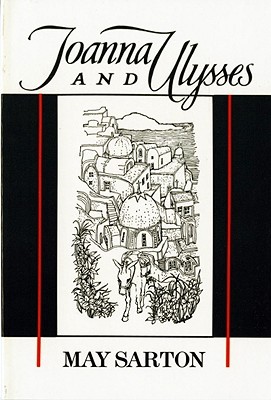
Let’s take a look at an excerpt from May Sarton’s Joanna and Ulysses. This comes from the end of the second chapter. Joanna, thirty-year-old Athenian in the 1950s, takes a holiday to Santorini, where she unexpectedly adopts a donkey, Ulysses, to save him from maltreatment:
In spite of the drama of the day, into which she had thrown herself with such intensity that there had hardly been space in which to analyse what was happening to her, Joanna felt strangely at peace. However preposterous the adventure, it was related in some way to the inner person... and this was true in spite of the fact that she had at first winced before taking on a gratuitous responsibility, when, after all, she had set out early that morning, so long ago, in search of freedom, determined to be committed only to her self, the Joanna who had wanted to cry her identity aloud to the sea gulls. Well, perhaps, Ulysses was a kind of answer to that un-uttered cry. She had taken to herself already a part of the natural world; she had indulged in a private madness, and, for once, the gods seemed to be smiling at bravado.

While down below the secret village slept, here she was as wide awake as an owl, filled with excitement, and at the same time at peace. Already her fingers were itching for charcoal and canvas. She stood there, wrapped in a sheepskin, for the air was cold, and knew her joy. It breathed through her in a long sigh, the sign of a person who lets fall heavy clothing onto the ground. Within, she heard the donkey relieving himself.

"Dear soul, you are safe," she murmured, and perhaps it was spoken to herself as well as to the donkey, for perhaps she too had been in need of rescue.
What I love here is the boldness with which Sarton charges into Joanna’s mind (or, the introspection with which Joanna charges in herself). The passage is thick with emotional detail–the initial peacefulness, the pain of unexpected responsibility, the memory of that morning’s determination, the excited desire to begin painting, joyfulness, relief–
I think it’s important to say that by explicitly naming many of these emotions, Sarton makes them forces in the story. This is where less explicit discussion of the inner world, as in film, might struggle to portray the same complexity. Sarton’s writing invites the emotions in like they are characters themselves, and we will watch Joanna grow and change over the course of the novel, and it is easy to empathize with her. We cannot avoid it.
Characters in our fiction may or may not be as deeply aware of their own feelings as Joanna. Third or first person narrators might have different ways of dealing with these inner worlds. This dimension, which accounts for much of the misunderstanding in real life, does too within our stories.
Whether our characters are aware or not, I think it’s essential for us as writers to know intimately our characters’ minds. We must consider at all times what emotions they are feeling and how those impact thought and action. We must empathize with them first, before the reader can.

Needs: Character Motivation
Nonviolent Communication asks us to name our needs, those universal needs shared by all humans, including the physical, emotional, the interpersonal–I think of Maslow’s hierarchy of human needs and Gilligan’s anti-patriarchal theory of moral development.
In some previous posts on conflict, I have come to the conclusion for myself that I want to replace focus on conflict with focus on characters’ needs; conflict might emerge from a need unmet, but ultimately it is the need that forms the core. When we identify emotions in a character, and perhaps really before we identify them, we must carefully consider the characters’ needs. What is driving the character at each moment?
Like real people, complex characters do not have only one need. They have a range of needs, which assert themselves at different times, contradict, are ignored or screamed to a flock of seagulls in the sky. When we identify a character’s range of needs, we are able to choose their actions reasonably, authentically, not to fit our preconceived structures, but in real human ways that will allow real life for them within the text.
Requests: the Action of the Story
These needs lead us and our characters to act. What will the characters do to try to meet their diverse needs? Will they resort to violence? Will they suffer unfulfilled? Will they work to discover and then share their insides constructively? Will they succeed or fail or some mixture of the two? I hope by reframing our stories in this way, we can keep our focus on the human heart that drives us all.
As you can see from the above, these thoughts are far from complete, and I feel most certain of the ideas about feelings. Needs and requests–how these fit I’m still exploring. I would love to hear your thoughts.
I hope Nonviolent Communication has a place in the future of our world. We fiction writers can use it too, to help perfect the gold in our craft that already exists. To bring introspection to others, to encourage empathy.
What do you think about these ideas? What ideas of character development and emotion and motivation and empathy resonate for you?
If you would like to learn more about Nonviolent Communication, check out these sites:
- The original book about Nonviolent Communication is here.
- The Center for Nonviolent Communication–this organization was founded by Rosenberg and offers workshops.
- An overview of the theory of Nonviolent Communication can be found here.
The snow has melted. We are back to rain. I’m enjoying the sound of it now dripping on the window. It’s one of the beauties of this place.
Wishing you a peaceful, productive, and good week, and don’t forget to check out the other #AuthorToolboxBlogHop posts.



I love how you have fit non-violent communication into writing! I am a big believer in it for the help it brings to family relationships.
LikeLike
Interesting parallels here. I like where you’re going with this. In terms of making this a methodology that fiction writers can use, I’m not sure how to make that happen. I know there will be push back, and it will likely be from the same people I had to block from commenting on my post today.
LikeLike
What a beautiful post. I had no idea Rosenberg started these points in Nonviolent Communication. I used to teach managers a curriculum similar to what you said here in this post. It’s called Crucial Conversations and parallels in many ways to the main point. I really like the call to action. I love identifying what we are feeling and why we are off. It took me a long time to do so myself. I do see the validity in using these points of communication on our own writing. Thank you and Happy Hop Day 🙂
LikeLike
The internal workings of characters is something I’m always working on. Improvement needed… no matter how well I do, I still want to do better. Thanks for your post. 😉
Anna from elements of emaginette
LikeLike
What an interesting post. As one who devours old west stories and thrillers, I’m noodling how this would be integrated into those genres. Hmm…
LikeLike
I feel like I need to print this off and use it, not just for writing but for marriage, HA! I don’t use violent communication, nor does my husband, but it’s a nice reality check doing it this way. Thanks for sharing use useful information!
LikeLike
A very fresh approach to writing and making decisions about writing! I’ll have to try it out 🧐
LikeLike
Wow, this is a lot to think about.I’ve certainly used non-violent communication without realizing it. I’ve done a fair amount of descalating in my time. But I’ve never considered approaching fiction from this angle.
Thanks!
LikeLike
Great post. Bookmarked for future use!
LikeLike
You might enjoy my website, http://www.exploreconnection.com about my book based on NVC.
LikeLike