With IB exams canceled this year, second-year students have been given the choice of continuing with their classes or not. I’ve had a little less than half my English Language & Literature group stick with me, and freed of assessment’s narrow course, we were without direction, of a sudden free. The students said they wanted to read Shakespeare. What a treat! When I’d suggested the Bard at the beginning of the year, they had declined. It was too intimidating, they had said. Without an exam, the teeth are gone from it.
We’re working through A Midsummer Night’s Dream. For all but two students, this is their first time reading Shakespeare. Most are not native speakers of English. And while it is largely an exercise in simple comprehension–making sure the characters are sorted, that Oberon’s various schemes are clear, Puck’s mischief-penchant I’ve explained, and the four lovers–well, we’re going for the gist first. The students say they are understanding better as we read, and they are.
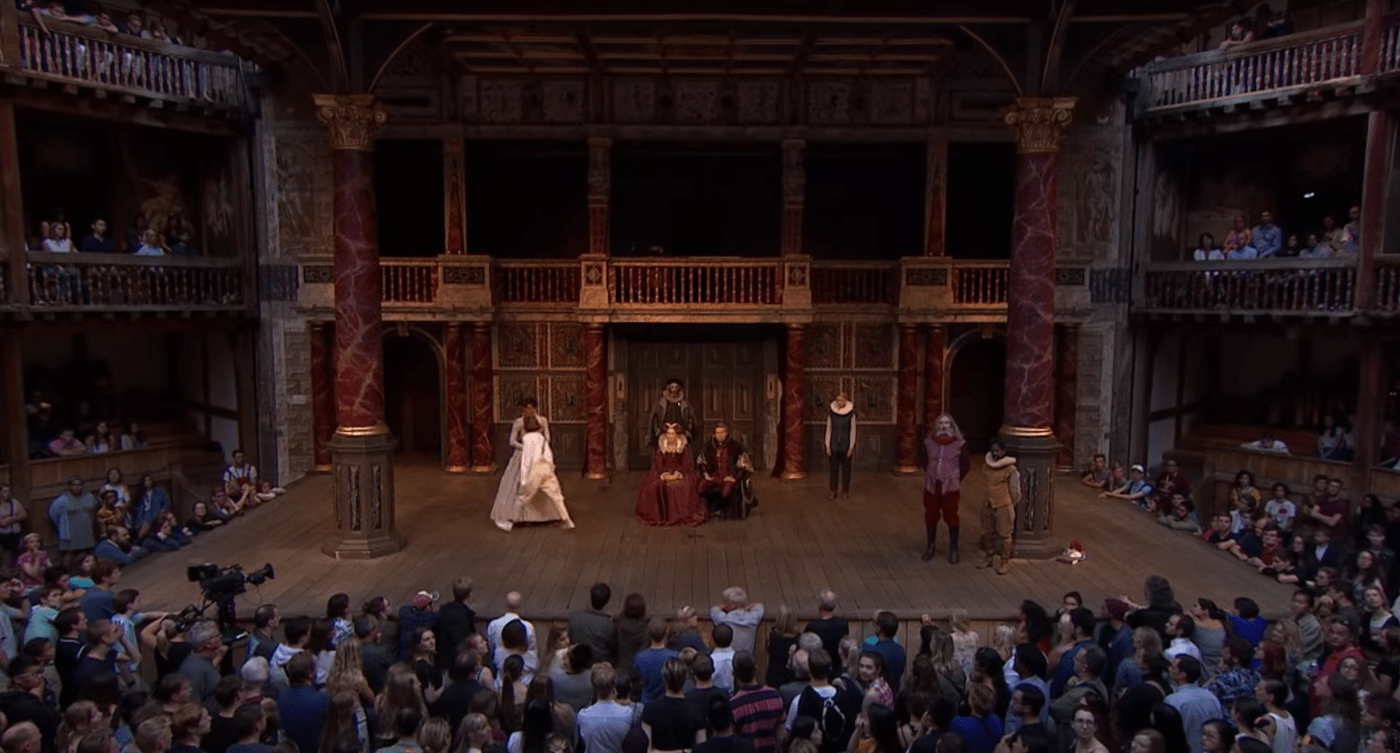
Approaching the play’s end, a student alerted me to a series of limited-time free recordings streamed on YouTube by the Globe in London. Through today runs Hamlet. Next week is Romeo and Juliet, followed anon by a range of shows. Do check them out, or, to support The Globe monetarily, there are dozens of productions you can watch here. The Globe does fantastic work, performing Shakespeare plays in the minimalist style of the day, while updating the casting, gender-bending, incorporating sign language as an integral element of a number of productions, and if you find yourself in London, a 5-pound ticket to stand in the yard, groundling-style.
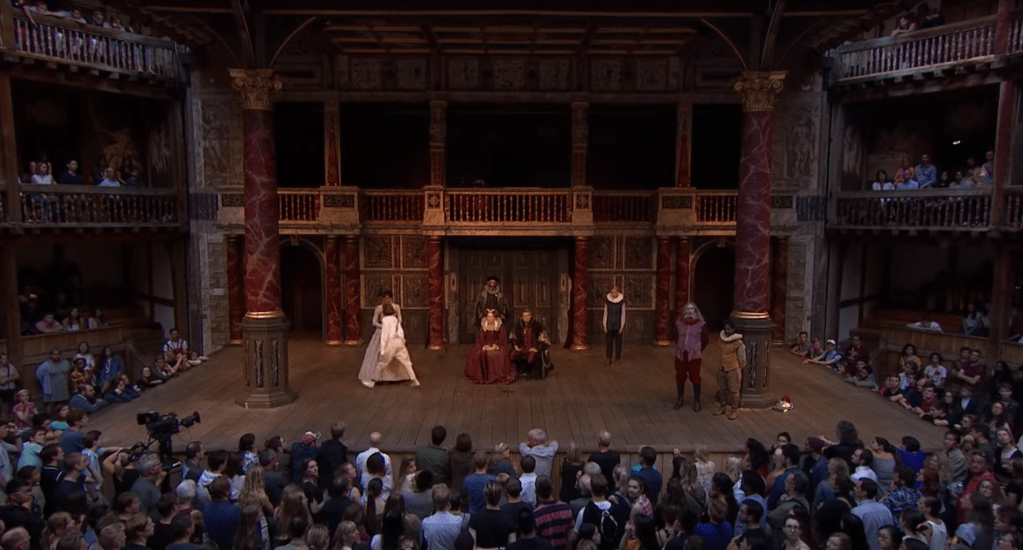
Last night, I cozied in for Hamlet. There stood the ghost upon the tower, frightening Marcellus and Horatio, the awful court of Claudius in counterfeited pomp, and dour, sour Hamlet, who opens brooding in a black hoodie.
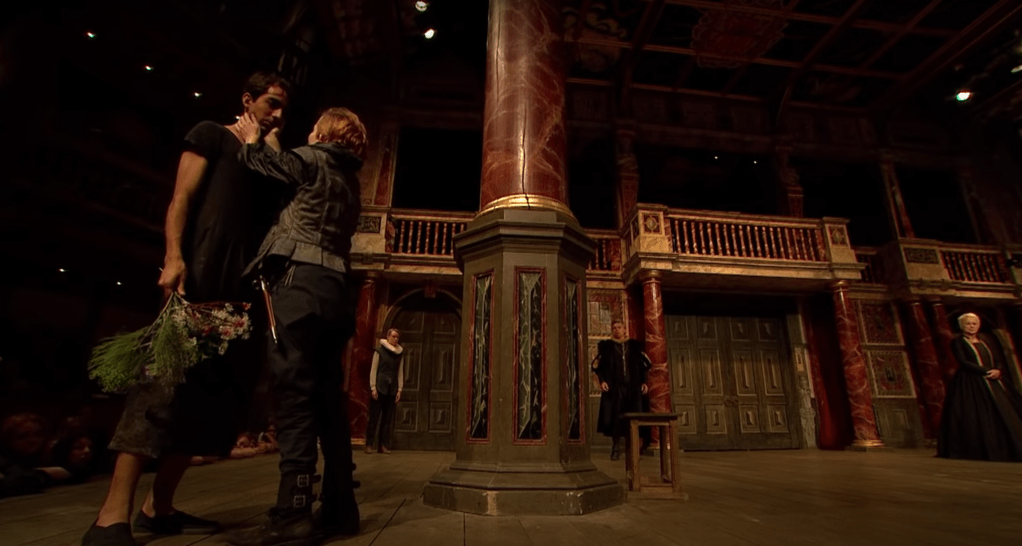
And brilliant as the acting is, swift the pacing, bold the costumes of the Globe production, I could not help but compare another streamed production of Hamlet from five or six years back, the venue now forgotten, though as well acted I am sure. This older production felt itself free with something the Globe avoids out of course: special effects. It was nothing too fancy. The ghost glowed, I remember. Hamlet’s world grew dark while he brooded. The sets were built up beautifully. And all of this had an undeniable impact. I’ve remembered it.
Minimalism requires the audience to imagine, or it focuses our attention on the acting and the story. For both these things, I applaud it, and in the range of theatrical productions I have seen, my favorite in memory have struck a balance. All one way–the completely bare or the sumptuously bedecked–might reduce the life of the play. Or maybe this is just me.
I think about how this applies to fiction. In one way, fiction is necessarily minimalist. By its confinement to typed words on a white page, it will forever require the reader’s imagination for its flesh–
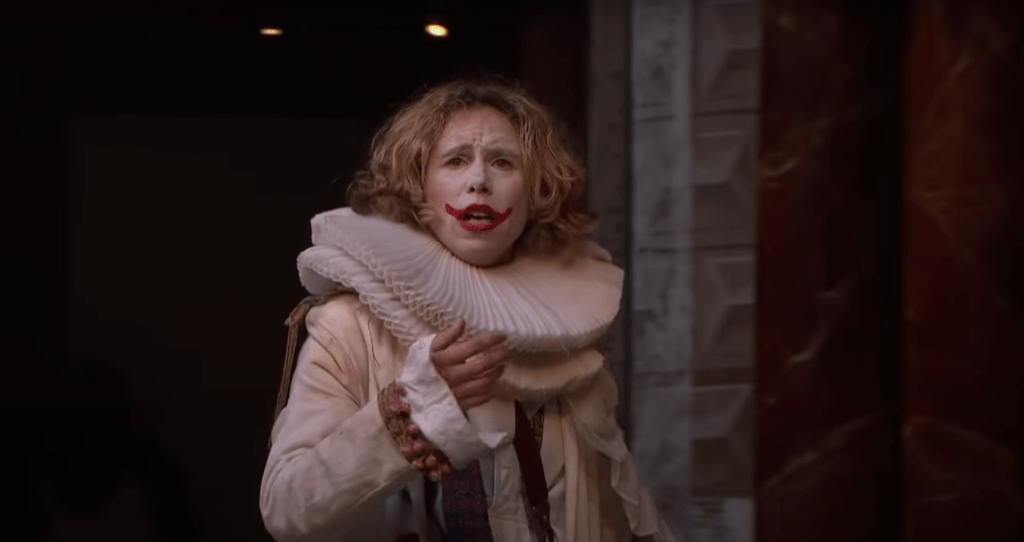
Yet I think a more useful comparison returns again to a question that has followed me since the inception of this blog: is working to excite and engage the reader, often through heightened drama, conflict, or other tools beyond the emotional resonance of daily life–are such “special effects” helpful, or do they damage the story we are telling?
I consider these Hamlets. Where was the strongest character? Where the most powerful thinking generated? Where was Hamlet most alive for me? I laugh here–for it was neither of the productions I’ve mentioned, nor even the incredibly intimate (and minimalist) production I saw years ago at the American Swedish Institute. It was the careful study in a Shakespeare class at college. Long hours of contemplation. It was on the page. And so I must remember, that close attention, whether minimalist or decadent, the lingering gaze can glean rich meaning.
So perhaps the question should be reframed to this: what can we as writers do, then, to leave readers thinking and talking about what we read after they are done? A roaring conflict might indeed achieve this. Maybe the emotional ferocity of such “special effects” is what we need to keep the brain alight. Or perhaps its impact is the reverse: we get caught in the thrill of a page-turner and miss the deeper significance behind. We flip the page so fast, we’ve missed the core for focus on the surface, and then on to the next book for the next thrill–
My posts on conflict and page-turning excitement have been somewhat disparaging. But perhaps now that I feel reasonably freed from the yoke of the necessary, burning conflict as the heart of every story, now that I feel free of that, maybe I can look back and see some of the value conflict can provide. Use it as one of many tools, perhaps.
I confess, my energy is low. Another week is coming. I can’t say I am excited. But I’ll be fine. I’ll get through and do my best. I’ll keep on writing.
Best wishes to you, and be in touch,
Jimmy


As an occasional reader, I do like conflict, because my purpose of a fun read, like watching a fun movie, is to take me away from my everyday life – which like most people, is comparatively mundane.
LikeLike