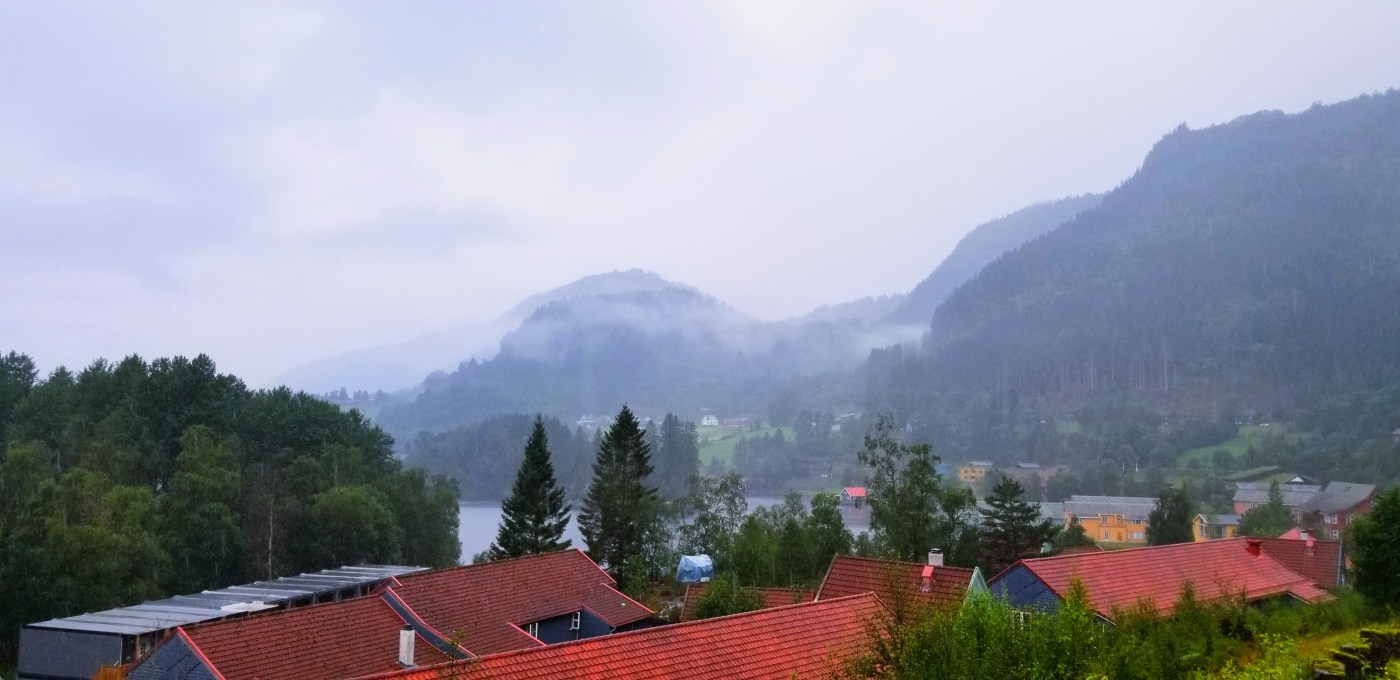
Work went from zero to one hundred more abruptly that it ever has. Two weeks ago, that last easy week of summer, I wrote an hour each day, completed consistent thirty-minute workouts, weekly video-calls with family and friends, eight hours of sleep each night. Two weeks, and I feel already wrung dry. Although they’re all good things I’m doing–meetings with students, planning lessons, training peer tutors, coordinating student orientation–I am faster than I ever remember flailing at the end of a tether.
Balance will come. The beginning of the year takes so much groundwork, culture to establish, new classes to get to know, extra meetings–this work must be done now if the students are to have the best start, if the rewards of an organized system, of dependable teacher-student relationships, if these rewards are to be reaped later. So I remind myself as I trudge back up the hill in rain, to a refrigerator bare of leftovers now, to a weekend’s long to-do list.
We are so fortunate to be almost all of us here in person, with a robust quarantine procedure for students entering from red-marked countries and COVID testing for all students. I’ve made a mask from a sock, and it’s suitably colorful and more comfortable than I’d expected. Some students can’t get to Norway yet–visa application delays, border closures, canceled flights. There are some we might never be able to get here. I’m trying to keep focused on the good things.
In all of this, I know I must find time for the writing. When I don’t, my days feel listless. Writing is where I process what I’m feeling, or escape, disconnect fully from school, which allows me to return to it refreshed. Beyond this, maintaining my habit is important to me. I’ve made a commitment to myself, and while I might miss days now and then, it’s important to me that I keep the tap running, don’t stop for too long.
How can we find the time to write when so many other things clamor for that space? How can we write when we are tired?
Get up early
Some (no-doubt crazy) people wake up at five in the morning to exercise. Others do it to write. Last spring I took to setting my alarm back one hour, and I use that sleepy time for an hour’s drowsy writing. This has been the single most helpful thing in maintaining my writing habit during a busy school year. For inspiration, check out the #5amwritersclub on Twitter.
Yes, you’ll feel sleepy. Yes, your body will adjust. Yes, the writing may not be your best. Yes, it may be better than you would expect. Give it a try for a few days. See if it might work for you. I’ve been back at it this week, waking at six to be down on campus at eight. So far so good, if a little sleepy.
Schedule it
If you use a calendar, schedule your writing. If it’s a commitment that you choose to make to yourself, give it the place on the schedule it deserves. This can help avoid a situation where you’ve booked up all your time and nothing is left for writing, and it can signal to the busy brain that writing is something worth investing time in.
Celebrate what you do, and let go of what you don’t
When I began trying to add an exercise habit into my daily routine this summer, instrumental was a daily addition to the calendar where I recorded what workout I had done. Seeing the entries accumulate gave me a great feeling of accomplishment, and the desire to be able to add another line helped motivate me on days I wasn’t sure I could. Keep a log of when you write, and celebrate that list!
There will always be days that won’t work. Whether we’re sick or in pain, overwhelmed with other commitments, or we simply forget, this is normal and fine and it never means we have failed. On these days, it’s best to be kind to ourselves. Encourage, but avoid reproach. Tomorrow, try again, and when you can write again, be sure to celebrate.
Should, or have to?
This is one I think I can do better with. It’s something I tell to students all the time when they come to see me about feeling overwhelmed with schoolwork. “Have you overcommitted yourself?” I ask. “Let’s see if there’s something we can find to change.”
This is always easier said than done. We agree to things because we want to do them, because they too are important, and many tasks on our busy to-do lists really are urgent and important. However, we are humans, and we have limits. We cannot do it all and we must choose. If writing is important to us, where in our priority stack does it fit? What might we remove in order to have the time?
Here, I stumble. Teaching is a profession dangerous for the perfectionist. Always there is something more that we can do, and every additional action we take feels so important for the experience of our students. The intrinsic motivation to make our students’ experience as positive as we can sometimes leads us to push ourselves too hard. We sacrifice too much of ourselves. We become drained.
Several years ago, I was seeing a therapist who gave me the advice I still use, although I could still apply it more consistently: divide everything on the list into have-tos and shoulds. The shoulds will pile up. They are infinite. They are such great ideas. But they are not have-tos. And then you do this: you do all the have-tos first. Then you do whatever shoulds you can within the reasonable limit you identify for yourself. The rest of them, you just let go. In that time released, that’s when you write.
Conclusion
Each of us has different circumstances, and what has worked for me may work for you, or it may not. What have you found to work best? How do you find time to keep writing when other parts of life swell up? How do you keep focused? How do you keep writing?
Best wishes for the week to come, and thanks for stopping by,
Jimmy


Kudos to you! I wish I was that disciplined but I’m just not. I get frustrated that I still haven’t finished my novel – but I would get frustrated if I didn’t do the other things as well.
As you said – we do what we can.
LikeLike