
My sister is, as far as I can tell, a financial genius. I might, with a knowing air, explain what “bonds” are to a class when teaching The Great Gatsby, but in a conversation with my sister, I realize quickly that I speak really with the self-contentment of naiveté. I might know my “bull” and “bear,” but in a world of “black swan events,” “candlesticks,” “haircuts,” and a “dead cat bouncing,” where “margin,” “float,” “street name,” “split,” and “hedge” and “short” and “strangle” all mean things I’ve never thought about (let alone the ominous “death cross”), I see that I am likely to remain a fledgling in the nest; my sister is the full-flighted swan.
Recently my sister took on the monumental task of trying to get me to understand this even more bizarre domain of cryptocurrencies. I had the vaguest sense: some code, some “mining,” some climbing prices, anecdotes of the danger of lost passwords. But as my sister walked me through the concept of the block chain, this decentralized ledger that makes crypto more secure, as she described the roles of brokers and hardware “cold wallets,” I could not get past the fascination that this whole vista of cryptocurrencies was just an idea that somebody made up, and that they have real monetary value now essentially because a lot of people have decided that they do.

It is this phenomenon, the idea that the decision that something has value is truly at the root of whatever actual value it has, it is on such explicit display in the financial world, it can seem shocking. The recent GameStop surge, the daily vicissitudes of markets that measure the aggregate decisions of investors, the currency exchange rates that jump a thousand times a second as my husband and I transfer some Norwegian job earnings to our American bank account (who knows just what the rate will be when we finally click?)–in all of these interactions, the contingency, the self-referentiality, what feels like sometimes unreality is laid out there before us. These things matter because (and only because) we all have said they do.
But I am tracing this idea. I follow it backward to the roots. The more I look, the more I see this principle of meaning in everything. The more I start to think that this human-determined value of a piece of code is no more unreal than water.
I was teaching yesterday about the broad idea of intertextuality. No text exists in a vacuum, we can say, and the way people interpret one text is always based on what they know of others. When I read any text, from a blog post to a meme to a three-volume novel, I am following the patterns I have built by reading other texts. I am comparing, consciously or not, the writing style and content, making decisions for myself about how much value I give the thing I am reading now. If there were only one text in the whole world, it would be meaningless. The meaning comes because each text exists in a system alongside others.
There is no authority in language but our common agreement, as the novel Frindle so captivatingly explained to my young mind when I was a child: the word “love” is nothing in itself but a pattern of sound. It is because we all have tacitly agreed that this pattern of sound represents an emotion so dear, so powerful and bleak and beautiful and diverse, it is only because of our shared agreement that the word “love” exists at all.
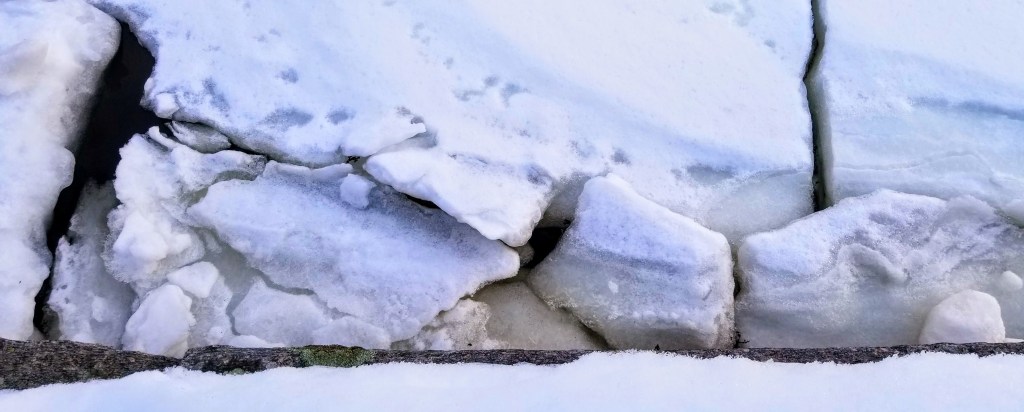
I think it is bigger than language. My hunch is that the concepts with which we map the world–the line where anger becomes irritation, where good turns bad, where winter ends and spring jumps forth, and also where I end and you begin–I have not yet thought this fully through, but I expect they are pieces of this same big web of meaning, meaning that people before us have defined and that we continue to define and redefine and that exists because we say it does.
I think that this is our job as writers. We are mapping out the meaning, exposing the ways people think that they don’t realize, and we are proposing new ways to define the world, make sense of it, reorient, rename. I have now finished Ursula Le Guin’s The Dispossessed. It is brilliant. The way she uncovers so many basic tenets of Western society, from private property to family structure to the purpose of government to its very existence, assumptions that most of the time we would always say, “Of course life is this way. How could it be different?” She imagines so vividly how different it could be, in all the good and bad and complexity. That is skillful writing. That is worthwhile.
If I figure out all the secrets of Bitcoin, I’ll do a post on that. In the meantime, best wishes, and keep writing.
Jimmy



 Jimmy Kindree
I only have one quibble with this beautiful post: A single text would have meaning because each person reading it would each bring a unique meaning to it, based on their own experiences and thoughts. Just my opinion. I love your posts. You always leave me thinking. 🙂
LikeLike