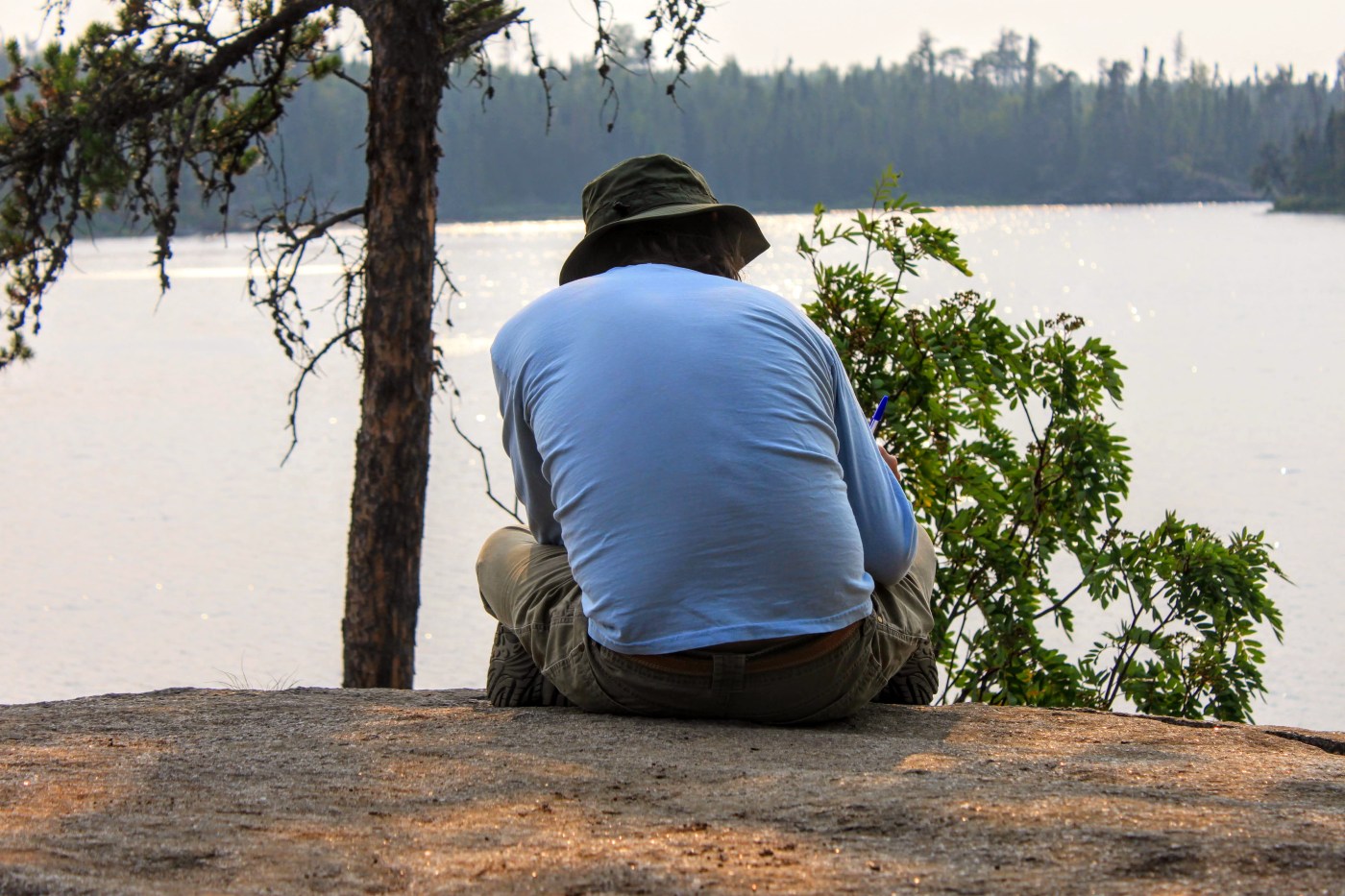
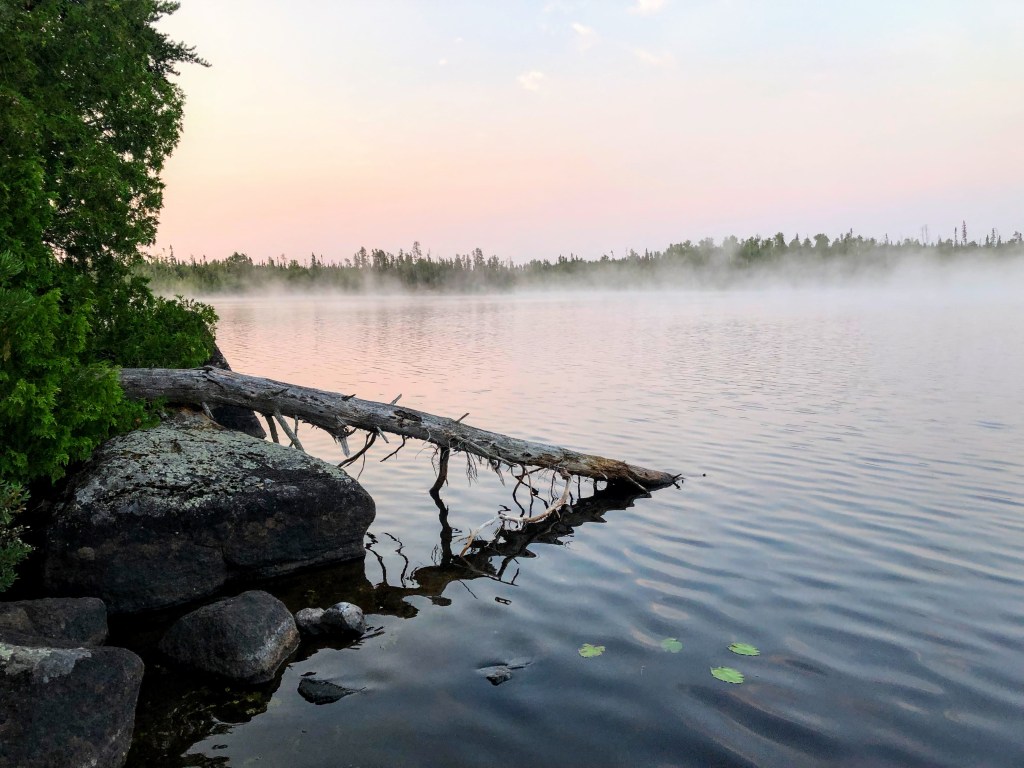
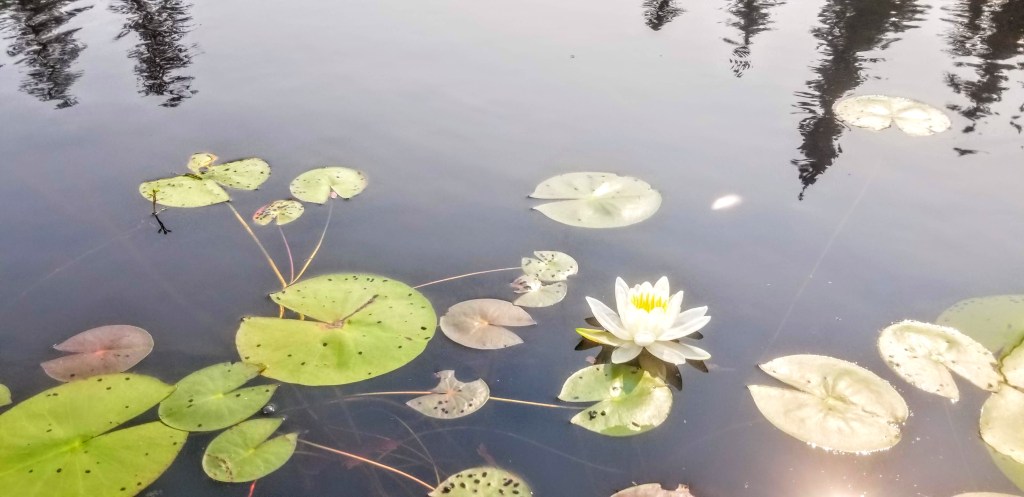
In the north of Minnesota, lakes patchwork the great conifer-birch forest. Land lies flat to the water like it might buckle and sink down, and sphagnum bogs pull the water up and inland, drowning trees and leaving old gray skeletons. Water insects ride the surface tension in great swarms, dotting it like rain does, to chew at the lily pads, pause so that they become creatures I can briefly see, antennae and carapace and the pinprick eyes.
In this wilderness, rules limit human incursion to a great extent. Many of the lakes have no portages to access them; there are no signs for the campgrounds or the portages, which themselves are the only human structures. No more than nine people can gather together at a place. Because of fire danger, we were limited to a camp stove. The goal in these things is that all change in this land result from natural forces and not human ones, that human impact be so reduced that the land can sustain its own equilibriums.
Aldo Leopold in A Sand County Almanac writes so much of wilderness that I had never thought before. One idea stood out to me, about the necessity of preserving wilderness to aid humans’ present and future conservation efforts:
A science of land health needs, first of all, a base datum of normality, a picture of how healthy land maintains itself as an organism. ...

[The] most perfect norm is wilderness. Paleontology offers abundant evidence that wilderness maintained itself for immensely long periods; that its component species were rarely lost, neither did they get out of hand; that weather and water built soil as fast or faster than it was carried away. Wilderness, then, assumes unexpected importance as a laboratory for the study of land-health.
By studying the ecology of what wildernesses remain in the world, we may have a better chance of preservation, rehabilitation, of letting nature establish its own equilibriums in the future again, when we have finally found a way to curb our impact.
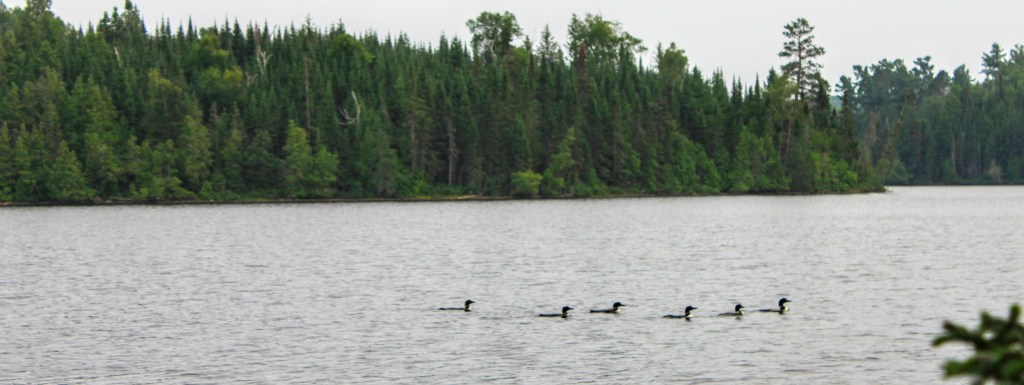
There is much to write about from the journey we took last week, four nights in the Boundary Waters Canoe Area Wilderness, five days of paddling and heavy portages. I’ve got too many pictures and too many images in my mind. I’ll blog today briefly about the experience of writing out there.
The overwhelming feeling was of being fully surrounded by something both familiar and alien. It was like falling from a boat into deep water–water is so familiar, but in such a quantity it becomes a different thing. It is beautiful, it is mesmerizing, it is frightening, it is a being more than a thing. If, as Leopold says, land is an organism, if each component of tree and moss and mosquito and rock and water and brown bear is an organelle in the larger cell of the whole ecosystem, to see the whole as a living entity enacting its own life processes, into which I am incurring, I felt I had to tiptoe. I was on precarious ground in a place that was not mine. For all the beautiful parks that abound, for all the brilliant glimmers of persistent nature that appear in the most urban regions, those are not wilderness. In those places I am always a moment away from the human world. In wilderness, one leaves much of that human world behind. One is passing through the world of another.
I brought with me a journal and some pens. My friend Lauren handmade the journal. She and I had taken a book-making class together in college, and she had made these beautiful journals afterward, carrying forward the skills we had learned. It was the perfect thing to have there in the wild.
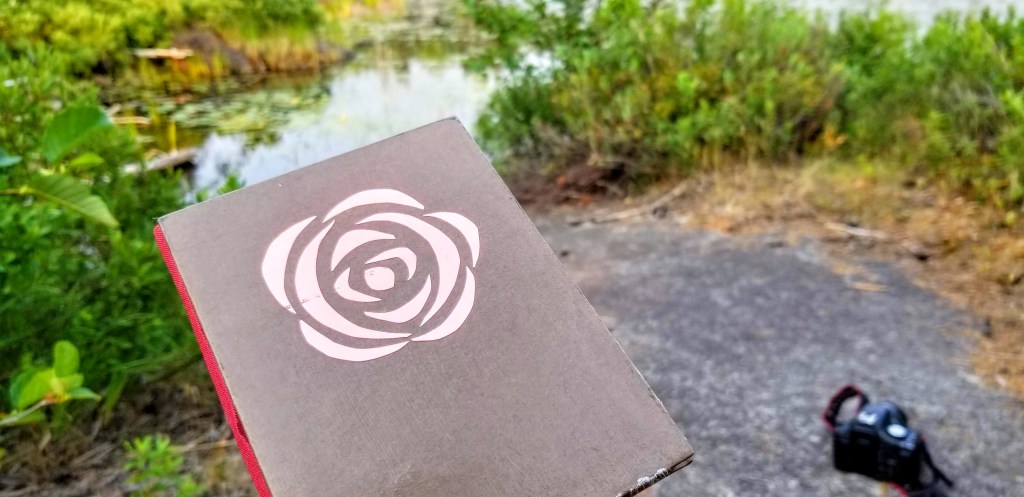
I don’t typically write longhand. In the wilderness, there was of course no other choice. So I opened to the next blank page, wrote the date at the top, and began cataloging my impressions about what I had seen: flashes of memory, records of sounds, images, observations of the plants and insects. I could not write as quickly as thoughts came, pieces of the thought sliding past me and evaporating, but that also I scratched out and erased less, just let words be where they fell.
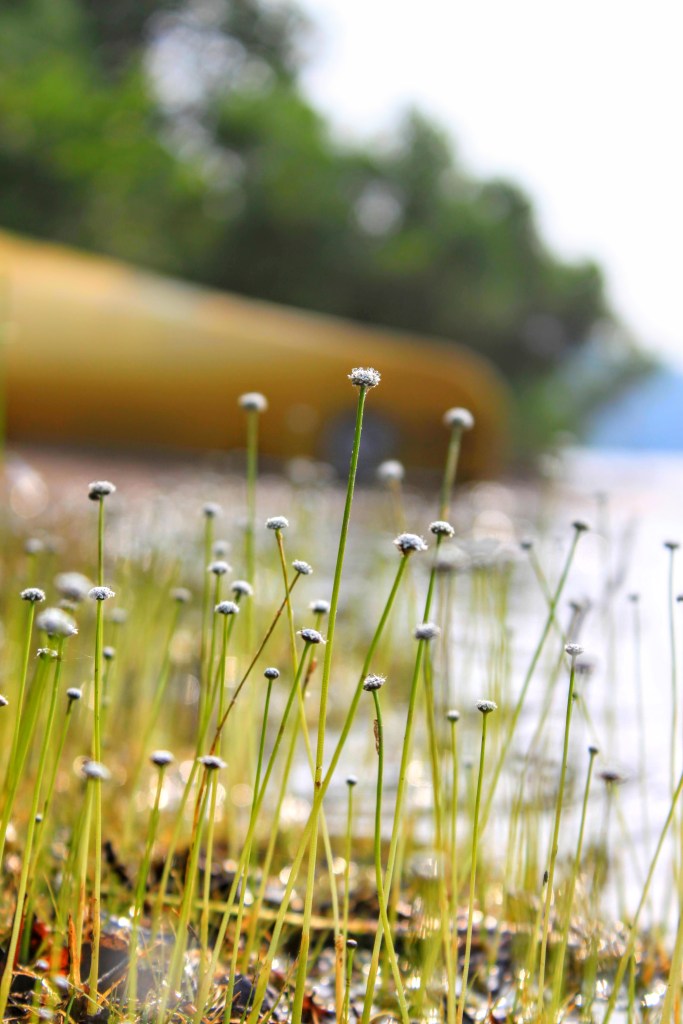
Fiction came to me too, in quick flashes of an experience I might incorporate into a current project, or perhaps new stories. I puzzled over details that I observed, like the way the buds of water lily flowers were held below the surface by a tightly coiled stem, springlike–how might I make that detail a piece of a story?
I thought before I went that I would write poetry. Instead, I wrote long lists of impressions, each entry several paragraphs long. I wrote out questions about what I had not seen on the first glimpse, then returned to the plant I had been looking at to investigate, recorded my findings. I wasn’t planning this kind of documentary, naturalistic observation, but it was what came.
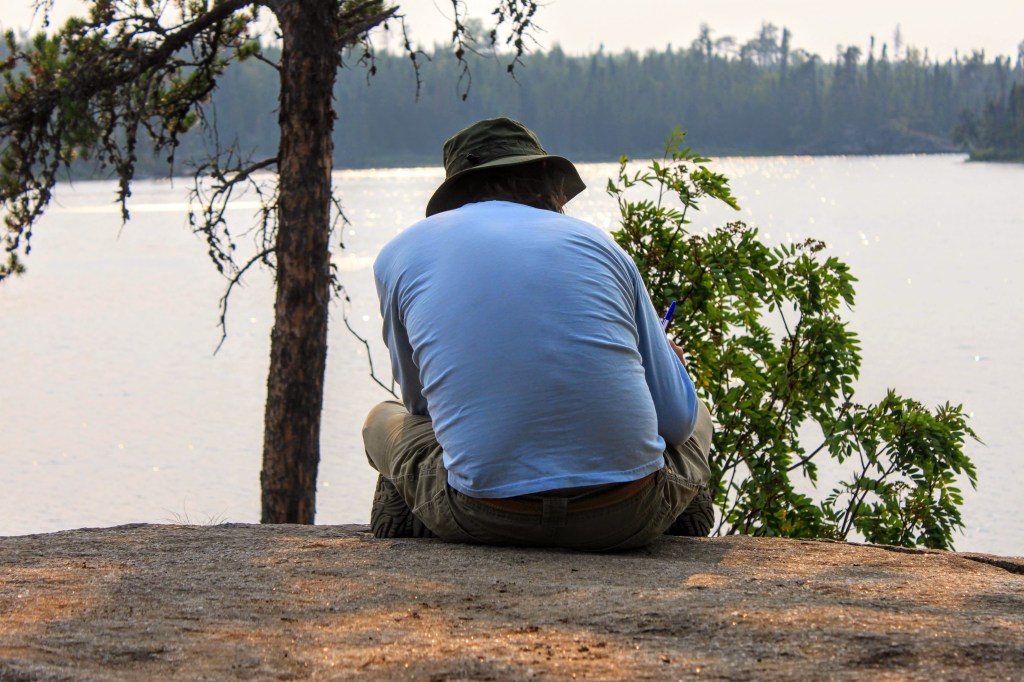
The first two days, I spent a good hour writing in the shade of a tree, moving every so often as the sun traced a path. Later in the week, as the lack of a shower and the wet clothing made me irritable, I lost my thread. I was ready to emerge the day we did, but I was also sad to go, feeling at the last moments a keen sense of having only the barest snapshot of this place.
What do these plants look like earlier and later in the season? Were these lazily flowing reeds that lay down on the water really wild rice before it flowered, or were they something else? There is little way for me to know. I visited briefly this land-organism, and I left it with a greater feeling of its mysteriousness than before I had gone. I can trace only a few strokes of the brush.
We are back in Wisconsin, but Monday we fly out, briefly to Norway, and then on for a short trip in Italy before school begins. Being vaccinated, we are hoping the travel will come more easily this time. Certainly we will have less worry about getting infected or infecting others. I’m beginning to feel excitement for the school year, which is a good feeling.
With love and good wishes,
Jimmy


Your ruminatory paragraphs no doubt contain so many hidden truths and fruitful observations, those pages of memory in words are the most beautiful writing of all. 🙂
LikeLike