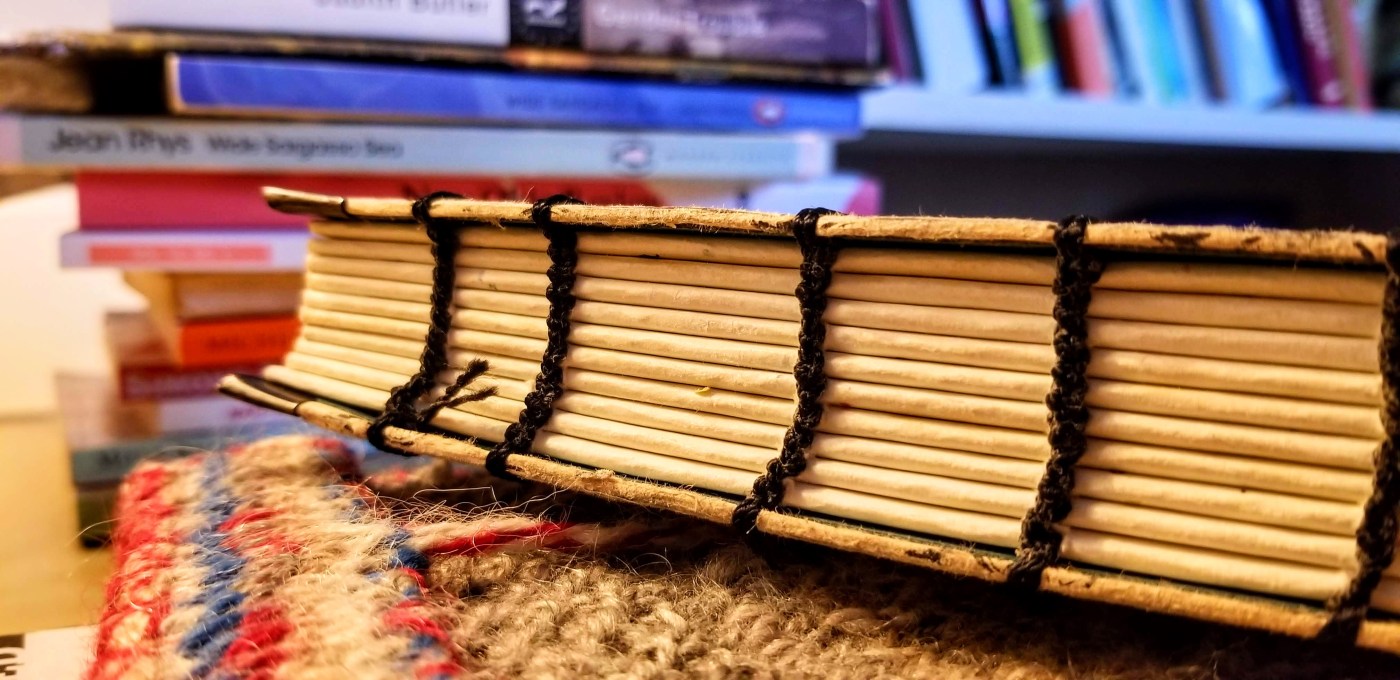
I’m an e-reader lover–the convenience of travel, the ready availability of English books when living in rural Norway, their searchability, the ability to convert my own writing into e-book format for a more authentic read-through–there are many things I love about these devices. But of course, the book as a physical object is not to be lost, at least among my own generation. Books can be such beautiful objects. Their construction, their covers, paper, typography–I won’t be letting physical books go anytime soon.
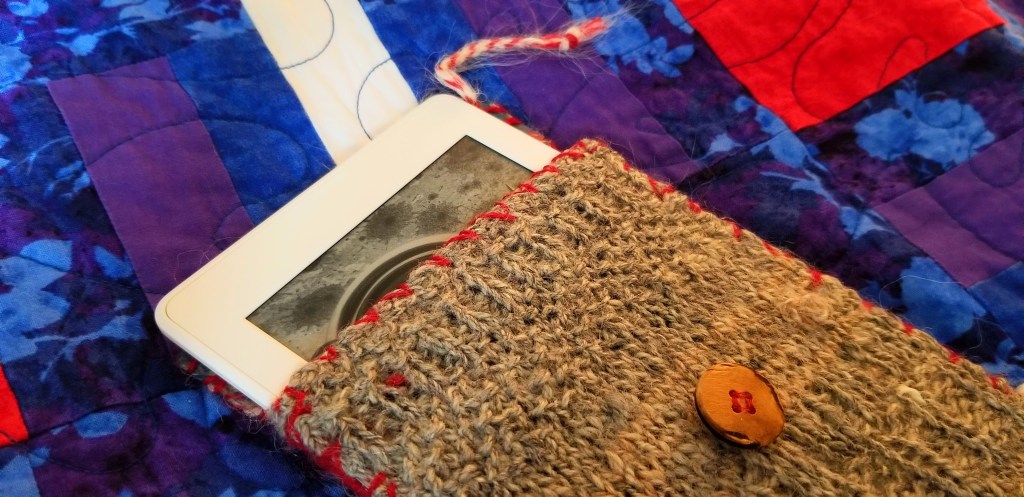
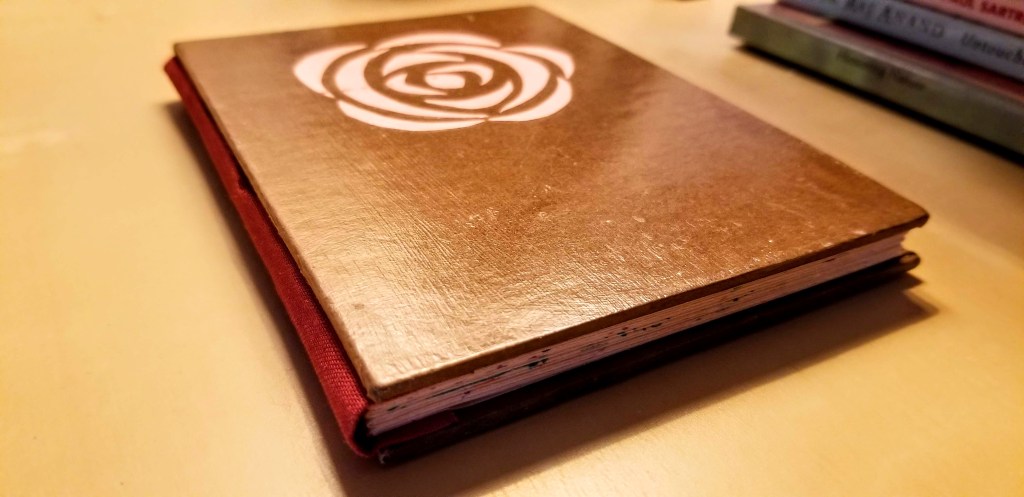
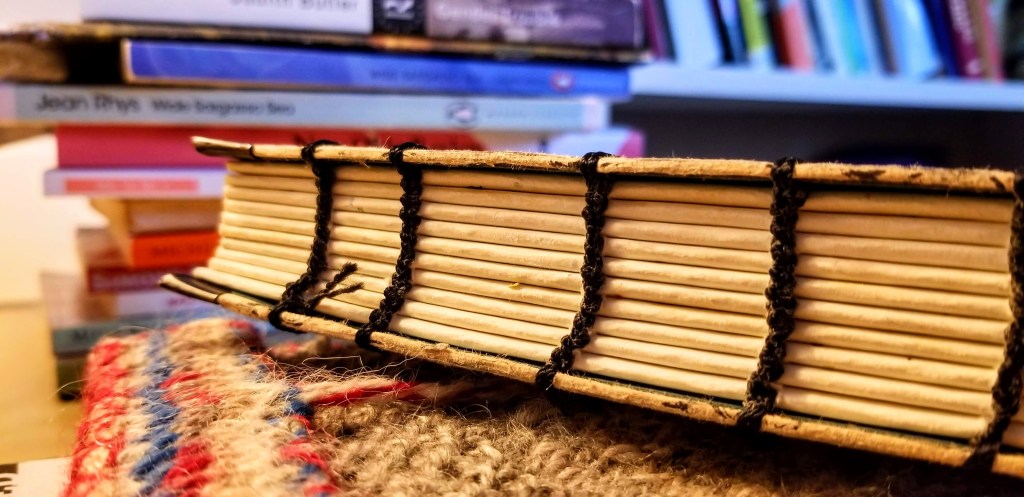
My senior year at college, I enrolled in a course on the history of the book. We traced the story of European bookmaking from the hand-written incunabula to Gutenberg’s movable type, onward through to the paperback, the e-reader, and contemporary trends in information ownership. There was practical work too: we learned and practiced diverse binding styles, printed illustrations on woodblock and etched brass plates, did basic papermaking. This practical work culminated in the production of a small edition of a book, containing at least two woodblock prints, a page of hand-set movable type, sewn into signatures and bound with covers. I produced an edition of six copies of a short story I had written. I wish I had it with me here in Norway. It’s one of the many things I left behind when we moved.
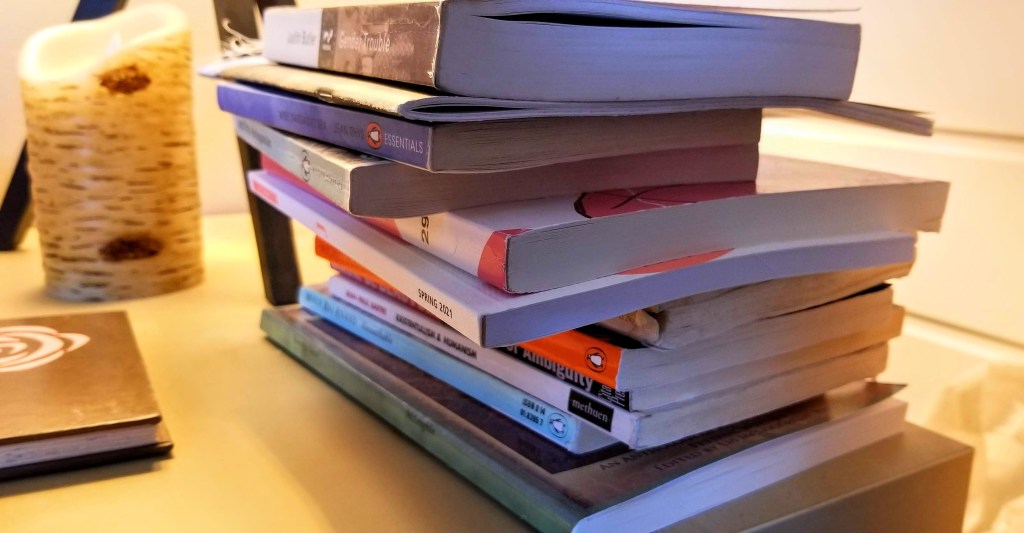
Most of the books in my life are not art books like these. They are mass-market paperbacks with glued-together bindings, and there are a few cloth-bound, older books, sewn with thread I’m afraid will break through paper I’m afraid will shred.
I was thinking about books the other day, the way they are so small, but because of their engineering, they contain a huge amount of surface area. Each thin page multiplies the space again. The information covering that surface area is far larger than what could fit onto a solid block of the same size. Like the human brain that is folded, scrunched, and squeezed into the tiny skull, books contain far more information than their size should indicate. That extra surface area allows the meaning of a whole novel.
Recently, in the student-led creative writing group I supervise, the leaders brought in books they’d found in a huge variety of languages. Every student chose a book from a language they did not speak, and they had to imagine what that book might be about, flip through, let something about the book-as-object inspire them. They wrote imaginary book reviews. Mostly, I gathered from their laughter, they wrote about over-the-top action stories and murder mysteries, teenage romance novels and outdated self-help advice. I’m sure these all had more to do with their own imaginations than the books before them, as they should have, after all.
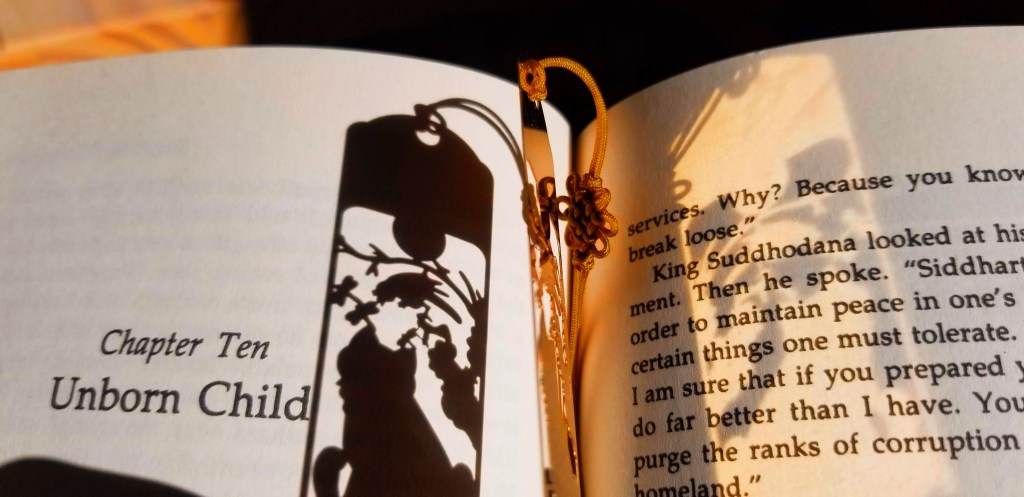
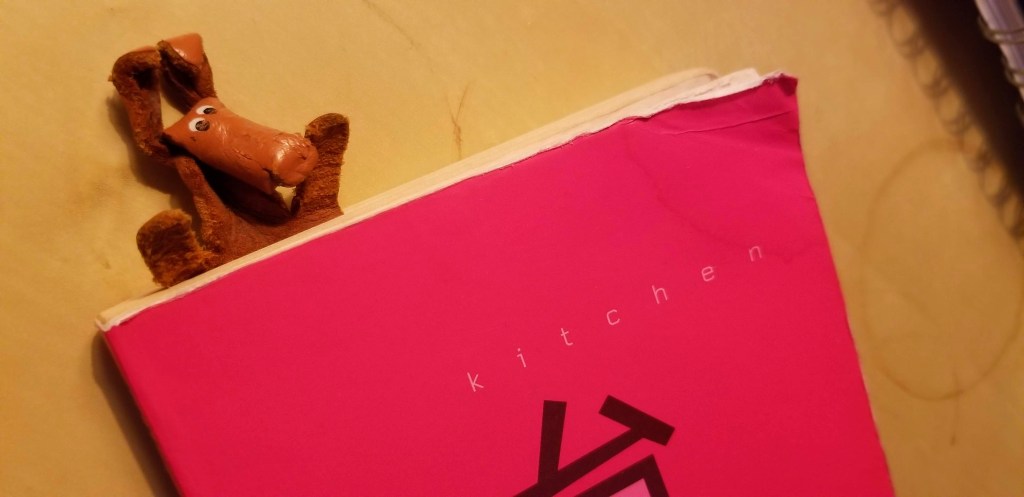
I just finished reading Bastard out of Carolina on my e-reader. It was a mythological, terrifying, shocking, beautifully-told story, and I was able to access it here where no print copy exists. Then now I’m reading Banana Yoshimoto’s Kitchen in a small, brilliantly-pink paperback that I found in the school book room. I move between print and electronic based on what I find available, and that is the best way for me. However I can get the book, I’ll read it.
What is your relationship with physical books? With e-books? Are there particular physical books with great meaning in your life?
Thanks for reading. Thanks for stopping by.
I should also say, I’m considering changing how to do this blog. Once-a-week posts, I feel like I can’t give them the attention they deserve, like the blog is no longer serving the purposes it did in the past. I haven’t made any decisions yet, but I’m thinking about posting less frequently, or we’ll see. Anyway, best wishes for the week ahead,
Jimmy


Yes I agree with you on this. It is nothing like the physical copy of a book. I live physical copies of the V.C andrews books because of the special covers. You don’t get the same experience.
LikeLike