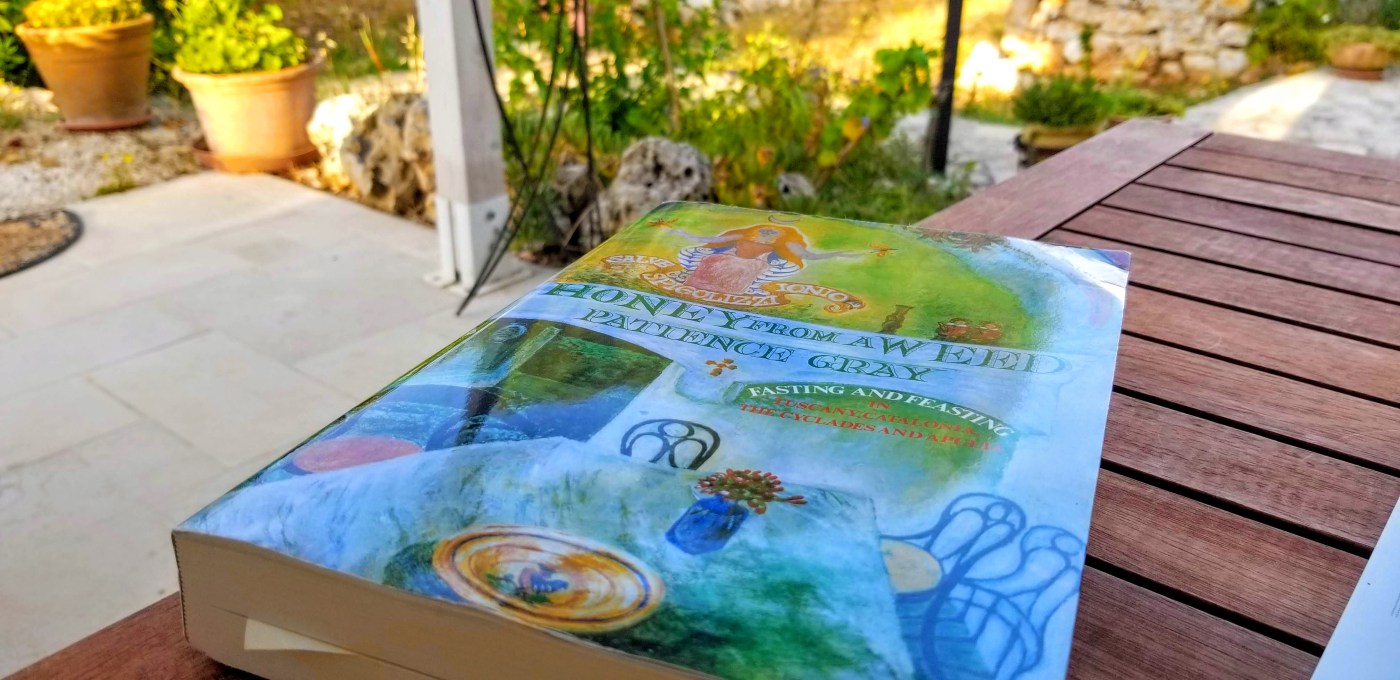
Over the last year, I have been reading parts of Patience Gray’s Honey from a Weed: Fasting and Feasting in Tuscany, Catalonia, the Cyclades and Apulia. Gray traces the food traditions of rural people along Europe’s Mediterranean coast, interspersed with stories of the people she met and learned from while she was living in each of these areas during the 1980s. For these last two weeks, my husband and I have been exploring the region of Apulia (or, in Italian, Puglia) with an eye open for a few of the foods Gray mentioned.
During a continent-wide heatwave, we have been endeavoring to keep cool and greatly enjoying discovering some of these foods we never have the chance to encounter at home in Norway. Today, I’ll share a few of these with you, along with some of the other experiences and adventures along the way.
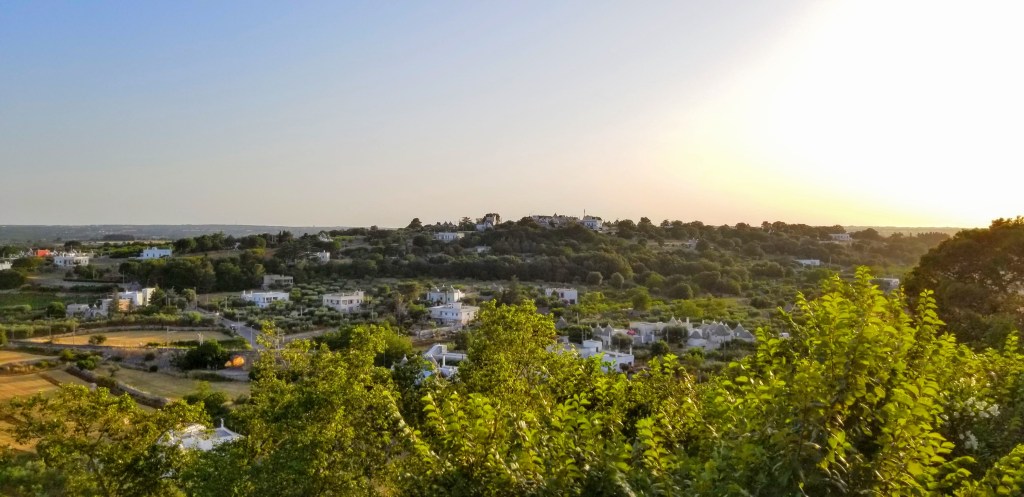
Unlike much of Italy, Puglia is relatively flat. The hills there are are very gentle, and the countryside is densely populated. Historically, we learned, most farmers in the region did not live in town and commute out to their fields as was common elsewhere. The legacy of this today is that at night, much of the countryside almost looks as if it has as many lights as a city.
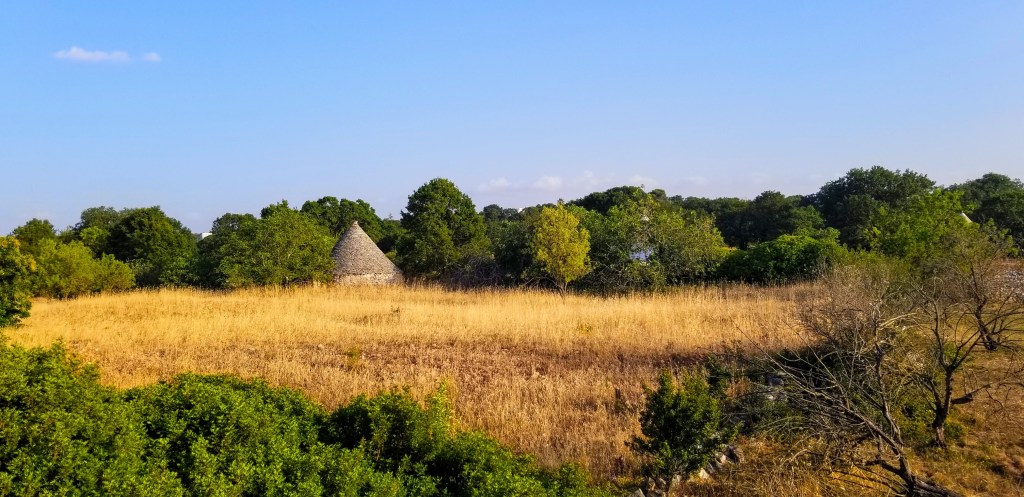
In the image above, look closely to find a number of gray conical buildings. These are trulli (singular trullo), the traditional farmhouses of the region. More on them later!
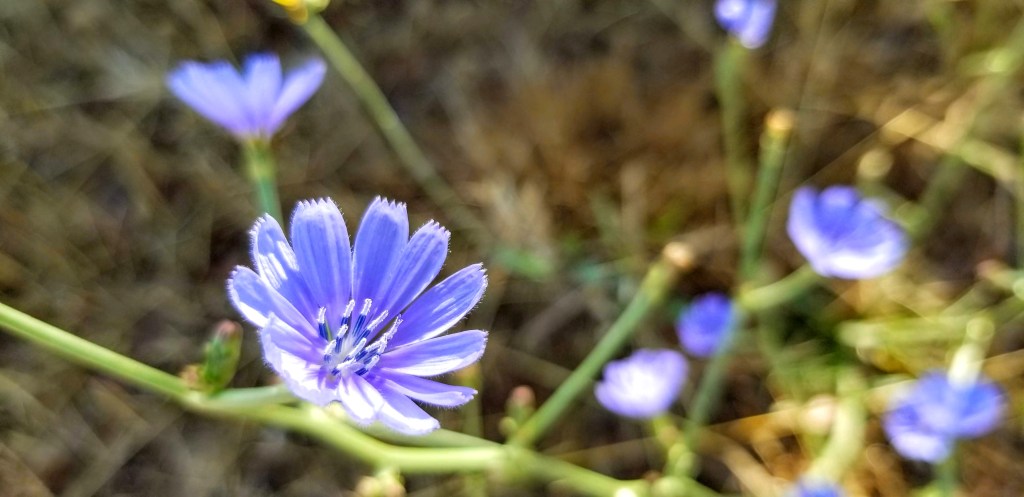
Patience Gray writes enthusiastically about what she calls “edible weeds,” the great variety of visually unremarkable wild plants that were mainstays of traditional food among rural people in Italy and Greece. The picture above shows the flower of wild chicory (Cichorium intybus), one of the principal weeds that Gray writes about, although it would be harvested for eating before it flowered.
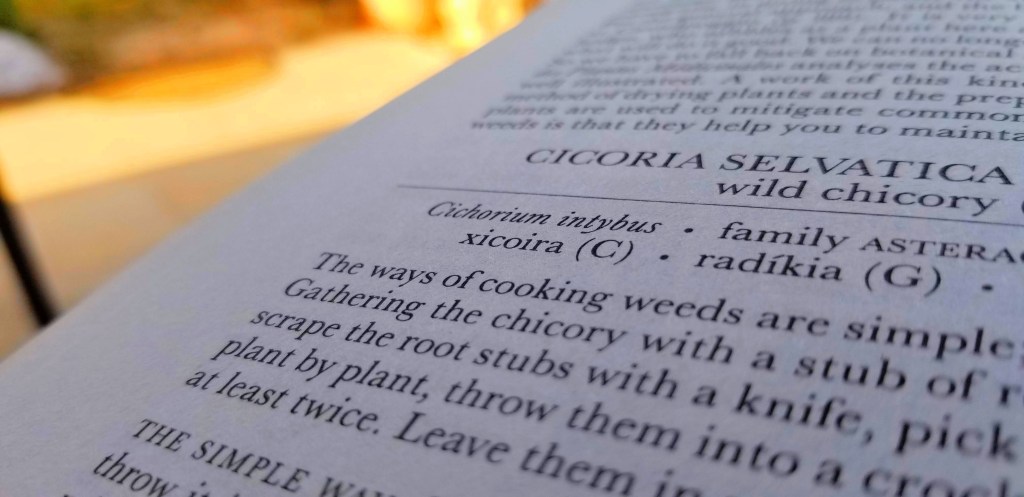
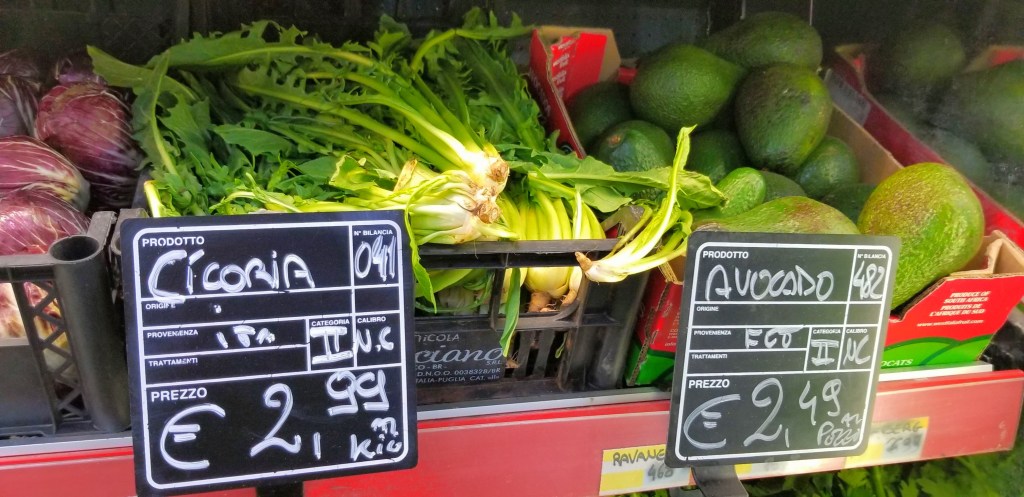
Cultivated relatives of this wild chicory are an important traditional food here in Puglia. A dish of sautéd chicory served with fava bean puree is beloved. The chicory is good but surprisingly bitter. Gray writes that people around the Mediterranean valued the bitterness, and so I have been trying to challenge my assumption that a bitter vegetable is not as it should be!
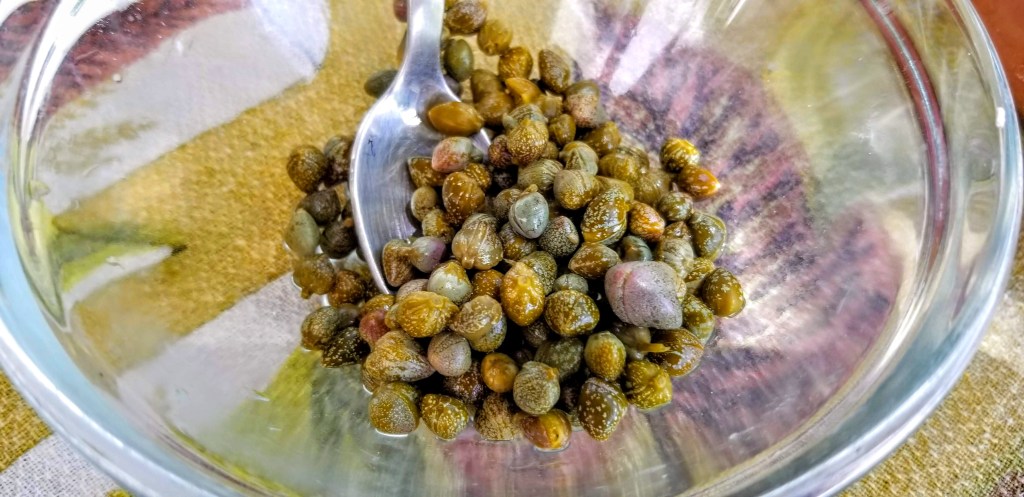
We came across these capers, looking so much fresher than the ones we can buy in jars in Norway. I had never before seen these patterns on their little outer petals. In the farmers’ market on Saturday, we saw capers being sold loose mixed with salt.
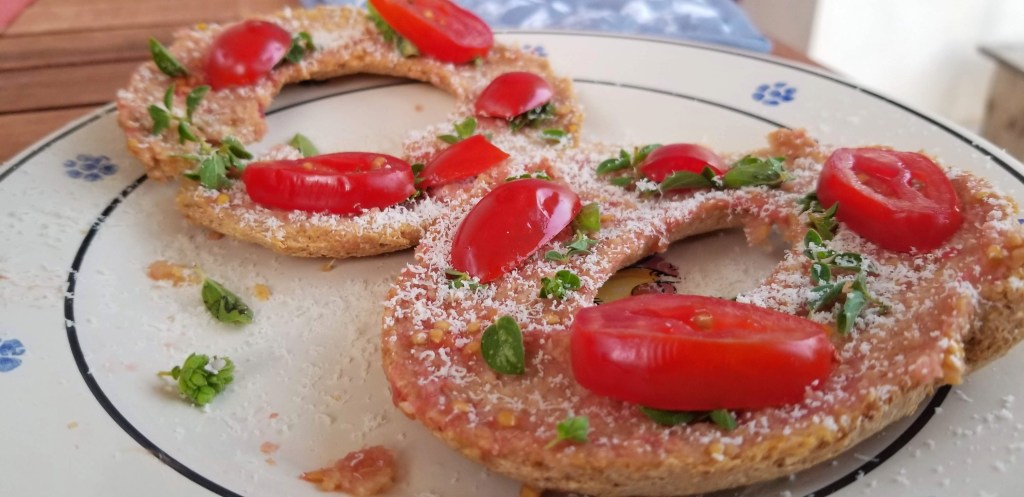
A new food I had never heard of before coming were these dried breads that look like bagels. These are frise, made with a yeasted dough of a variety of grains, including wheat, farro, barley, and others. After the normal baking that any bread would receive, the frise are cut in half and baked again, thus drying them out completely. Historically, this was done as a food preservation technique, and the hole in their center was used to hang them up for safekeeping in the house.
When it’s time to eat the frise, you begin by soaking it for two to three seconds in water. This reconstitutes it remarkably well, and then you can eat it with tomatoes, olive oil, herbs, and a bit of grated cheese. They still have a bit of crunch to them. Really marvelous. We’re going to try making these at home.
Norwegians traditionally made round knekkebrød that were hung up in the same way as the frise for storage. Modern knekkebrød are rectangular, and they are never reconstituted. Because they are thin, they can be eaten as they are, like a large cracker. I expect eating a frise without adding water would be a challenge.
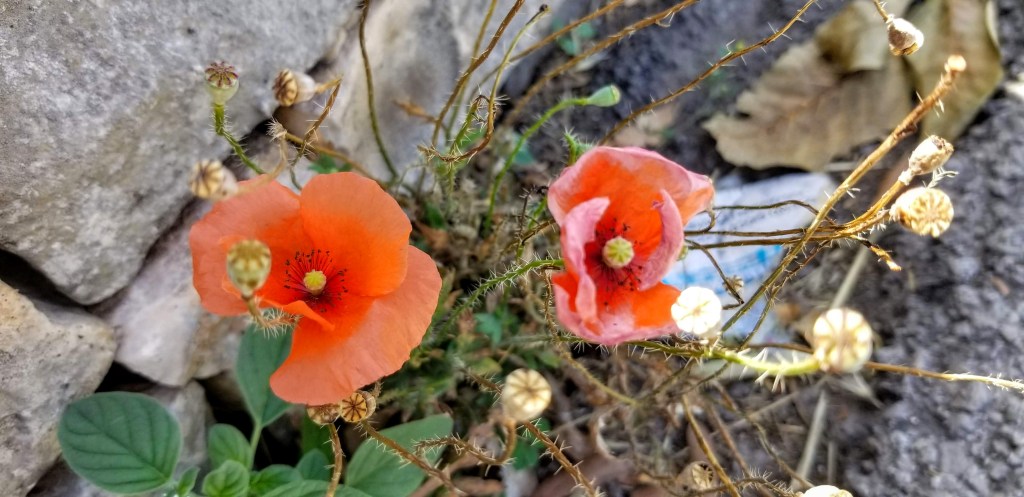
Wild poppies (along with a bounty of marvelous wildflowers) grow around the landscape. We have heard that the poppies can often be considered a weed. Like many weeds, they sure are beautiful!
Here was another gorgeous flower. What could it be?
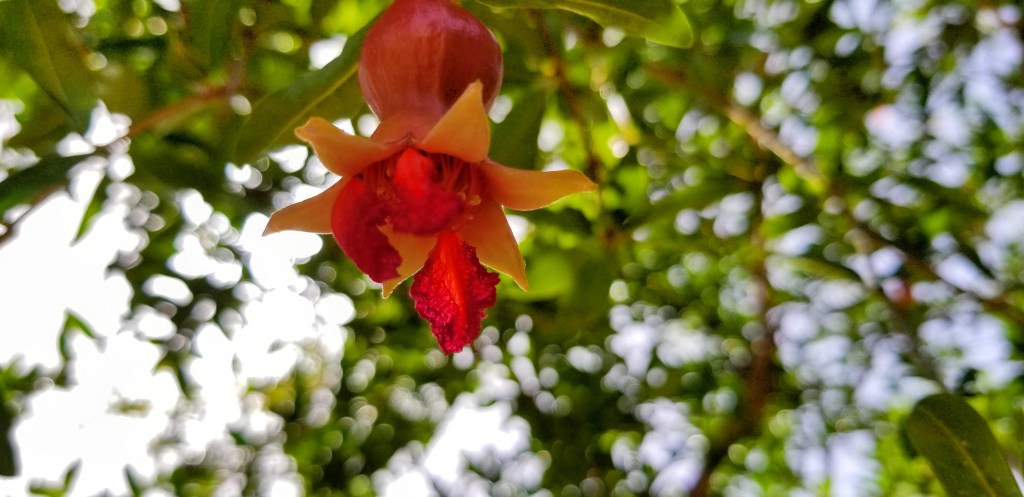
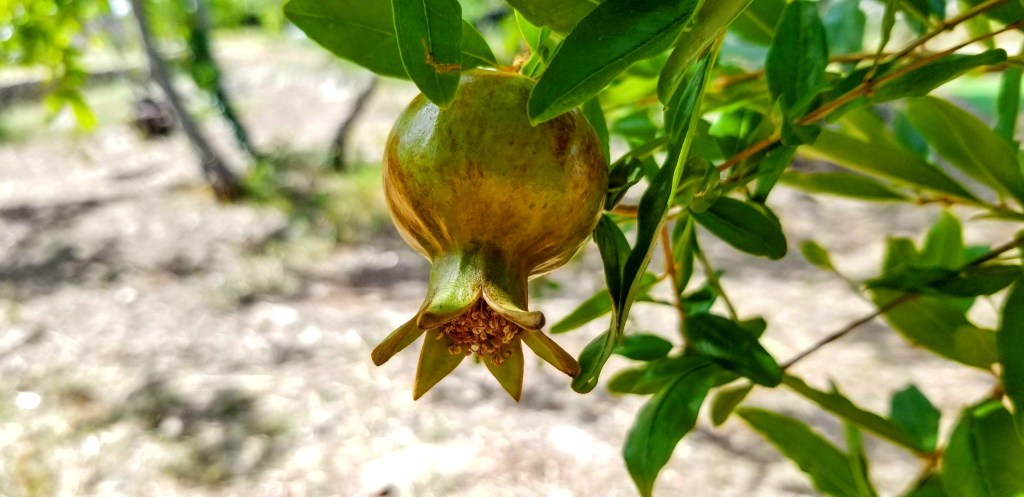
It’s the beginning of a pomegranate! This has been another theme of the trip, seeing the growing plants of foods we normally would encounter only in their packaged, freighted forms. Another in this category, which has been such a revelation to us, has been fresh figs. Fig trees grow everywhere here in Puglia, and the fresh figs are subtly flavorful and beautifully soft.
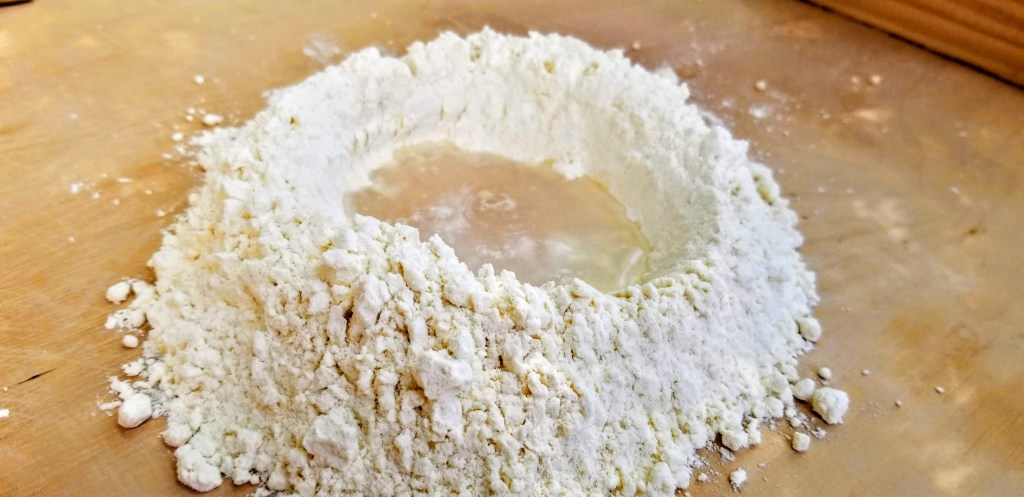
At the beginning of our second week in Puglia, we took part in a cooking class where we learned to make orecchiette, the characteristic pasta of the region. “Orecchiette” means “little ears,” and indeed, you can see the ear shape clearly in these cute little cup forms, with a rough surface that our teacher was determined we should not smooth out.
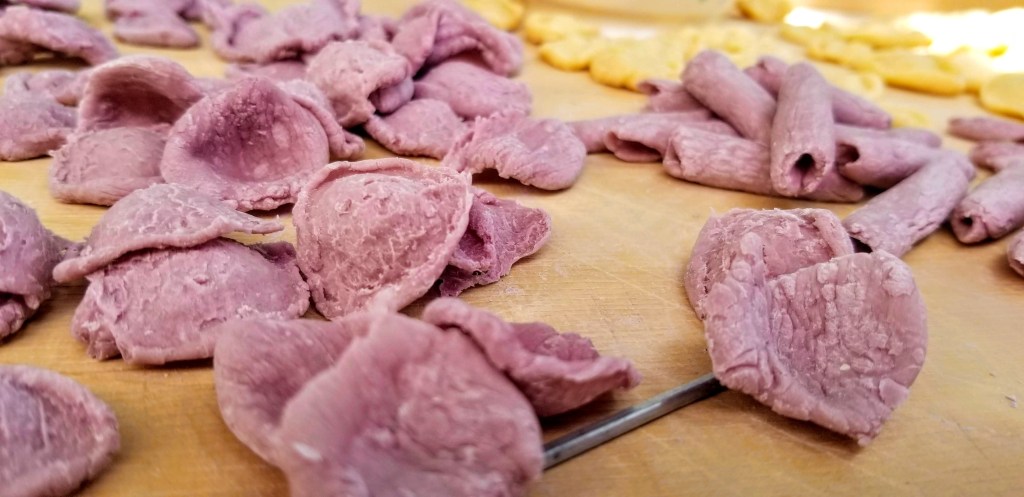
Half of the group mixed water into the flour; the other half used red wine, giving the pasta a beautiful pink color. Here you can see some of my orecchiette, as well as a few macaronis that we made for a few minutes afterward (the orecchiette, we were told, was a “female pasta.” It was important to make at least a few of the “male” macaroni for balance). As you can see, I definitely have to work on making these little ears regularly-shaped! But I feel good about my efforts. We’re going to try to make the orecchiette once more before we leave Italy in order to remember the skill.
The countryside of this part of Puglia is dotted by stone trulli. Standing alone in old fields, or joined to modern houses, each trullo is surrounded by a three-or-four-foot solid stone wall that then rises into a conical roof of piled rock. At the apex, a carved pinnacle caps the structure. This pinnacle can have the shape of a sphere, a cross, a star, or other shapes and, along with large symbols sometimes painted onto the roof, could have magical significance in the tradition of the people who lived in them (apparently, there is a long tradition of magic in southern Italy. I encountered this first a couple of weeks ago when reading Carlo Levi’s memoir of his time as an exiled political prisoner during the Fascist era in the province of Lucania (now Basilicata), Christ Stopped at Eboli).
The trulli originated under the feudal system, when the local nobleman sought to lower his tax liability. The king of Naples levied taxes, apparently, on any buildings that used mortar in their construction. Therefore the noblemen ordered the peasants to construct stone houses without the use of mortar. The result was this conical roof of stacked stone. Other versions of the story are less specific, saying that the tax was levied on all buildings. But here too the lack of mortar was important: when the tax collector was coming to inspect the land, the nobles would order the peasants to deconstruct their trulli, and then to rebuild them after the tax collectors had gone.
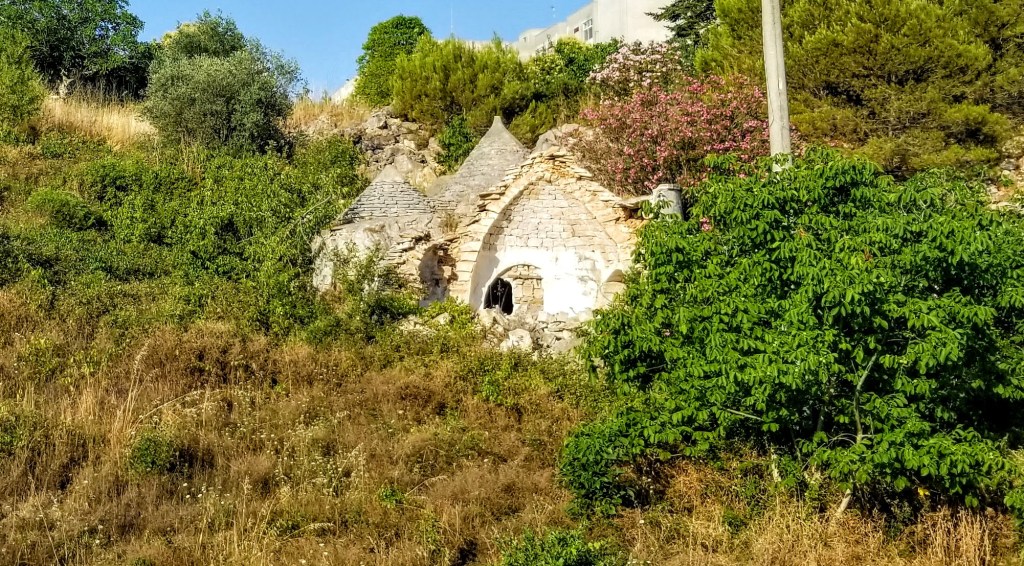
We saw this half-fallen trullo from the train. You can see the double-layer construction of the roof, with an interior arch of thicker stones covered with a shell of more rectangular stones that form the outer roof.
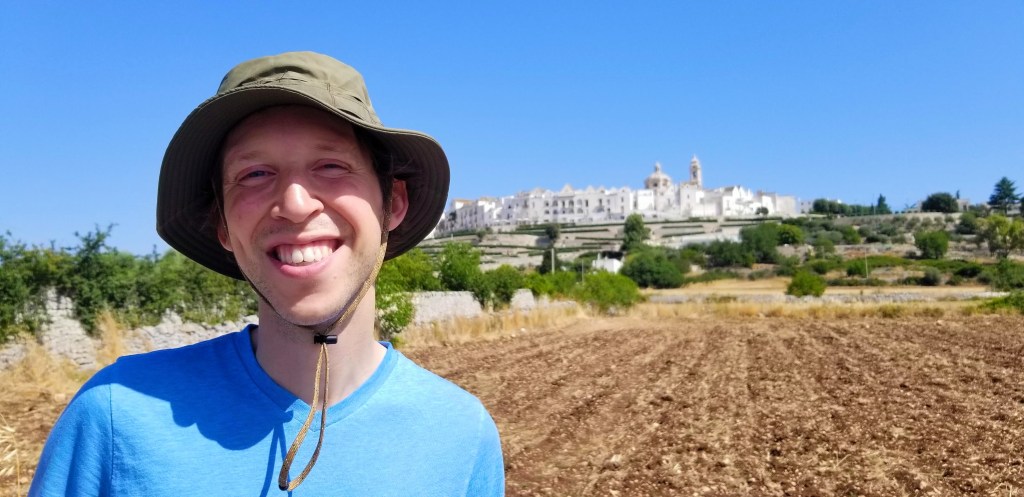
I’m learning a lot in these travels, about history and cuisine, and I’m also having a much-needed break from school. Here is a photograph of me in front of the town of Locorotondo, where we spent our first week. In Locorotondo we got to eat at some marvelous restaurants, before our second more rustic week when we are primarily cooking for ourselves.
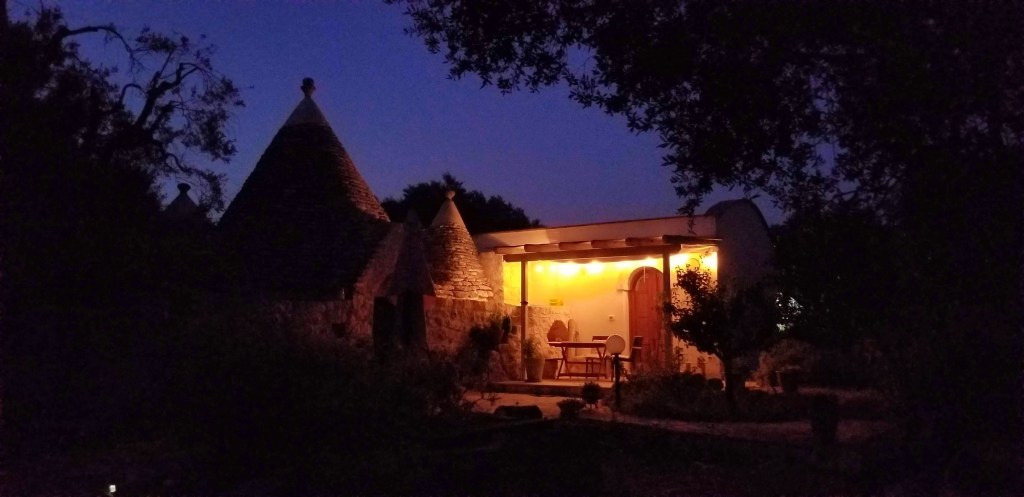
For this second week, we’re staying in this beautiful trullo in the photograph below, in the country just outside the town of Ceglie Messapica. We don’t have a car, but we have rented bicycles that we are using to explore and get over to the grocery store. We’re doing our best to keep cool and free of too much sunburn and too many bug bites, and I’m getting (a little) writing done in the early mornings, with a saucepan of tea that I’m ladling into an espresso cup.
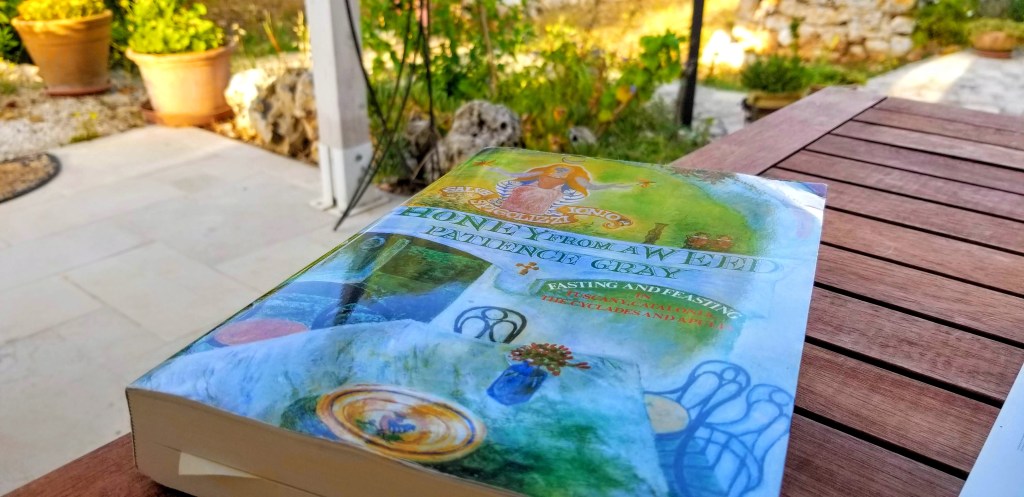
We almost didn’t bring the book with us. It is large and heavy, after all. But I’m really glad we did. Rereading the sections about the foods we are encountering as we find them, reading aloud before we prepare dinner, the book emerges in new life that I had not anticipated. This is a lesson to remember, about reading something in the place it touches so deeply. If you get the chance to do this, always do.
Next time I write, I’ll be in the US visiting family. Best wishes to you all, and thank you for stopping by.


