
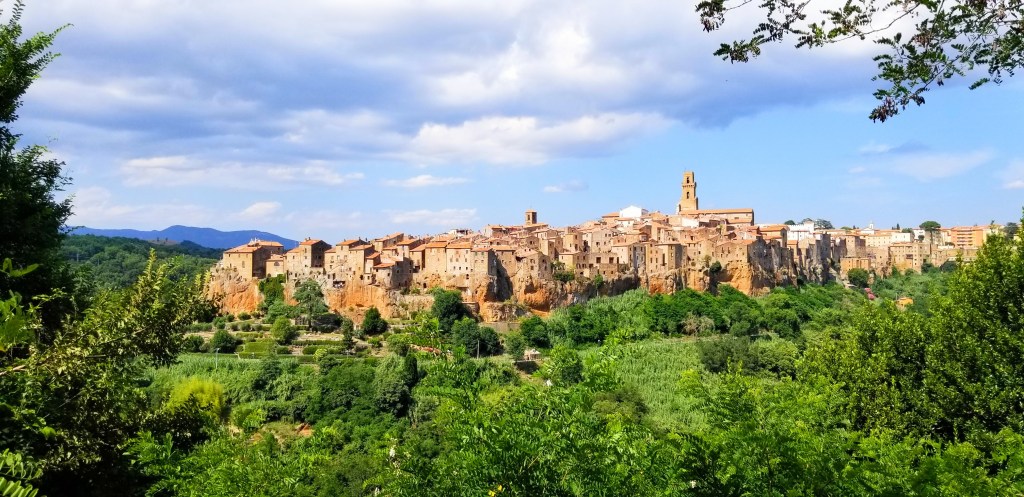
In the southern part of Tuscany, the region of Maremma stretches along the coast of the Tyrrhenian Sea. About an hour inland in Maremma, the land changes. Old volcanic tuff rock rises in plateaus out of the forest. Tuff, as stones go, is quite soft, and for millennia, the people here have been digging and carving these plateaus into cities. One of these, Pitigliano, is where we’ve been staying for the last week and a half.
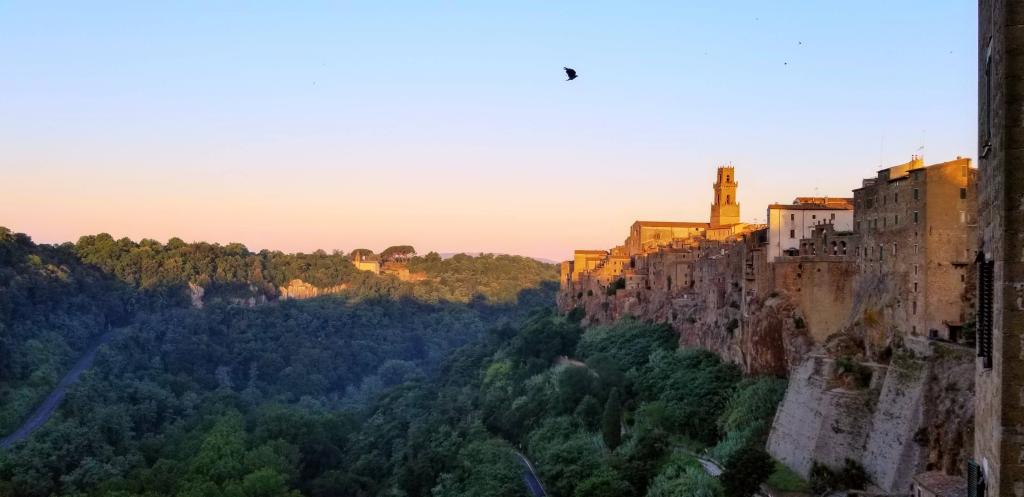
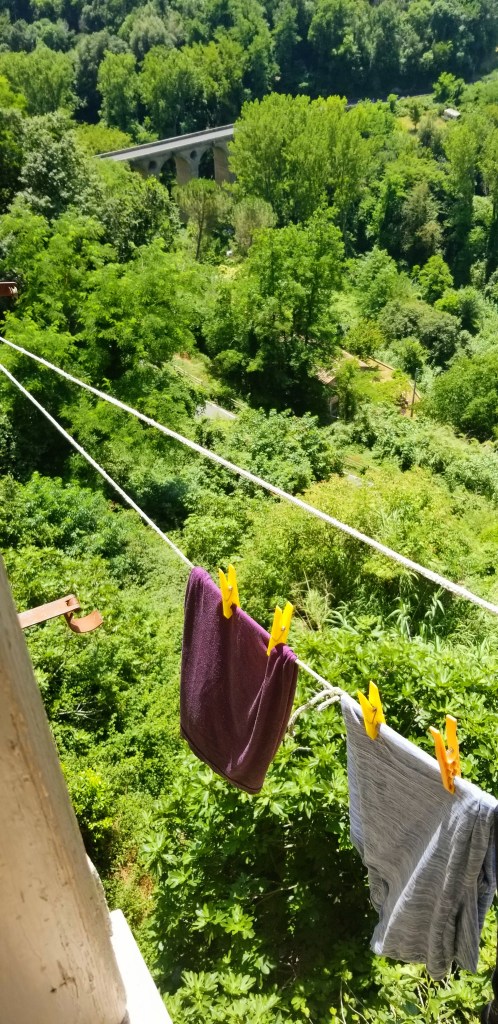
It’s a small city, 3500 people. Its old town, its Roman aqueduct, the area of the Jewish community that lived here between the 16th and 20th centuries, the churches and homes and people’s laundry lines jostle right to the edge of the tuff. This plateau extends like a peninsula into the valley, so that on three sides, the city drops off at the cliff edge. On the fourth side, the modern part of the city sprouts out into the surrounding highland. You can see the 3D representation of this in the Google Earth view here–click and drag to move around and see the shape of the land.
This place has been inhabited since Neolithic times, but most of the history we know about begins with the Etruscans, a culture that flourished in the first millennium BCE. It was Etruscans who first fortified the plateau with a high wall, who dug out the first wine cellars straight into the tuff, and, in the valleys below, dug a series of walking paths into the stone that connected them to neighboring towns, all more than 2000 years ago.
On one of our first days here, we decided to explore these paths. We hoped they would give us a better sense of the land and the surroundings. I was keen to identify some of the plants that live here. We set off in the morning for what online information told us would be a three-hour hike, about ten kilometers. I don’t think the website we looked at accounted for how much we would stop to take pictures and just observe the place–it took us around six hours to complete the loop.
The Etruscans were a decentralized culture. Their twelve major city states shared a culture and a language, traded with one another, sometimes fought one another or fought with one another against other powers. Pitigliano was a satellite of the larger Etruscan city of Volci, and itself networked with the nearby towns of Sovana and Sorano. To transport goods and animals through the deep valleys, and to reach the agricultural land on the valley’s other side, the people carved these paths, called the Via Cave (pronounced “vee-uh cah-vay”) into the tuff stone. Precisely how they did this isn’t known for sure, but one theory is that they began by chiseling holes down into the rock, into which they then jammed wooden sticks. Pouring water onto the sticks, the expanding wood would then crack apart the remaining stone.
The soft tuff was prone to erosion, especially by the hooves of pack animals, and so each successive civilization who used the Via Cave (after the Etruscans came the Romans, then medieval people, then the Renaissance. The paths continued to be used for transport up into the beginning of the twentieth century) dug deeper to level out the paths. This repeated digging means that now, after 2700 years, the paths in some places are twenty feet deep between high stone walls.
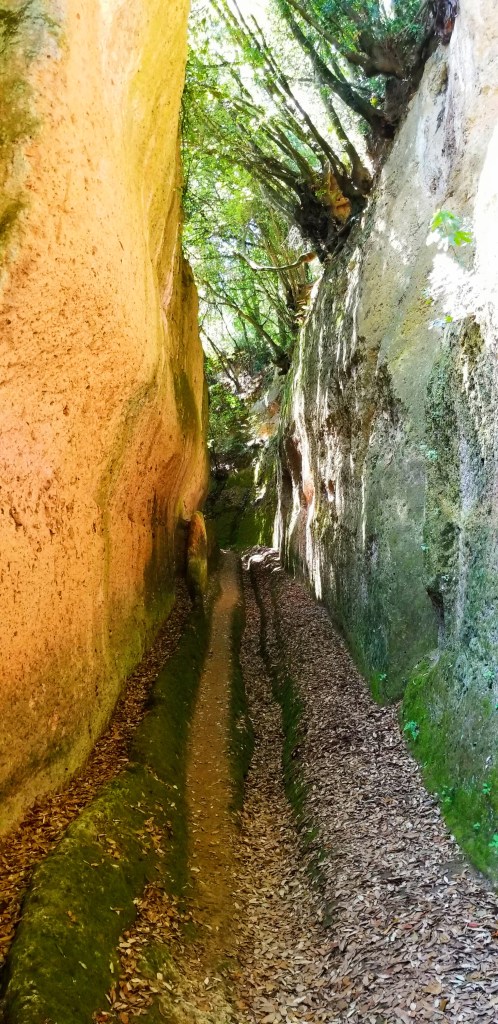
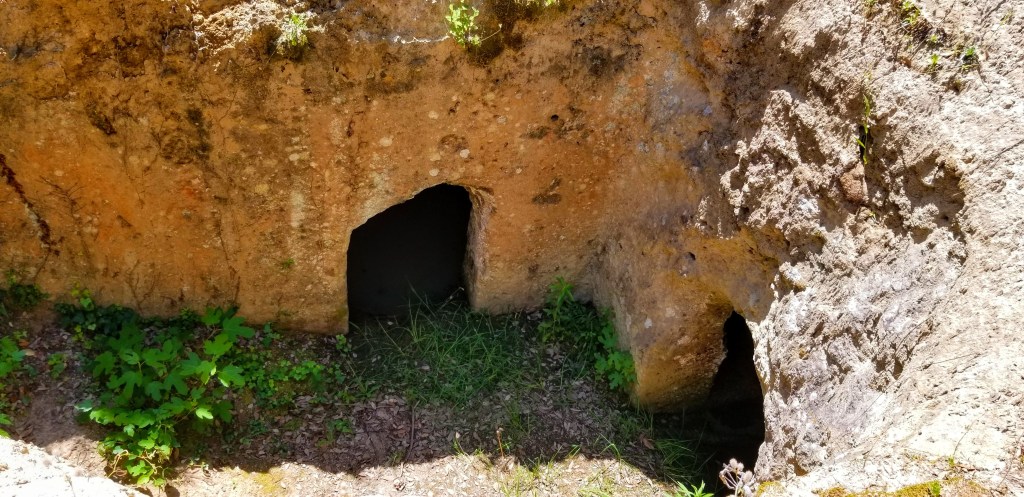
In addition to carving the paths ever deeper into the tuff, each successive culture put its own cultural marks on the land here. During Etruscan times, burials happened along them, and some of these old tombs have been excavated by archaeologists. During the Christian era, shrines were built along the paths, and niches cut into the tuff housed religious icons that were meant to protect travelers from the deep forest.
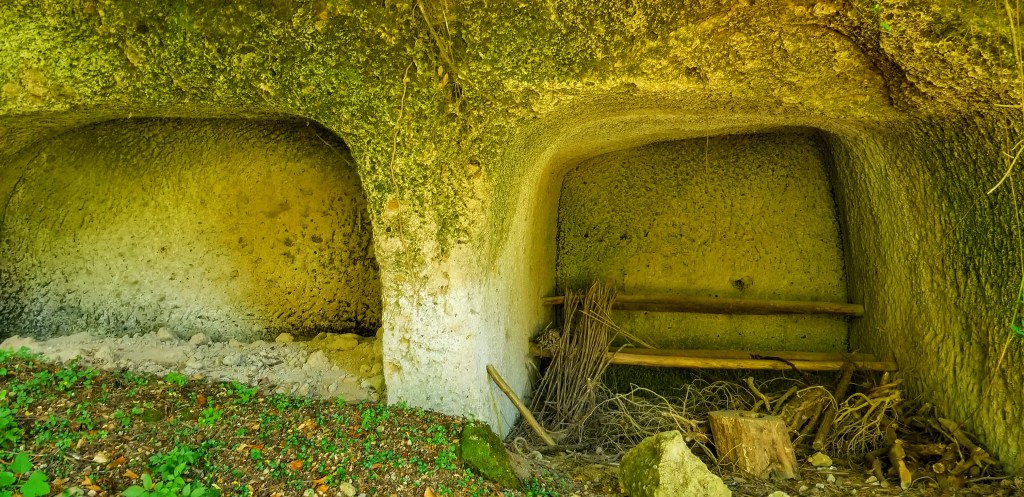
Our hike took us deep into the forested valley, then back up into blistering sun over agricultural land. I loved exploring the species in these different ecosystems–the lush forests, the wildflowers along the roadsides, vineyards, olive plantations, pomegranate trees, figs. The vegetation and animal life are so different to Norway.
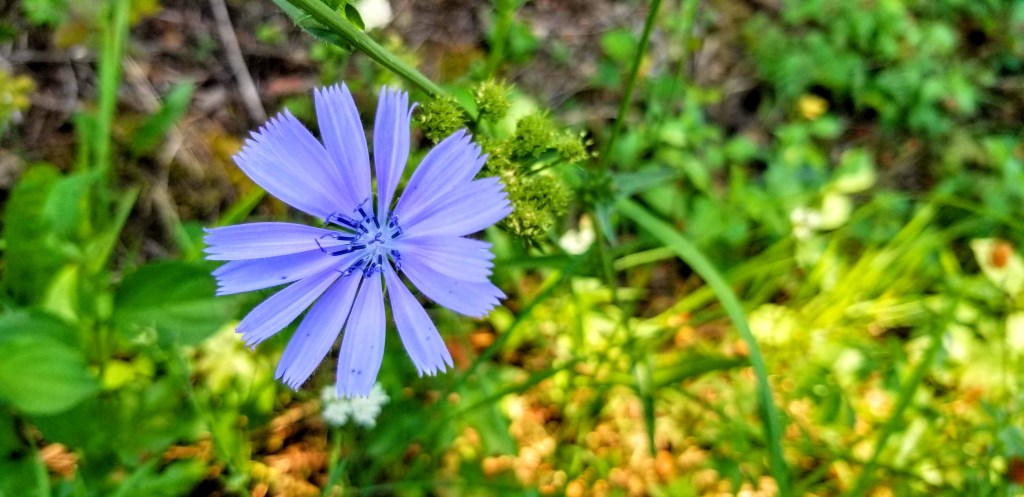
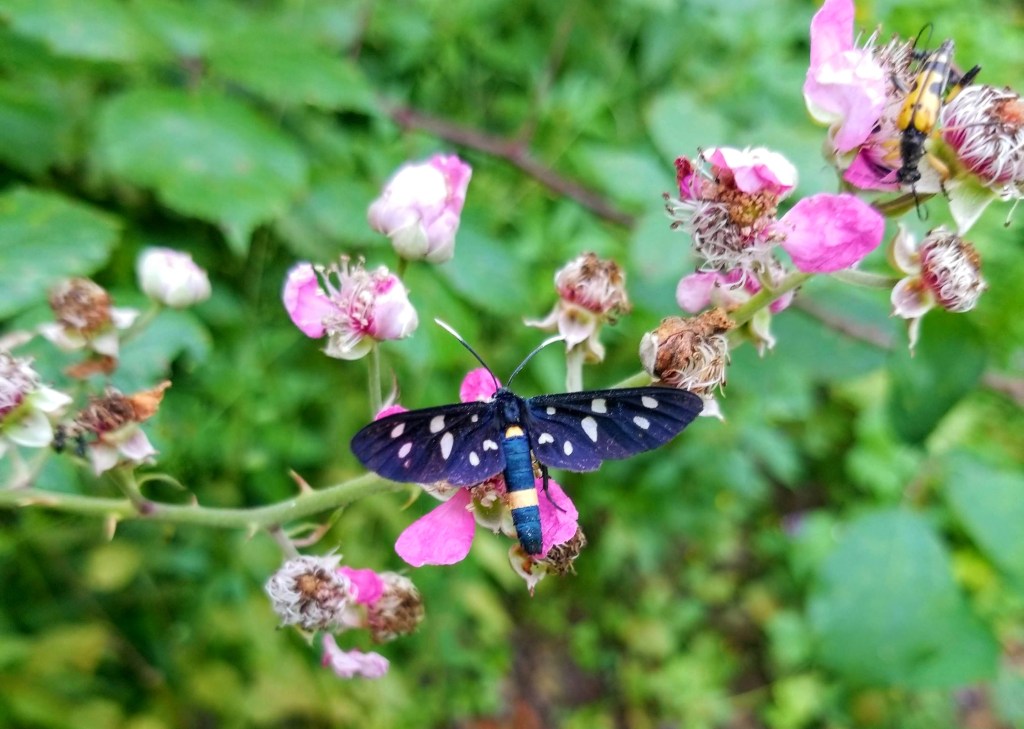
It is really good to be here. There is so much more we’ve been able to explore and experience than what I can write about here today, in museums learning more about the Etruscans and the Jewish community here, in day trips out to the coast and to an incredible Renaissance garden near Viterbo, and, being foodies, lots of restaurants. The heat wave that is affecting much of southern Europe right now is here too, and our apartment does not have air conditioning. This week, it’s supposed to reach 106 degrees Fahrenheit. We’re drinking lots of water.
We’ll head to Florence for a few days next weekend, then visit a couple of colleagues and friends in northern Italy before beginning the train journey back north. We’ll be back in Norway in early August, in time for the new school year.
Thanks for stopping by, and best wishes,
Jimmy


Leave a Reply