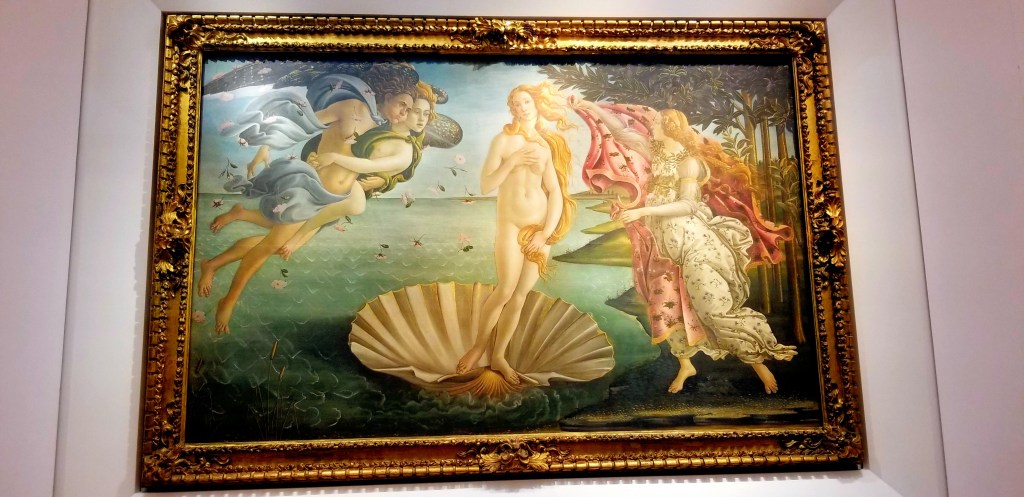
July has hurried by. We left Pitigliano on the 21st for Florence, where we joined the throngs of tourists to explore medieval and Renaissance history and art. Our guide was this funny and in-depth podcast by an art history professor, Rocky Ruggiero, which helped us contextualize what we were seeing.
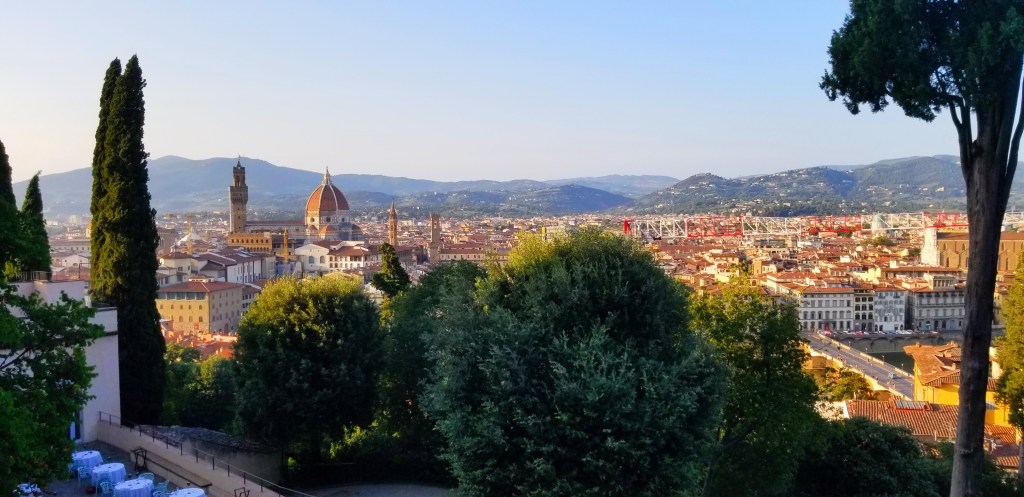
Florence was hot–although the height of the southern European heatwave had come while we were still in Pitigliano, we perhaps felt it more in Florence, where we were out in the city throughout the day. Florence was chaotic and beautiful, a bit overwhelming. I feel really fortunate to have been able to see and learn the things we did.
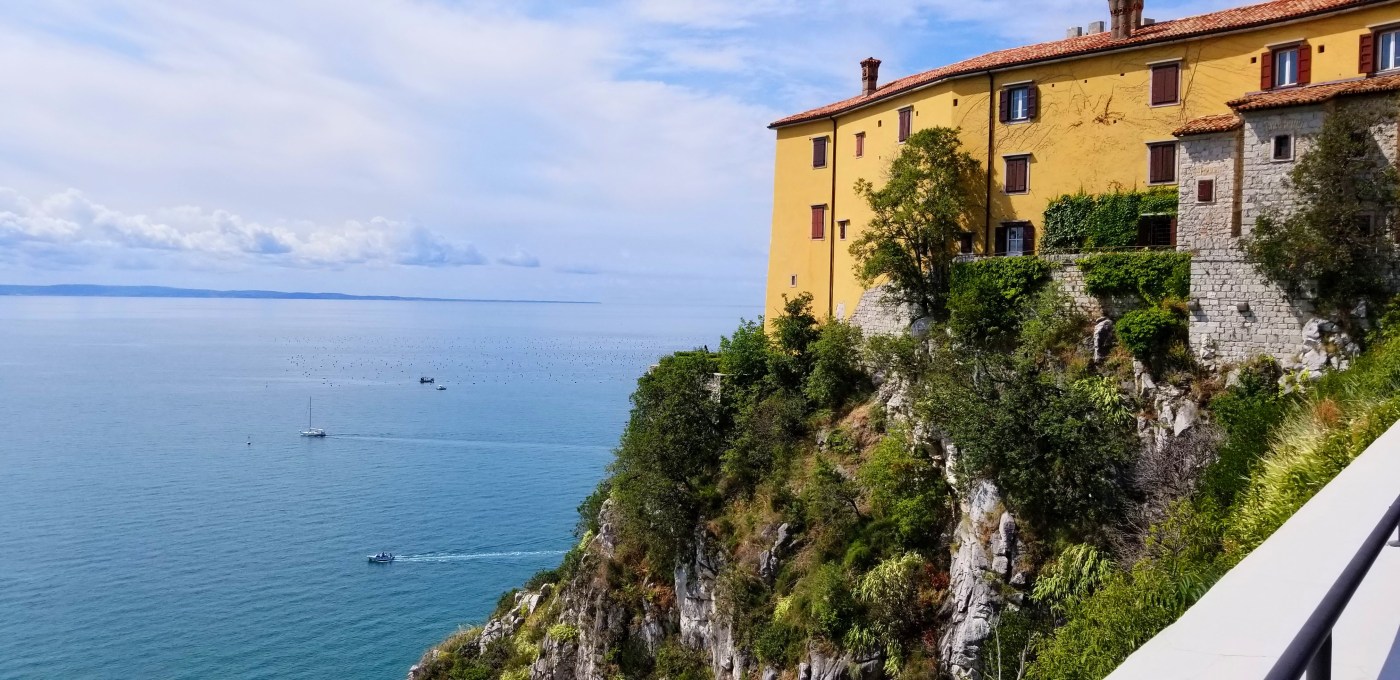
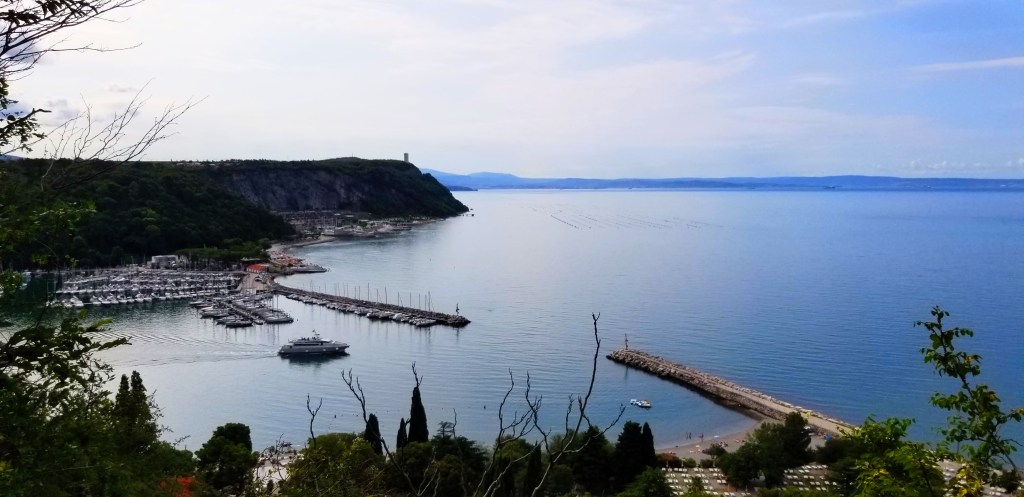
After three days there, we began an itinerant journey north, moving nearly every day. We visited Parma to learn about cheese. We visited colleagues from our school in Norway who live in Pordenone. Our last stop was in the towns of Sistiana and Duino, which perch on cliffs over the Gulf of Trieste on the Adriatic Sea. We were there to visit one of our sister schools, UWC Adriatic, and look out into the sea from this other side of the Italian peninsula.
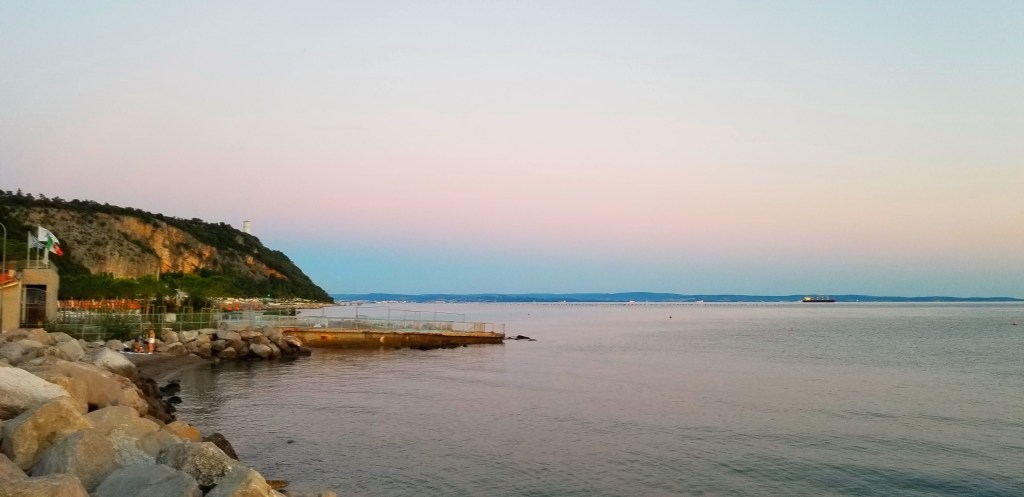
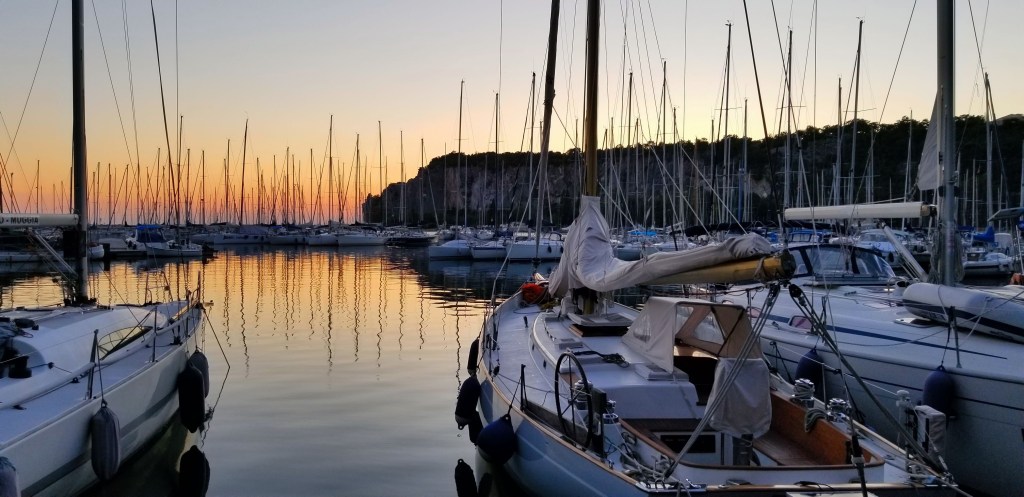
What struck me more than anything was the coastline. In the evening, we hiked down a series of steps to Sistiana’s harbor. There, people were enjoying the end of a summery day, still sitting on the rocks, throwing out fishing lines, and a few still swimming, although it was beginning to get cold.
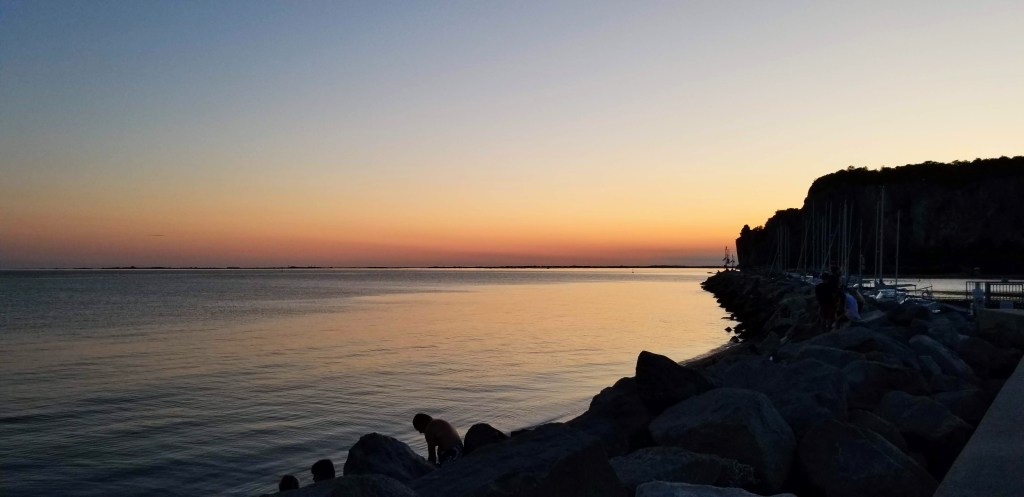
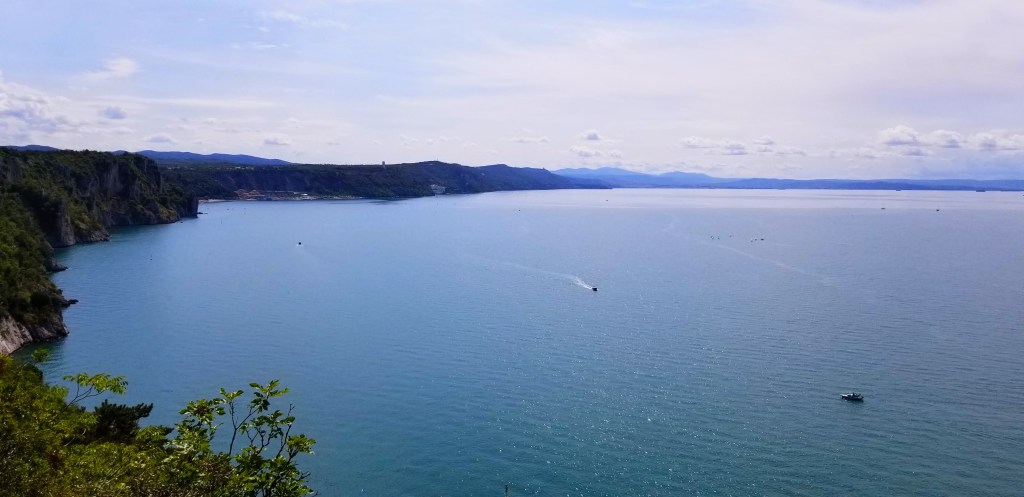
Peering down the coastline to the southeast, we could see the lights of Trieste, the capital of the region and an important port city since Roman times. But just beyond, the arm of the coastline turned inward, wrapping the gulf. The next part of the coastline was Slovenia, and looking further, we could see the beginning of Croatia across the water to the south.
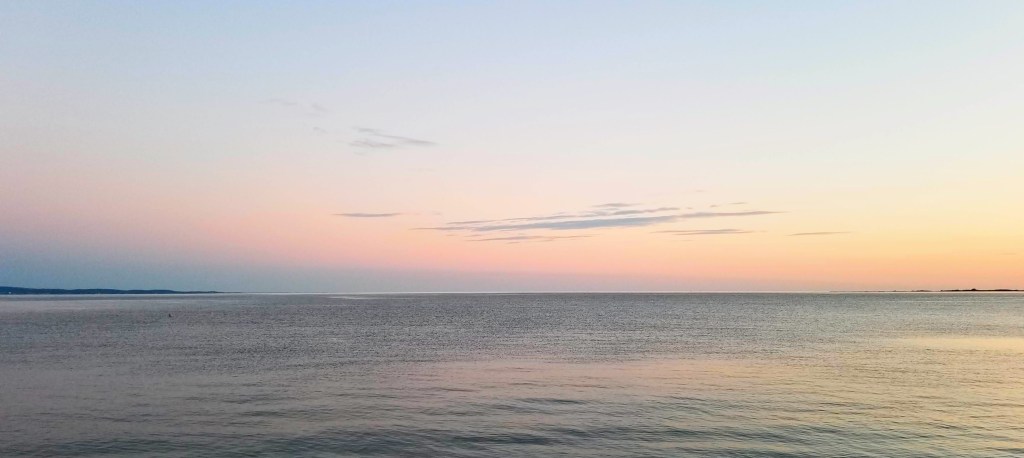
I was amazed to see the coastlines of three countries in one swath. It made me think of other border areas, like Lake Constance, where people walk across the border between Germany and Switzerland, or on our canoe trip in the Boundary Waters two years ago, when we looked across a lake to Canada. Until 1991, Croatia and Slovenia were both parts of Yugoslavia, and if you go back to the years just after World War Two, this whole coastline was all briefly part of one political entity: the Free Territory of Trieste. Since then, the coastline has fractured.
The land surrounding the Gulf of Trieste has for centuries been a multicultural place. Italians, Slovenes, and other ethnic groups have mixed and sparred with one another. The area passed hands politically–with the splitting of the Roman Empire, it became one of the western outposts of Byzantium. It fell to Charlemagne, later became an independent sea-trade rival to Venice, joined the Hapsburgs’ Austrian Empire, later regained independence, and then was annexed by Italy following World War I.
But conflicts between Slovene citizens and Mussolini’s fascist regime grew. After World War II, the United Nations’ peace treaty with Italy established the Free Territory of Trieste as a buffer zone between Italy and Yugoslavia. American and British forces occupied the northern zone of this territory, including Trieste and the area of Sistiana and Duino. After seven years, this northern zone was re-annexed to Italy.
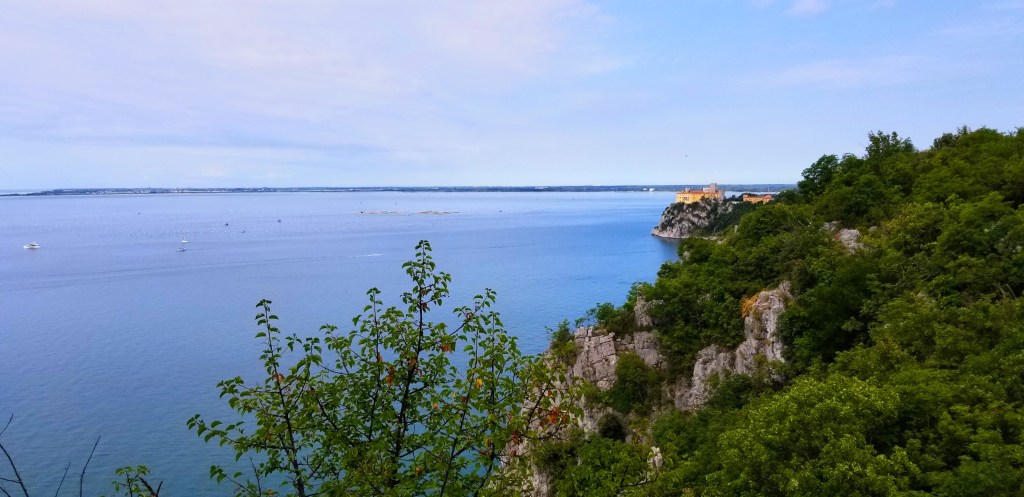
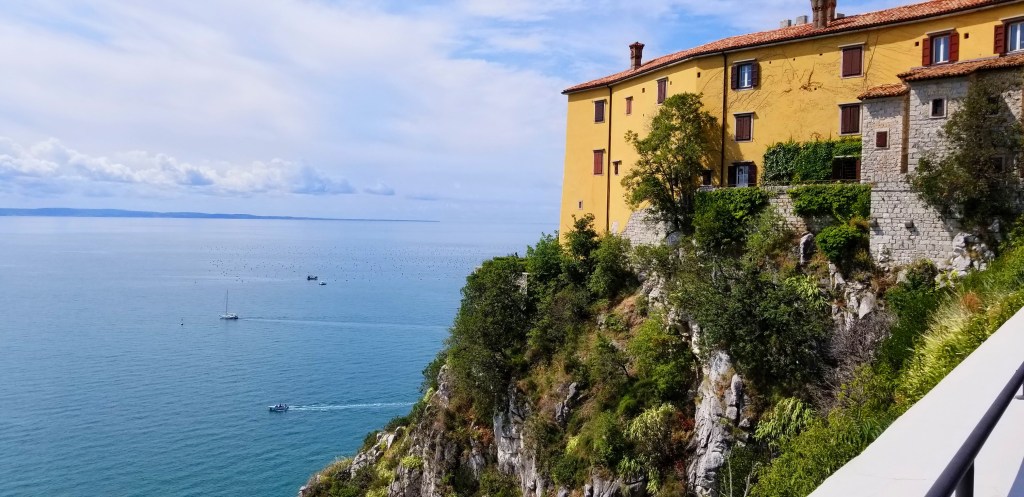
Today, this place is a tourist destination for beachgoers and boaters, and fish and mussel farming is visible in the water. UWC Adriatic was established here in 1982, near the Duino Castle perched up on the cliff.
We left Sistiana and began our journey home. A marathon set of trains took us from Northern Italy across Austria and Germany, to Kiel, where I am writing this post. This afternoon, we’ll board the ferry that will take us back to Norway. I’ll be home in just a few days.
This has been a wonderful journey, but I’ll be ready to be home. School will be starting before too long. I have a lot of writing I want to be working on too.
Thanks for reading, and best wishes,
Jimmy


Leave a Reply