For years, we have been planning a dinner with colleagues. The idea first arose two or three years ago–my husband and I are hobby cheesemakers, and two of our colleague-friends come from India and make delicious food. When we mentioned once that we had made paneer over the weekend, our colleague hatched the plan: you two make the paneer, then bring it to us and we’ll cook it up into a dinner.
That was years ago, and after date after date on the calendar kept falling through (someone was ill, then pandemic restrictions, again the ever-rushing slog of the school year), at last, last weekend, we finally bought the milk, and set to work.
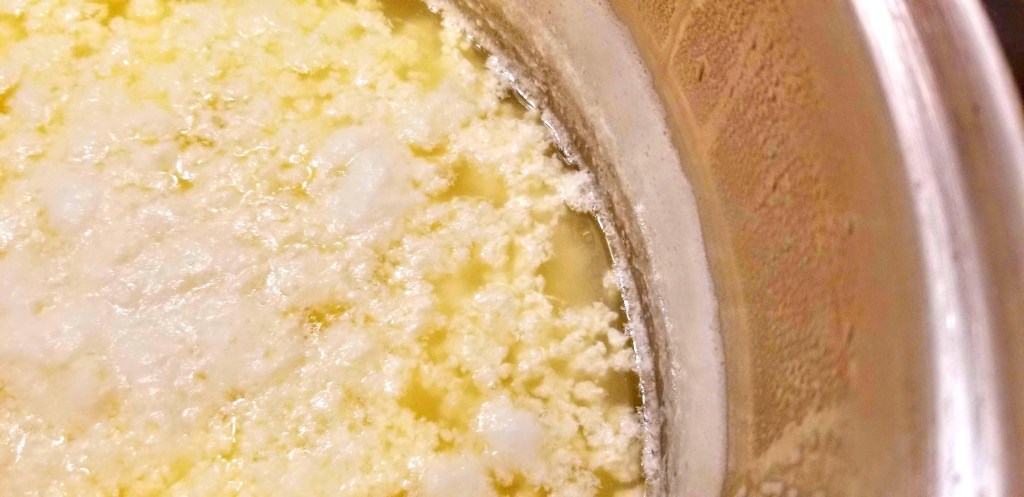
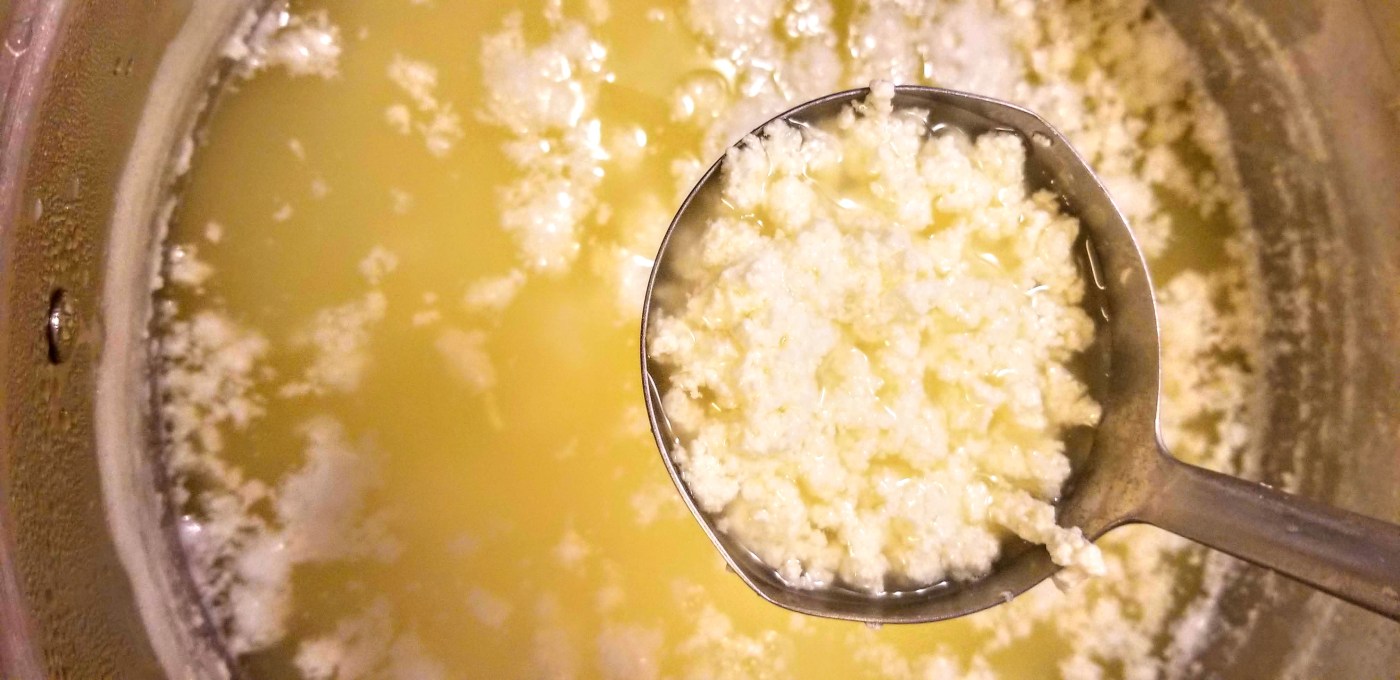
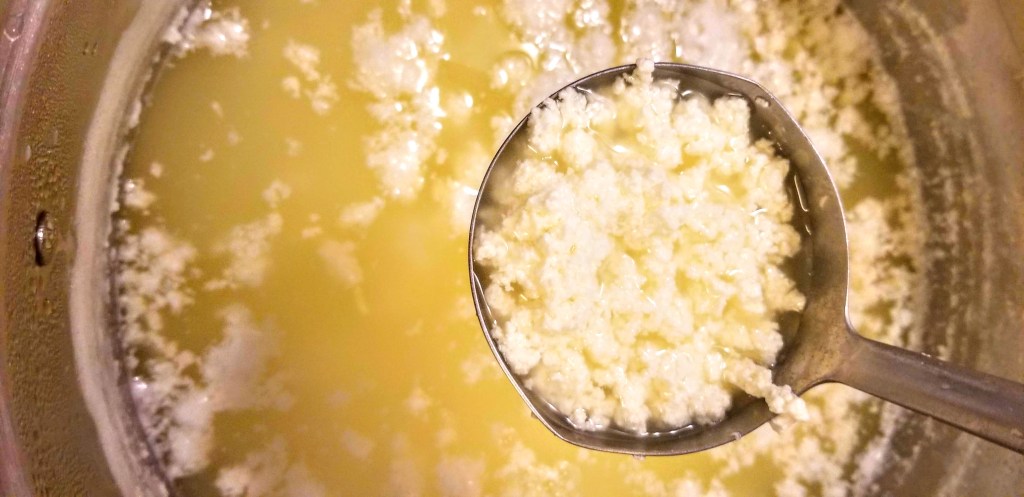
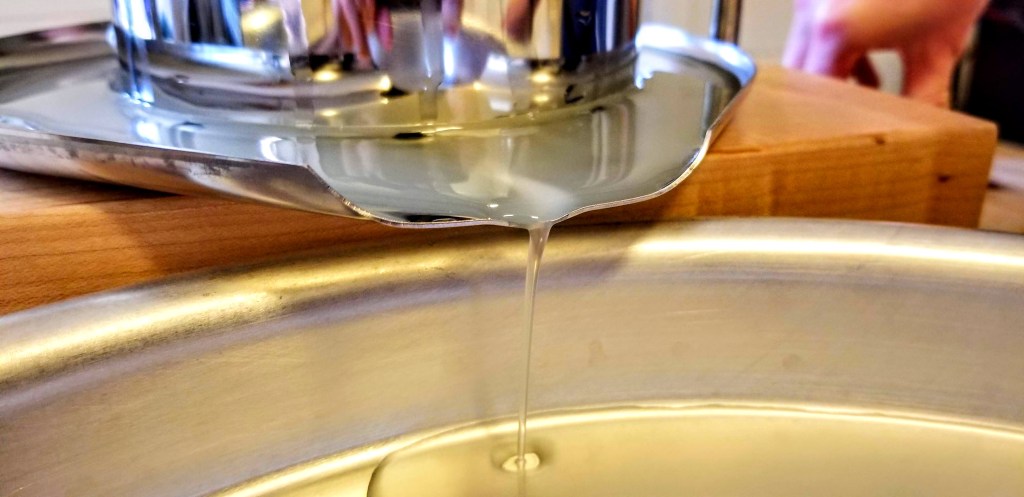
The recipe, as cheeses go, is straightforward. There is no active culture that need be left to ripen. There is no instruction to raise the temperature by two degrees every five minutes over the course of an hour and a half. For paneer, the milk is boiled, and then one adds coagulant–lemon juice or citric acid–and immediately the roiling milk separates into curds and whey, floating nets of protein in a yellow-green translucent liquid.
It smells sweet and warm, that perfect aroma that recalls hot chocolate or making Christmas egg-nog, those comforting returns to childhood winters. The separation of the curds highlights the swirling motion of the milk, which is less visible in a homogenous liquid. I lean again and again over our largest pot (the only one we have that will take two gallons of milk), and watch the whirlpool, inhale.
This is the reward, but the way up to a boil is high tension. The fear the milk will burn against the pot had us stirring like a fever. Round and round, fast enough the liquid rose against the sides and dipped in the center–centripetal force squeezing the milk out against the sides. I rotated the pot a couple of inches every time I thought of it–we had it straddled out between two burners, and so it always heats unevenly.
I kept sniffing for burnt milk, and the horrible thing was that a little burnt smell always emerged, though usually from the outside of the pan–some of the stains burned onto the pot, no doubt, or invisible residue on the stovetop. Then I would lean back over the milk itself, and assure myself that it was smelling sweet.
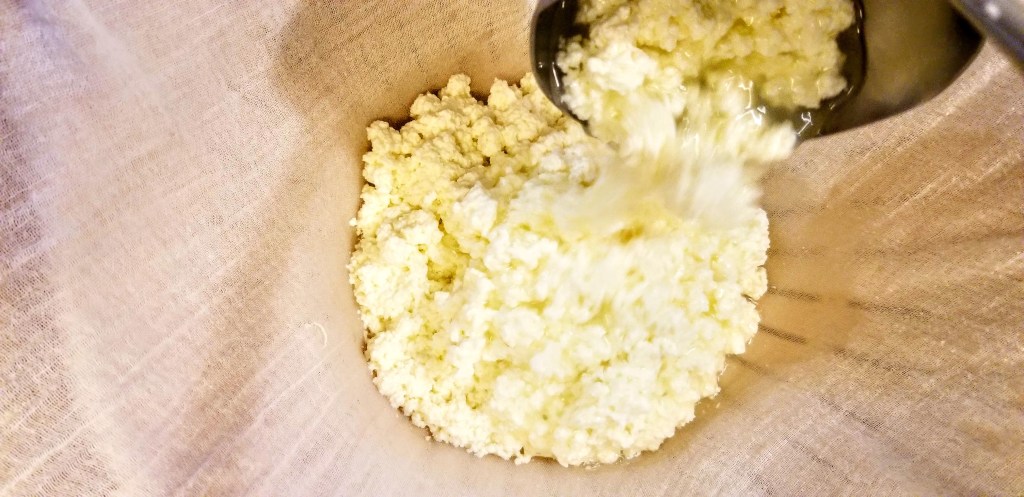
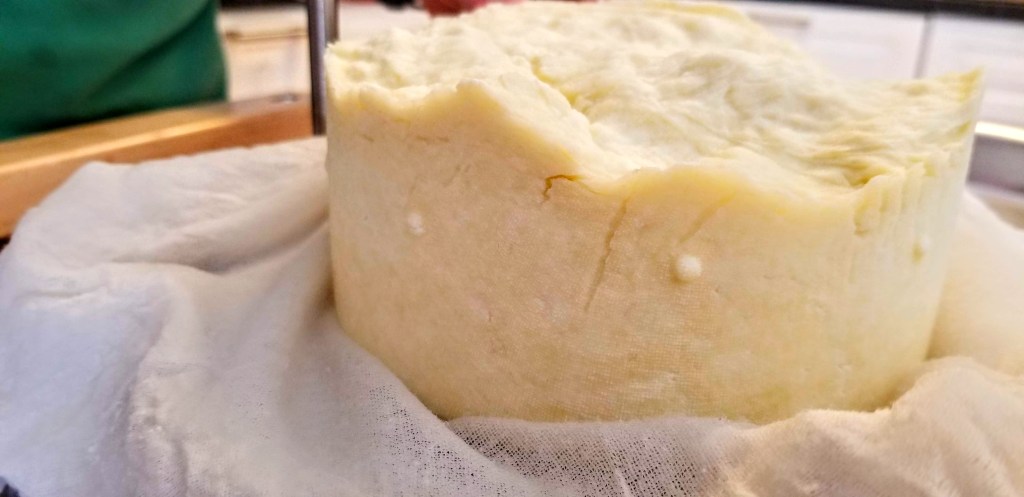
We ladled curds and whey into a butter muslin (a very fine cheesecloth) and drained them out. Like glistening cottage cheese swaddled like the glory that it is, our prize was reduced from two gallons of milk to a small bowlful. We rinsed with clean water, to remove residual acid, then transferred this whole mass into the cheese press to reduce it further, press out all the whey we could, compact it into something that would hold its shape.
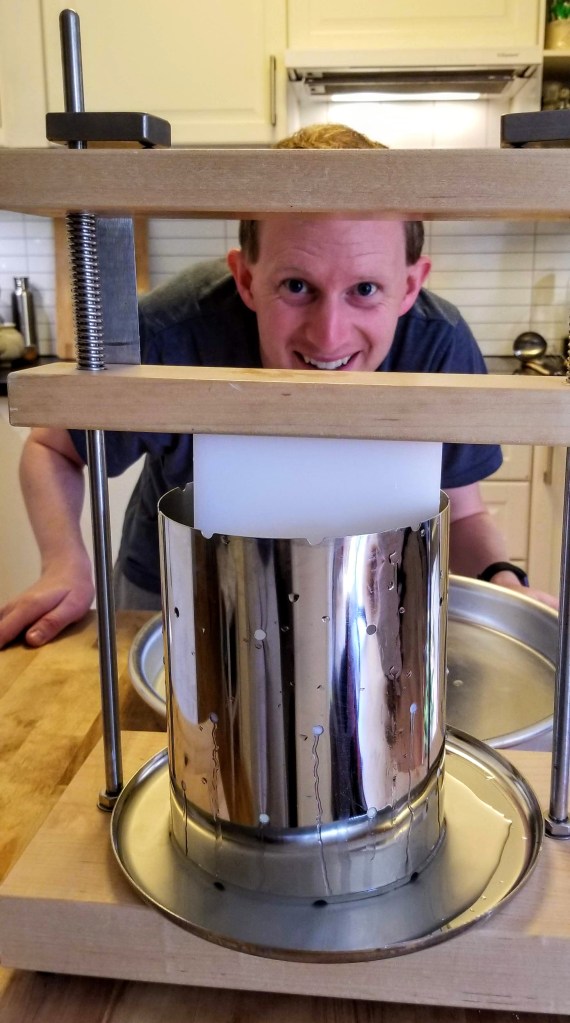
The recipe we use, from Ricki Carrol’s renowned Home Cheese Making, calls for only a light weight, or even no weight at all–just draining–to finish the cheese. But we have found over the years that without a firm pressing, the paneer breaks apart when we try to fry it, as so many dishes suggest. My sister gave us this cheese press many years ago, and it’s specifically needed for hard cheeses like cheddar or manchego, but it has been a life-saver for our paneer, which comes out solid and stable, cutting and frying without crumbling, while still moist enough for mouth-melting.
After three hours in the press, we unwrapped the finished cheese and brought it to our friends. The house smelled heavenly already–spices and warm food. Already the mater paneer (paneer-less yet) was bubbling on the stove–“I’m so glad you brought this now,” our friend said. “It will be best for the paneer to soak in the curry for a few hours before we eat.” This was new to us, who usually put the paneer into our dishes right before we eat. A new piece of knowledge to improve our cooking.
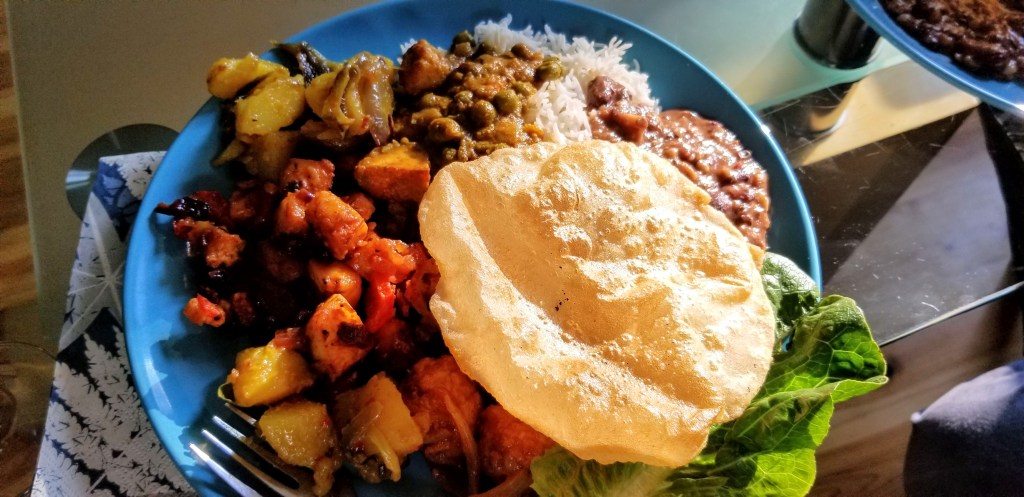
That night, we celebrated an incredible dinner–mater paneer with its sweet peas, the drier karahi paneer with bell pepper, dal, some marinated Norwegian turkey-meatballs (a source of disagreement between our two hosts), and fresh-fried puris that kept emerging from the kitchen faster than we could scarf them down. We kept work talk to a minimum. Instead we traded stories of our university days, of falling out of canoes into the fjord, and the time the mystic Chandra Swami met with Margaret Thatcher.
It was good to make the time to be with friends, to share food, even when the work keeps pressing us from every side. A little milk transformed into a good cheese, ingredients transformed into a row of brilliant dishes.
Thanks for stopping by, and thanks for reading. Best wishes for the week ahead,
Jimmy


Paneer is so utterly divine! We make it when we have too much milk and make it last as long as we can. It has a unique, filling flavor that marries well with homemade bread. ❤
LikeLike